Washington, DC — 11 March 2022
In Bashar al-Assad’s Syria, what began as peaceful demonstrations for reform evolved into more than a decade of profound human suffering. After decades of repression, corruption, and economic hardship—first under Hafez al-Assad and later under his son—Syrians took to the streets during the wave of uprisings known as the Arab Spring.
Rather than responding to calls for reform, the government met protests with force. As demonstrations grew and demands for Assad’s resignation intensified, state security forces escalated their response, deploying lethal force against civilians. What followed was a protracted and devastating conflict that continues to shape Syria today.
The scale of suffering has been staggering. Over the course of the conflict, Syrian civilians have endured chemical attacks, including the use of sarin gas, widespread deployment of barrel bombs, sieges and starvation tactics, torture, sexual violence, enforced disappearances, extrajudicial killings, and mass displacement. These patterns of abuse have been widely documented and attributed, in significant part, to state forces and affiliated actors.
Displacement and Humanitarian Crisis
The humanitarian consequences of the conflict have been immense. An estimated 14 million Syrians have been displaced—roughly half the country’s population. Nearly seven million fled across borders in the early years of the war, while millions more remain internally displaced.
Neighboring countries, including Turkey, Jordan, and Lebanon, host the majority of Syrian refugees, placing a significant strain on regional resources and infrastructure.
According to United Nations estimates, approximately 14.6 million people inside Syria require humanitarian assistance, with millions facing acute need. Food insecurity remains widespread, with over 12 million Syrians unable to reliably access sufficient nutrition. Children have been disproportionately affected, with hundreds of thousands suffering from chronic malnutrition.
Casualty figures remain contested but consistently high. UN estimates document at least 350,000 deaths, while other monitoring groups suggest the number exceeds 500,000. Tens of thousands are believed to have died under torture in detention facilities, and reports of mass executions continue to surface.
Syria’s humanitarian crisis has been further compounded by economic collapse, international sanctions, and the effects of the COVID-19 pandemic. Infrastructure has been decimated, currency value has plummeted, and inflation has surged, pushing an estimated 90 percent of the population into poverty.
Healthcare systems have been particularly hard hit. Hundreds of medical facilities have been damaged or destroyed, and attacks on healthcare infrastructure—despite protections under international humanitarian law—have significantly reduced access to care. Large portions of the population remain without adequate medical services.
State Violence and International Involvement
As the conflict evolved, it expanded beyond a domestic uprising into a complex, multi-actor war involving regional and international powers. The rise of extremist groups, including Islamic State and Al-Qaeda, further complicated the conflict and intensified international concern.
The Assad government has received sustained military, financial, and political support from Russia and Iran. Russian airpower has played a decisive role in supporting government offensives, while Iranian-backed militias—including fighters from multiple countries—have reinforced ground operations.
Opposition groups, by contrast, have received varying degrees of support from Turkey, the United States, the United Kingdom, France, and several Gulf states, including Saudi Arabia and Qatar.
A U.S.-led coalition conducted airstrikes and deployed special forces in support of the Syrian Democratic Forces (SDF), primarily targeting extremist groups. Meanwhile, Turkish military operations focused on border regions and areas held by Kurdish forces.
Across the conflict, multiple parties have been accused of committing violations of international law, underscoring the complexity and brutality of the war.
Prospects for Conflict Resolution
Despite years of diplomatic engagement, a comprehensive political resolution remains elusive. Efforts led by the United Nations Security Council have called for a negotiated settlement based on the 2012 Geneva Communiqué, which envisions a transitional governing body formed through mutual consent.
However, progress has been limited. Multiple rounds of UN-mediated peace talks have failed to produce a lasting agreement, in part due to entrenched political positions and the unwillingness of key actors to compromise on core demands—particularly regarding Assad’s role in any transition.
The conflict’s resolution will ultimately depend on sustained diplomatic engagement, political will among domestic and international actors, and a framework that addresses both governance and accountability.
What remains clear is that peace in Syria is not unattainable—but it will require a fundamental shift from military stalemate to genuine political negotiation.
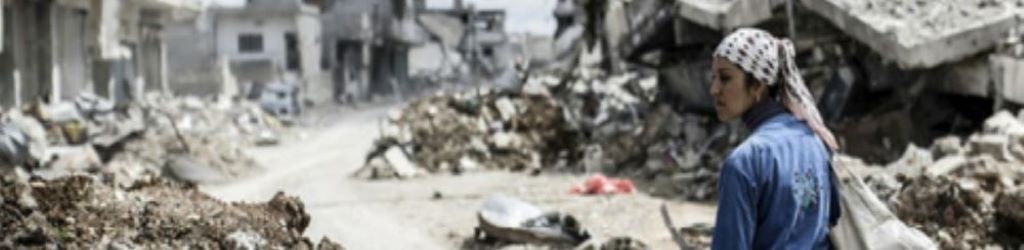
Photo Credit: Dera’a, Syria, Vita. Licensed under CC 2.0 license
Lara Kajs is the founder and executive director of The Genocide Report (TGR). She has conducted extensive fieldwork in conflict and displacement settings, including Yemen, Syria, and Afghanistan. Her work focuses on humanitarian crises, international law, and atrocity prevention.