By Lara Kajs
Dispatches from the Field—The Genocide Report
Washington, DC — 4 December 2025
After more than thirteen years of conflict, Syria remains one of the most extensively documented atrocity situations of the 21st century. Independent investigations have produced substantial evidence that forces under the command of President Bashar al-Assad committed grave violations of international humanitarian and human rights law.
Despite this evidentiary record, structural political barriers—particularly within the United Nations Security Council—have stalled international prosecution pathways. In December 2024, Assad fled to Russia, avoiding immediate legal exposure. Nonetheless, accountability remains possible through universal jurisdiction, coordinated multilateral pressure, and long-term justice mechanisms.
Why Accountability Matters
Accountability serves three essential purposes. First, it delivers justice for victims. Survivors and families of the disappeared endure profound trauma, often waiting years for answers about the fate of loved ones. Legal accountability is both a necessity and a moral obligation.
Second, accountability functions as a deterrent. Without consequences, the use of chemical weapons, torture, and deliberate attacks on civilians risks becoming normalized—not only in Syria but in future conflicts.
Third, accountability is foundational to lasting peace. Sustainable peace requires truth, acknowledgment, and a reckoning with the past.
Evidence and Investigative Efforts
International mechanisms—including the Independent International Commission of Inquiry on Syria, the International, Impartial and Independent Mechanism (IIIM), and the Organisation for the Prohibition of Chemical Weapons (OPCW)—have documented widespread abuses. These include enforced disappearances numbering in the hundreds of thousands, indiscriminate aerial and artillery attacks on civilian infrastructure such as hospitals, markets, and residential areas, and the use of chemical weapons in multiple attacks attributed to Syrian government forces. Taken together, these findings indicate probable war crimes and crimes against humanity.
Legal Pathways
Although Syria is not a party to the International Criminal Court, crimes may fall under its jurisdiction if referred by the Security Council—a process repeatedly blocked by vetoes. Alternative avenues for accountability include universal jurisdiction cases prosecuted by individual states, international evidence mechanisms, targeted sanctions, and hybrid or ad hoc tribunals similar to those established for Yugoslavia, Rwanda, or Sierra Leone. European states such as Germany, France, and Sweden have already prosecuted lower-level Syrian officials. The 2022 conviction of Anwar Raslan in Germany demonstrates that accountability is achievable even without direct access to senior leadership.
Barriers to Prosecution
Assad’s residence in Russia, combined with Moscow’s political, military, and economic backing, presents a major obstacle to accountability. While immunity claims do not universally shield leaders from international criminal prosecution, practical enforcement depends on host-state cooperation, which remains unlikely.
Strategies for Pursuing Accountability
Evidence preservation is one of the most critical tools available, and mechanisms such as IIIM continue to collect and safeguard documentation of crimes. Targeted sanctions—including travel bans, asset freezes, and financial restrictions—impose tangible costs and reinforce international condemnation. Civil litigation in certain jurisdictions can generate judicial findings, financial penalties, and documentation of abuses. Sustained diplomatic pressure, through UN resolutions and regional coalitions, can politically isolate perpetrators and constrain their legitimacy.
Bringing Assad to Justice
Historical precedent shows that accountability for senior leaders is often delayed, but not impossible. Figures such as Slobodan Milošević and Charles Taylor were brought to justice after significant political shifts. Preparing robust legal cases now ensures that when political conditions evolve, prosecution mechanisms are ready.
Justice for the Syrian people cannot wait for political convenience. The scale and gravity of the crimes are too extensive to ignore, making accountability essential to upholding international norms and protecting civilians worldwide.
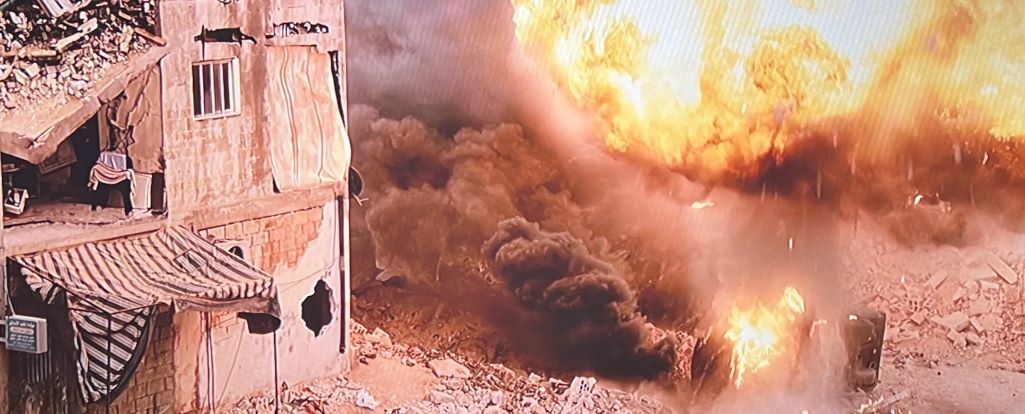
Photo credit: “Homs Attack 2012” by Lara Kajs. Also, featured as the cover image for the book “Assad’s Syria.”
Atrocity Prevention Lens
Accountability is a key pillar of atrocity prevention. Without mechanisms to investigate and prosecute perpetrators, patterns of violence can continue unchecked, increasing risks to civilian populations. Preserving evidence, enforcing sanctions, and sustaining international pressure are critical to preventing further mass atrocities in Syria and beyond.
Legal Framework
Universal Jurisdiction
Allows states to prosecute individuals responsible for serious international crimes, regardless of where the crime occurred.
International Criminal Court (ICC)
May investigate crimes in non-member states if referred by the UN Security Council.
Crimes Against Humanity & War Crimes
Prohibited under international law, including the Geneva Conventions and customary humanitarian law.
Sanctions & Diplomatic Measures
Used to enforce accountability when direct prosecution is blocked.
About TGR
The Genocide Report (TGR) publishes analysis and educational resources on conflict, international law, and atrocity prevention. Its work seeks to bridge academic research, field realities, and public understanding of mass violence and civilian protection.
Lara Kajs is the founder and executive director of The Genocide Report, a Washington, DC-based educational nonprofit focused on atrocity prevention and international law. She is the author of several field-based books on conflict, displacement, humanitarian crises, and international humanitarian law, drawing on extensive research and field experience in Yemen, Syria, and Afghanistan. Her writing and public speaking focus on atrocity crimes, forced displacement, the protection of civilians, and the legal frameworks governing armed conflict.