Washington, DC., 19 November 2025—
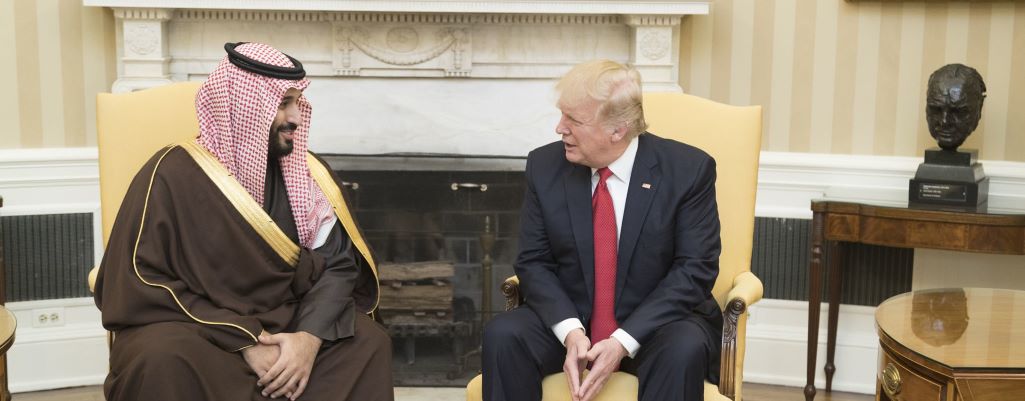
The Saudi Crown Prince, Mohammed bin Salman (MBS), is in Washington, DC, for a White House visit. The visit has sparked an intense debate, not just about geopolitics and investment, but about fundamental human rights. While the Trump administration celebrated the MBS visit with pomp, red-carpet diplomacy, an Oval Office presser, and a lavish dinner, it represents more than a strategic reset. The visit highlights a troubling pattern of prioritizing business and security interests over justice.
Jamal Khashoggi
The 2 October 2018 killing of Jamal Khashoggi is a subject that Mohammed bin Salman continues to shape international perceptions of his leadership. US intelligence assessments (ODNI), citing MBS’s propensity for resorting to violent measures to silence dissidents, concluded that the Saudi Prince approved the operation that led to the journalist’s brutal murder inside a Saudi consulate in Istanbul, Turkey.
The evidence stemmed from the fact that the Turkish Intelligence Agency had previously bugged the Saudi consulate in Istanbul and recorded the Khashoggi murder. UN Special Rapporteur for Extrajudicial Killings, Agnes Callamard, listened to the recordings. Her findings were submitted to the Human Rights Council, which determined that the assassination of Jamal Khashoggi was a “state killing.”
For many, MBS’s return to the White House feels like a rehabilitation, a normalisation of his status despite that deeply traumatic case. During the Oval Office press briefing, questions regarding Khashoggi’s killing were met with deflection and criticism, reflecting a broader reluctance to directly confront the issue in diplomatic settings.
Trump said, “You’re mentioning somebody that was extremely controversial. A lot of people didn’t like that gentleman that you’re talking about. Whether you liked him or didn’t like him, things happen.” Trump went on to absolve MBS, despite the US intelligence assessment that MBS in fact ordered the murder. Putting this in perspective: the “leader of the free world” was defending a killing widely assessed by US intelligence to have been approved at the highest levels of the Saudi government.
We will continue to demand that the perpetrators be brought to justice, even if the perpetrator is a sitting head of state.
Surge in Executions
Under MBS’s watch, Saudi Arabia has carried out an alarming number of executions, with 2024 and 2025 seeing record-high numbers in the country’s modern history. In 2024, the Kingdom executed 345 people, a record number that surpassed its previous high of 196 in 2022. In the first half of 2025 alone, at least 180 executions were carried out. The increase contradicts earlier public claims by MBS in 2018 that the Kingdom would limit the use of the death penalty “big time.”
A significant proportion of those executed are foreign nationals, many of whom face barriers to adequate legal representation and language access. Numerous cases involve nonviolent offenses, raising concerns under international legal standards that restrict capital punishment to the “most serious crimes.” Many death sentences follow grossly unfair trials, often involving confessions obtained under torture. There are serious concerns about due process, fair trials, and the systemic use of capital punishment as a tool to stifle dissent. Additionally, the Kingdom is intensifying its crackdown on freedom of expression.
Silencing Dissent
Journalists, writers, and social media influencers continue to be punished for peaceful expression. Many Saudis have received long prison sentences merely for posts and comments online. Particularly concerning is that some of those jailed are relatively low-profile activists: people using social media to call for basic reforms or highlight injustice.
In 2012, Raif Badawi was arrested and sentenced to 10 years in prison, 1,000 lashes, and a large fine, for creating an online forum and posting liberal views that were deemed to insult Islam. Badawi received 50 lashes on 9 January 2015 in a public square in Jeddah, Saudi Arabia, in front of the Al Juffali Mosque. The flogging took place after Friday prayers and was streamed online as many spectators and witnesses filmed the flogging with their cellphones. The remaining 950 lashes were postponed due to international pressure and medical concerns.
Badawi was released from prison on 11 March 2022, after serving 10 years. He is subject to a 10-year travel ban and a 10-year ban on using visual, electronic, and written media. The restrictions prevent him from rejoining his family, who sought asylum in Quebec, Canada.
Calling for Change
The visit presents an opportunity for the United States to integrate human rights considerations more explicitly into bilateral engagement. The US should call for the release of peaceful dissidents, journalists, and activists detained for criticism or social media posts. Trump should call for an end to arbitrary travel bans by the Saudi government. Many repressed voices, including US citizens, are barred from leaving or returning to Saudi Arabia. The Saudi justice system needs overhauls to guarantee fair trials, legal counsel, and protection from torture. There needs to be a real moratorium on executions, especially for nonviolent offenses.
Considering Saudi Arabia’s role in regional crises, the visit to the White House should not only be inward-facing. Mohammed bin Salman can use his leverage to press the US to lift the blockade on Gaza and prioritize humanitarian access.
The US risks sending a message that human rights abuses can be overlooked if one is “strategically important.” Such optics undermine moral credibility and embolden authoritarianism. Arms deals, jet sales, and investment commitments are incentives, but without concrete reform, these incentives could effectively reward repression. The visit underscores a persistent tension in US foreign policy, balancing strategic interests with the promotion of human rights. How this balance is managed will shape not only bilateral relations but also broader perceptions of US credibility in advancing international norms. Centering human rights in discussions with Mohammed bin Salman is not a diplomatic risk; it is a necessary step toward genuine partnership and sustainable security.
Photo credit: Foreign Leader Visits by The White House is marked with Public Domain Mark 1.0 for public use.