Washington, DC — 4 April 2022
Saudi Arabia has a long-standing pattern of punishing, imprisoning, and in some cases executing individuals who challenge its policies or expose human rights abuses. Figures such as Raif Badawi, Nimr al-Nimr, and Jamal Khashoggi represent only a fraction of those who have faced severe consequences for speaking out.
Saudi Arabia remains one of the world’s leading executioners, carrying out dozens to hundreds of executions annually, often by public beheading. It has also historically relied on public corporal punishment, including flogging, as a means of enforcing control—though recent reforms have formally curtailed some of these practices.
The Kingdom has rejected key international human rights frameworks and continues to impose sweeping restrictions on expression. Authorities frequently enforce travel bans, restrict public speech, limit social media activity, and block individuals from working in human rights-related fields. These measures undermine freedoms of expression, assembly, and movement. In effect, individuals targeted by the state can become confined within the country—subject to detention, abuse, or disappearance at the government’s discretion.
Raif Badawi
In 2012, Raif Badawi, a Saudi blogger and human rights advocate, was arrested and charged with insulting religion and disobedience. He was sentenced to ten years in prison, 1,000 lashes, and a substantial fine.
On 9 January 2015, Badawi was taken to a public square in Jeddah, where he received 50 lashes in front of a mosque following Friday prayers. The flogging drew widespread international condemnation. Subsequent rounds were postponed due to medical concerns, as his injuries had not healed.
In April 2020, Saudi Arabia officially abolished flogging as a form of punishment. Badawi was released in March 2022 after completing his sentence. However, his release included a ten-year travel ban and a prohibition on media activity, preventing him from reuniting with his family in Canada.
International pressure has contributed to the release of several activists in recent years, including Samar Badawi and Loujain al-Hathloul, though many restrictions remain in place.
Sheikh Nimr al-Nimr
Sheikh Nimr al-Nimr, a prominent cleric from Saudi Arabia’s Eastern Province, was an outspoken critic of the government’s treatment of the Shia population. He called for political reform and encouraged peaceful protest.
He was first arrested in 2006 and reportedly beaten in custody. During the 2011–2012 protests, he urged demonstrators to remain nonviolent despite state repression. In 2012, he was shot, arrested, and later subjected to mistreatment in detention.
He was sentenced to death and executed in 2016 as part of a mass execution of 47 individuals. His killing was widely condemned by governments and human rights organizations. The execution further inflamed sectarian tensions and underscored the risks faced by dissenting voices within the Kingdom.
Culture of Intolerance
Since 2015, under King Salman of Saudi Arabia, Saudi Arabia has intensified its suppression of dissent. Public space for debate among writers, journalists, and intellectuals has narrowed significantly.
Critics often face a combination of detention, surveillance, asset freezes, and travel restrictions. In some cases, individuals who speak out after release are re-arrested or disappear entirely.
The killing of Jamal Khashoggi remains one of the most visible examples of this pattern. Investigations concluded that a Saudi team carried out the operation inside a consulate in Istanbul, reinforcing concerns about the extraterritorial reach of state repression.
Contempt for Freedom of Expression
Saudi authorities frequently assert that they balance human rights with religious and cultural values. However, the systematic targeting of critics raises fundamental questions about that claim.
Allegations of unlawful airstrikes in Yemen, repression of activists, and restrictions on speech point to a broader pattern in which dissent is treated as a threat rather than a right.
Western governments continue to maintain close strategic and economic ties with Saudi Arabia, including arms sales and security cooperation. These relationships risk signaling that human rights concerns are secondary to political and economic interests.
At international forums, Saudi officials have denied the existence of prisoners of conscience. Yet cases like Raif Badawi—and many others—demonstrate that individuals have been detained for peaceful expression.
Even after release, restrictions such as travel bans ensure that former detainees remain effectively confined within the country. In practice, this extends punishment beyond prison walls, turning release into a different form of control.
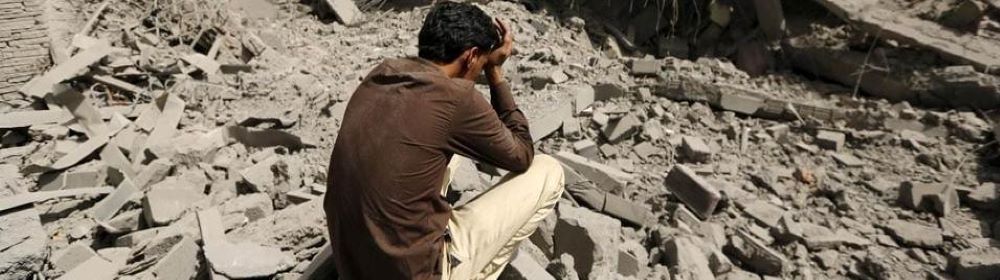
Photo Credit: 467 Survivors Amid Rubble – Felton Davis
Lara Kajs is the founder and executive director of The Genocide Report (TGR). She has conducted extensive fieldwork in conflict and displacement settings, including Yemen, Syria, and Afghanistan. Her work focuses on humanitarian crises, international law, and atrocity prevention.