Dispatches from the Field—The Genocide Report
Washington, DC—10 December 2025
In December 1948, the international community adopted two landmark documents that form the foundation of modern international human rights and atrocity-prevention law: the Universal Declaration of Human Rights (UDHR) and the Convention on the Prevention and Punishment of the Crime of Genocide. Emerging from the devastation of World War II and the Holocaust, these instruments articulated a global commitment to human dignity and to preventing the gravest crimes against humanity.
Although adopted on consecutive days—9 December for the Genocide Convention and 10 December for the UDHR—these documents represent a shared mission. Together they embody the promise of “Never Again”: the principle that the international community must prevent the systematic destruction of human groups and safeguard the fundamental rights of all people.
The Genocide Convention: Criminalizing Humanity’s Gravest Crime
Adopted on 9 December 1948, the Convention on the Prevention and Punishment of the Crime of Genocide established genocide as a crime under international law. The treaty defines genocide as acts committed with the intent to destroy, in whole or in part, a national, ethnical, racial, or religious group.
The Convention obligates states not only to punish genocide after it occurs but also to prevent it. This dual responsibility created a legal framework that recognizes genocide as a matter of international concern rather than solely domestic jurisdiction.
By codifying genocide as an international crime, the Convention laid the groundwork for later accountability mechanisms, including international criminal tribunals and the International Criminal Court.
The Universal Declaration of Human Rights
Adopted the following day, on 10 December 1948, the Universal Declaration of Human Rights articulated a comprehensive vision of human dignity and equality. The document sets forth fundamental rights that apply universally, including the rights to life, liberty, education, political participation, and freedom of expression.
Although not legally binding in itself, the UDHR has become one of the most influential documents in modern international law. It has inspired more than seventy international human rights treaties and continues to shape national constitutions, legal frameworks, and international norms.
Human Rights Day, observed annually on 10 December, commemorates the adoption of the Declaration and serves as a reminder of the ongoing effort to safeguard these rights globally.
Human Rights Protection as Genocide Prevention
The relationship between the UDHR and the Genocide Convention extends beyond historical coincidence. Systematic violations of human rights often function as early warning indicators of potential mass atrocities.
Patterns such as discrimination, exclusion, suppression of civil liberties, and dehumanizing rhetoric frequently precede genocidal violence. Protecting human rights, therefore, serves not only a moral purpose but also a preventative one. Strengthening civil and political rights, ensuring equality before the law, and safeguarding minority protections reduce the structural conditions that enable atrocity crimes.
Contemporary Challenges
More than seventy years after their adoption, the principles embodied in the UDHR and the Genocide Convention remain under strain. Armed conflicts, authoritarian governance, and geopolitical rivalries continue to challenge the enforcement of international norms.
Across multiple regions, minority communities face systematic discrimination, cultural erasure, displacement, and violence. While not all such situations meet the legal threshold of genocide, many display warning indicators associated with ethnic cleansing, crimes against humanity, or large-scale persecution.
Modern warfare has also intensified threats to civilian populations. Urban bombardment, siege warfare, attacks on healthcare infrastructure, arbitrary detention, and the targeting of journalists and human rights defenders represent serious violations of the UDHR’s core principles.
The scale of global displacement further reflects these challenges. More than 120 million people worldwide have been forced to flee their homes due to conflict, persecution, and environmental crises, highlighting the persistent gap between international commitments and real-world protections.
The Gap Between Commitment and Action
Despite the existence of international legal frameworks and early-warning systems, mass atrocities often unfold with delayed or insufficient responses from the international community.
Geopolitical rivalries, veto power within international institutions, and inconsistent enforcement of international law frequently hinder collective action. As a result, critics argue that the promise of “Never Again” has too often been undermined by political calculations and institutional paralysis.
Addressing this gap remains one of the central challenges of contemporary atrocity prevention.
Human Rights Day: A Continuing Call to Action
Human Rights Day is not merely a commemoration of past achievements. It is also a reminder that the principles established in 1948 require constant vigilance and renewal.
Preventing atrocities demands sustained international monitoring, protection of vulnerable communities, and rapid diplomatic and humanitarian responses when warning signs emerge. Journalists, civil society organizations, human rights defenders, and legal institutions play essential roles in documenting abuses and advocating for accountability.
The UDHR and the Genocide Convention were born from humanity’s determination to ensure that the horrors of the twentieth century would never be repeated. Upholding their principles remains a collective responsibility shared by governments, institutions, and individuals alike.
More than seven decades later, their message remains unchanged: human rights are universal, indivisible, and fundamental to the prevention of humanity’s gravest crimes.
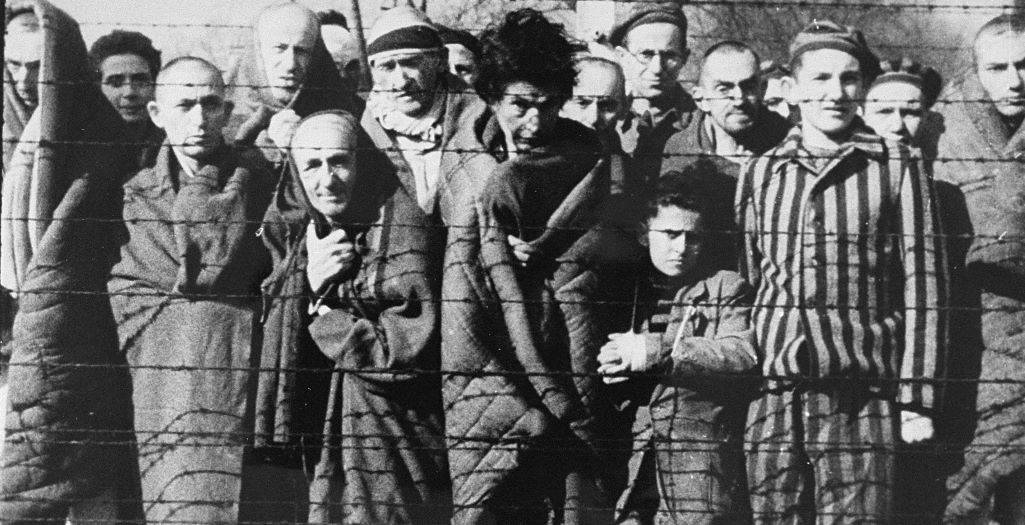
In this sense, human rights protections function as the first line of defense against genocide.Photo Credit: “1389.4 Holocaust B” by United States Holocaust Memorial Museum. Licensed under CC BY NC ND 2.0 – Liberated inmates of Auschwitz, 27 January 1945.
Atrocity Prevention Lens
The Universal Declaration of Human Rights and the Genocide Convention form the conceptual foundation of modern atrocity-prevention frameworks. Persistent violations of fundamental rights—such as discrimination against minority groups, suppression of political participation, and systematic dehumanization—often serve as early indicators of potential mass atrocities. Effective prevention, therefore, requires early monitoring, protection of vulnerable populations, and rapid international engagement before patterns of abuse escalate into crimes against humanity or genocide.
Legal Framework
Genocide Convention
The Convention on the Prevention and Punishment of the Crime of Genocide obligates states to prevent and punish acts committed with the intent to destroy protected groups. The treaty establishes genocide as an international crime and requires states to prosecute perpetrators or cooperate with international tribunals.
Universal Declaration of Human Rights
The UDHR articulates a universal standard of human rights and dignity. While not legally binding, it forms the normative foundation for numerous binding international treaties and national legal systems.
International Humanitarian and Criminal Law
Together with the Geneva Conventions and subsequent human rights treaties, these frameworks create a comprehensive legal architecture designed to protect civilians, prevent mass atrocities, and ensure accountability for the gravest violations of international law.
About TGR
The Genocide Report (TGR) publishes analysis and educational resources on conflict, international law, and atrocity prevention. Its work seeks to bridge academic research, field realities, and public understanding of mass violence and civilian protection.