Dispatched from the Field — The Genocide Report
Washington, DC — 15 August 2023
As the United States reckons with the consequences of its withdrawal from Afghanistan, the Afghan Adjustment Act represents a critical effort to address the legal and moral obligations owed to Afghan partners left behind. While the legislation offers a pathway to permanent residency for many, it also highlights the broader challenges of evacuation, accountability, and long-term U.S. credibility in conflict zones.
The Afghan Adjustment Act, introduced in the U.S. Senate on 7 August 2023, seeks to expand eligibility for Special Immigrant Visas (SIVs) for certain Afghan nationals and their families while addressing longstanding procedural barriers. Over the course of the United States’ two-decade presence in Afghanistan, more than 300,000 Afghan civilians supported U.S. military and diplomatic operations. In recognition of the risks incurred through that service, Congress established the SIV program to provide a pathway to lawful permanent residence.
Yet thousands of these allies remain trapped. Many have been threatened, kidnapped, or killed because of their association with the United States. Under current law, only a fraction qualify for refugee status or SIV protection. The Afghan Adjustment Act aims to correct this gap.
Bipartisan and Interagency Support
The Afghan Adjustment Act is a bipartisan measure originating in the Senate Judiciary Committee. It is sponsored by Senator Amy Klobuchar (D–MN) and co-sponsored by Senators Lindsey Graham (R–SC), Chris Coons (D–DE), Roy Blunt (R–MO), Richard Blumenthal (D–CT), Lisa Murkowski (R–AK), Jeanne Shaheen (D–NH), Jerry Moran (R–KS), Roger Wicker (R–MS), and Patrick Leahy (D–VT).
The legislation modifies procedures for granting lawful permanent resident status to Afghan nationals who supported the U.S. mission. It establishes updated vetting requirements and preserves eligibility for certain vulnerable individuals, including battered spouses whose status may otherwise be jeopardized by the termination of a qualifying marriage.
The Act also requires the Department of State to respond to congressional inquiries regarding individual immigration cases and to establish mechanisms—potentially including an in-country or regional processing structure—to facilitate SIV adjudication. In the absence of a functioning U.S. embassy in Afghanistan, the President is directed to create a task force to develop and implement a strategy to assist eligible Afghan nationals.
Whether such mechanisms will effectively enable safe evacuation remains uncertain.
Legal pathways without safe extraction mechanisms leave thousands of Afghan allies in the same danger the legislation seeks to resolve.”
Left Behind
Since 2001, U.S. and coalition forces have relied heavily on Afghan partners serving as interpreters, translators, security personnel, and civil support staff. In return, the United States pledged protection. However, bureaucratic delays and administrative bottlenecks severely constrained visa processing, leaving tens of thousands in limbo.
As U.S. troop withdrawal began in earnest, Taliban reprisals intensified. Afghan partners were systematically targeted—many were killed. The situation deteriorated further following the February 2020 Doha Agreement, negotiated between the United States and the Taliban without participation from the Afghan government, which set the conditions for full withdrawal.
When the Taliban launched its final offensive in 2021, U.S. intelligence assessments projected a months-long collapse. Kabul fell in less than ten days.
The subsequent evacuation succeeded in relocating approximately 120,000 individuals. However, it left behind thousands of U.S. citizens, lawful permanent residents, and tens of thousands of vetted Afghan allies. Hundreds of thousands more who had applied for SIV status remain at risk. Human rights advocates, journalists, educators, legal professionals, and former government officials are among those most vulnerable.
The speed and scale of the collapse—and the failure to evacuate those most at risk—continue to raise serious questions about planning, coordination, and accountability.
Two Years Later
Two years after the U.S. and NATO withdrawal, conditions in Afghanistan have deteriorated sharply. An estimated 24 million people require humanitarian assistance. The rights of women and girls have been systematically dismantled. More than 8 million people have been displaced, including approximately 3.2 million internally.
The economy is near collapse, and the Taliban has returned to illicit revenue streams. Afghanistan is once again emerging as a permissive environment for extremist groups.
At the current pace, processing and relocating eligible Afghan allies could take decades.
The Afghan Adjustment Act would expand SIV eligibility, establish a coordinated interagency response, and provide a pathway to permanent residency for more than 70,000 Afghan evacuees currently residing in the United States under humanitarian parole. However, legal status alone does not resolve the central challenge: extraction. For many, leaving Afghanistan remains extraordinarily dangerous. Taliban checkpoints, surveillance, and reprisals force eligible individuals into hiding, making movement nearly impossible.
The Need for Action
The Afghan Adjustment Act represents a necessary—though incomplete—step toward fulfilling U.S. obligations to its Afghan partners. It addresses legal status and administrative barriers, but must be paired with a credible and operational evacuation strategy.
Failure to act not only endangers lives but also undermines the credibility of future U.S. partnerships in conflict zones. The passage of this legislation is both a moral imperative and a strategic necessity.
Atrocity Prevention Lens
The Afghan Adjustment Act addresses a clear and ongoing atrocity risk: Afghan nationals who supported U.S. operations remain identifiable targets for Taliban reprisals, including persecution, enforced disappearance, and killing. Their exposure is not hypothetical—it is documented, targeted, and sustained. Expanding SIV eligibility is a necessary step toward harm mitigation, but without viable extraction pathways, these individuals remain trapped in conditions where systematic retaliation can continue. Effective atrocity prevention in this context requires both legal protection and physical relocation.
Legal Framework
U.S. Domestic Law
The Afghan Adjustment Act builds on the Special Immigrant Visa (SIV) program established under the Afghan Allies Protection Act of 2009. It expands eligibility and creates a pathway to lawful permanent residency for Afghan nationals who supported the United States, while addressing procedural and adjudication barriers.
International Refugee Law
The 1951 Convention Relating to the Status of Refugees and its 1967 Protocol establish the principle of non-refoulement, prohibiting the return of individuals to a country where they face threats to life or freedom on protected grounds.
International Human Rights Law
Afghan allies at risk of Taliban retaliation fall under protections against persecution, arbitrary detention, and extrajudicial killing, as outlined in core human rights instruments.
International Criminal Law
Widespread or systematic attacks against Afghan nationals associated with the U.S.—including persecution or killing—may constitute crimes against humanity under the Rome Statute of the International Criminal Court.
Suggested Citation
“Afghan Adjustment Act and U.S. Obligations to Afghan Allies.” Dispatches from the Field. The Genocide Report,
Washington, DC, 15 August 2023.
Photo Credit
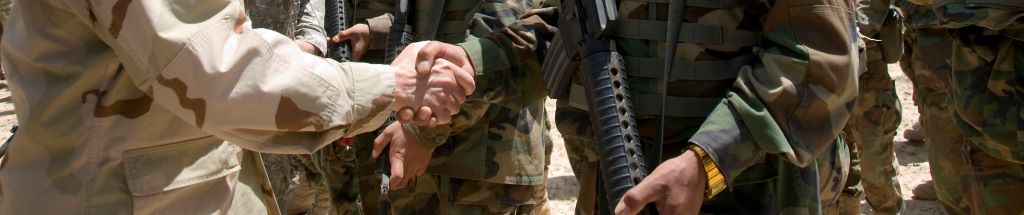
Supreme Allied Commander Europe meets with the Afghan National Army by NATO Training Mission – Afghanistan. Licensed under CC by SA 2.0
About TGR
The Genocide Report (TGR) publishes analysis and educational resources on conflict, international law, and atrocity prevention. Its work seeks to bridge academic research, field realities, and public understanding of mass violence and civilian protection.