Washington, DC — 11 November 2025
El-Fasher, the capital of North Darfur in western Sudan, endured an 18-month siege that turned the city into one of the most acute flashpoints in the ongoing conflict between the Sudanese Armed Forces (SAF) and the Rapid Support Forces (RSF). RSF forces encircled the city with earthen fortifications, cutting off supply routes, blocking humanitarian access, and isolating the population from the outside world.
Siege and Strategic Collapse
The situation deteriorated further when SAF-aligned forces withdrew, effectively ceding control of the city to the RSF. With the fall of El-Fasher, the RSF now controls all five states of Darfur. This shift raises the specter of territorial fragmentation, with the RSF dominating western Sudan while SAF-aligned forces consolidate control in the east. Such a division would significantly complicate prospects for national unity and civilian protection.
El-Fasher had long served as a refuge for internally displaced persons (IDPs) from earlier waves of violence. The broader conflict has now displaced more than 13 million people. The city’s collapse, therefore, represents not only a military turning point but a humanitarian catastrophe with far-reaching implications.
Mass Displacement and Civilian Impact
In August 2025, UNICEF estimated that approximately 600,000 people—half of them children—had been displaced from El-Fasher and surrounding areas. At the time of the city’s fall, roughly 260,000 civilians remained, including an estimated 130,000 children.
Accounts from survivors underscore the severity of the crisis. Fewer than 6,000 people reportedly reached the nearest refugee camp, according to the Norwegian Refugee Council. Those who survived the 40-mile journey described torture, beatings, and witnessing executions along the way. The fate of those who remained in the city is largely unknown.
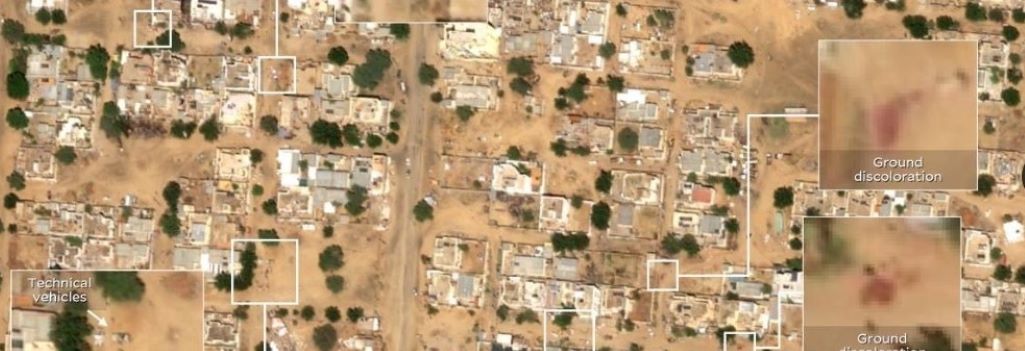
Satellite analysis conducted by the Humanitarian Research Lab at Yale School of Public Health identified patterns consistent with mass casualties, including clusters resembling human remains and ground discoloration indicative of large-scale loss of life.
Ethnic Violence and Atrocity Patterns
The violence in El-Fasher reflects deeply rooted patterns of ethnic targeting. The RSF, composed largely of Arab militias, has been accused of systematically targeting non-Arab communities through forced displacement, summary executions, and widespread terror tactics.
Reports and visual evidence indicate that civilians attempting to flee have been attacked, including accounts of aerial bombardment in desert escape routes. Men and boys are reportedly separated from women and girls and executed. Women and girls have been subjected to abduction and sexual violence, while children have been forcibly recruited into armed groups.
According to UNICEF, more than 1,100 grave violations against children have been verified since April 2024. These include killings, maiming, rape, abduction, and forced recruitment. The scale and nature of these violations point to patterns consistent with previous atrocities in Darfur.
Humanitarian Collapse and International Concern
Humanitarian conditions in El-Fasher have deteriorated to catastrophic levels. Severe acute malnutrition among children has surged as the siege has prevented the delivery of food and medical supplies. Civilians have resorted to consuming animal feed and food waste to survive, while disease outbreaks, including cholera, have further compounded the crisis.
Healthcare infrastructure has been systematically degraded. The Saudi Maternal Teaching Hospital, the last functioning medical facility in the city, was reportedly attacked, with the World Health Organization indicating that hundreds of civilians were killed.
Human rights organizations, including the Darfur Network for Human Rights, have documented widespread abuses, including summary executions, abductions, forced recruitment, and the use of civilians as human shields. Reports also indicate indiscriminate shelling of residential areas, hospitals, schools, and displacement camps.
Aid organizations such as Save the Children and Doctors Without Borders have described conditions among displaced populations as dire, with some reporting that all children under five in certain areas are suffering from malnutrition. Survivors, particularly children, are experiencing profound psychological trauma after witnessing violence, losing family members, or becoming separated from loved ones.
Regional bodies, including the African Commission on Human and Peoples’ Rights, have characterized the siege conditions as collective punishment and warned that the patterns of abuse may constitute war crimes and crimes against humanity.
El-Fasher is not simply another battleground; it represents one of the most urgent humanitarian crises in the world today. The convergence of siege warfare, famine, displacement, disease, and ethnically targeted violence raises serious concerns under international humanitarian and criminal law. Without immediate attention and intervention, the human toll is likely to deepen, with long-term consequences for both Sudan and the broader region.
Photo credit: Daraja Oula, El-Fasher, 27 October 2025. Clusters of objects and ground discoloration. 13.6329010, 25.3271401 By Yale School of Public Health: Humanitarian Research Lab
Imagery collected over the Daraja Oula neighborhood in El-Fasher on 27 October 2025, shows the presence of clusters of objects, ground discoloration, and light technical vehicles. The objects within these clusters measure between 1.5 meters and 2 meters in length. A group of light technical vehicles appears to be blocking the road near where there appears to be red discoloration on the ground. One cluster of objects is flanked by 3 light technical vehicles.
Lara Kajs is the founder and executive director of The Genocide Report (TGR). She has conducted extensive fieldwork in conflict and displacement settings, including Yemen, Syria, and Afghanistan. Her work focuses on humanitarian crises, international law, and atrocity prevention.