Lara Kajs
Dispatches from the Field — The Genocide Report
Washington, DC —19 November 2025
Mohammed bin Salman’s White House visit underscores the tension between strategic partnerships and human rights accountability. While the United States emphasizes diplomacy, investment, and security cooperation, the visit also raises pressing questions about the normalization of leaders implicated in extrajudicial killings, repression of dissent, and systemic human rights abuses.
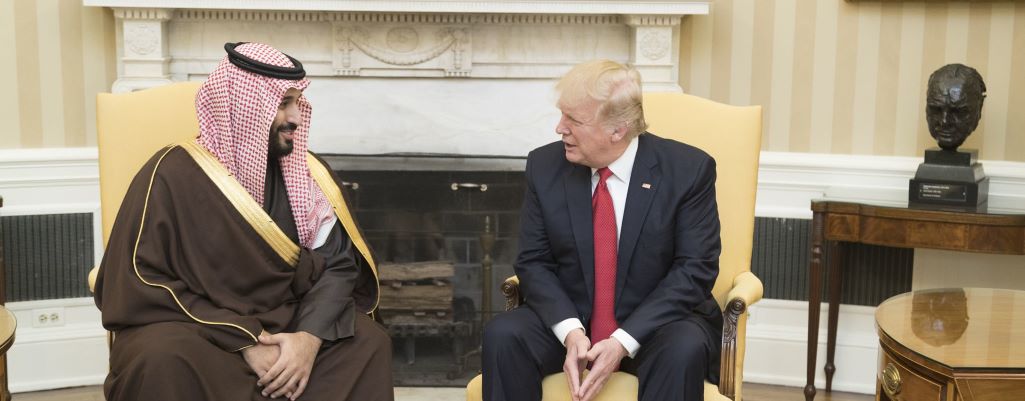
The Saudi Crown Prince, Mohammed bin Salman (MBS), is in Washington, DC, for a White House visit that has sparked intense debate—not only about geopolitics and investment, but about fundamental human rights. While the Trump administration has marked the visit with red-carpet diplomacy, an Oval Office press conference, and a formal dinner, it represents more than a strategic reset. It reflects a troubling pattern of prioritizing business and security interests over accountability and justice.
Jamal Khashoggi
The 2 October 2018 killing of Washington Post journalist Jamal Khashoggi continues to shape international perceptions of Mohammed bin Salman’s leadership. U.S. intelligence assessments, including those from the Office of the Director of National Intelligence (ODNI), concluded that MBS approved the operation that led to Khashoggi’s murder inside the Saudi consulate in Istanbul.
This conclusion was supported by multiple sources, including recordings obtained by Turkish intelligence. Agnes Callamard, the United Nations Special Rapporteur on extrajudicial killings, reviewed the evidence and submitted her findings to the Human Rights Council, which determined that Khashoggi’s death constituted a “state killing.”
For many, MBS’s return to the White House signals a normalization of his international standing despite the gravity of that case. During the Oval Office press briefing, questions regarding Khashoggi’s killing were met with deflection, reflecting a broader reluctance to confront the issue directly in diplomatic settings.
Donald Trump dismissed concerns, stating: “You’re mentioning somebody that was extremely controversial… Whether you liked him or didn’t like him, things happen.” He went on to absolve MBS despite U.S. intelligence assessments indicating high-level approval of the operation. The implication is stark: the “leader of the free world” publicly downplayed a killing widely assessed to have been authorized at the highest levels of government.
Accountability remains essential. Calls for justice should not be constrained by political status, including when those implicated hold positions of power.
Surge in Executions
Under MBS’s leadership, Saudi Arabia has carried out an alarming number of executions, with 2024 and 2025 marking the highest figures in the country’s modern history. In 2024 alone, 345 individuals were executed, surpassing the previous high of 196 in 2022. In the first half of 2025, at least 180 executions have already been recorded.
This sharp increase contradicts MBS’s 2018 public statements that the Kingdom would significantly reduce its use of the death penalty.
A significant proportion of those executed are foreign nationals, many of whom face barriers to legal representation and language access. Numerous cases involve nonviolent offenses, raising serious concerns under international legal standards, which restrict capital punishment to the “most serious crimes.” Many convictions follow proceedings that fall short of fair trial standards, including reliance on confessions allegedly obtained under torture.
The pattern suggests the use of capital punishment not only as a judicial measure, but as a mechanism of control.
Silencing Dissent
Freedom of expression remains severely restricted. Journalists, writers, and social media users continue to face arrest and long prison sentences for peaceful expression. In many cases, individuals are detained for online posts advocating modest reforms or highlighting social grievances.
The case of Raif Badawi remains emblematic. Arrested in 2012, he was sentenced to 10 years in prison, 1,000 lashes, and a substantial fine for operating an online forum and expressing liberal views deemed offensive to religious authorities. On 9 January 2015, Badawi received 50 lashes in public, drawing international condemnation. He was released on 11 March 2022 after completing his sentence, but remains subject to a 10-year travel ban and a 10-year prohibition on media engagement, preventing him from reuniting with his family, who were granted asylum in Canada.
Centering human rights in diplomatic engagements is not a liability—it is essential for credible and sustainable international partnerships.”
Calling for Change
The visit presents an opportunity for the United States to more explicitly integrate human rights into its bilateral engagement with Saudi Arabia.
This includes calling for the release of individuals detained for peaceful expression, ending arbitrary travel bans, and ensuring that affected individuals—including dual nationals and U.S. citizens—can leave or return freely. Structural reforms to the Saudi justice system are necessary to guarantee fair trials, access to legal counsel, and protection from torture. A genuine moratorium on executions, particularly for nonviolent offenses, remains critical.
Given Saudi Arabia’s regional influence, the visit also carries broader implications. Mohammed bin Salman is in a position to press for shifts in U.S. policy, including increased humanitarian access in conflict zones such as Gaza.
More broadly, the United States risks reinforcing a message that human rights abuses may be overlooked when strategic interests are at stake. Such signaling undermines international norms and weakens global credibility. Arms agreements, investment partnerships, and security cooperation may serve immediate policy goals, but without parallel commitments to reform, they risk entrenching repression.
The visit underscores a persistent tension in U.S. foreign policy: the balance between strategic interests and the promotion of human rights. How that balance is managed will shape not only bilateral relations, but the broader credibility of the United States in advancing international legal and moral standards. Centering human rights in engagements with Mohammed bin Salman is not a diplomatic liability—it is a necessary condition for a credible and sustainable partnership.
Atrocity Prevention Lens
The return of Mohammed bin Salman to high-profile international diplomacy highlights the challenges of balancing strategic interests with accountability for human rights abuses. Patterns of extrajudicial killings, arbitrary detention, and suppression of free expression demonstrate ongoing risks to civilian populations. Analysts in atrocity prevention view the normalization of leaders implicated in serious violations as a warning indicator that political priorities may undermine enforcement of international norms. Monitoring compliance with legal protections, press freedoms, and judicial fairness is essential to mitigating further harm.
Legal Framework
Right to Life and Protection from Extrajudicial Killings
International human rights law, including the International Covenant on Civil and Political Rights (ICCPR), protects the right to life and prohibits arbitrary deprivation of life. Executions must be limited to the “most serious crimes” and follow fair trial procedures.
Freedom of Expression
Restrictions on speech, journalism, and online activity must comply with international law standards. Arbitrary arrests or harsh penalties for peaceful expression violate the ICCPR and related human rights instruments.
Due Process and Fair Trial
Legal frameworks require transparent judicial procedures, access to legal counsel, and protection against torture or coerced confessions. Denial of these safeguards constitutes a breach of international obligations.
State Accountability
Governments engaging in bilateral relations have a responsibility to ensure that strategic partnerships do not normalize or facilitate human rights violations. Failure to do so undermines international law, global norms, and civilian protection.
Suggested Citation
Kajs, Lara. “Mohamed bin Salman’s White House Visit: Strategic Interests and Human Rights Tradeoffs.” Dispatches from the Field. The Genocide Report, Washington, DC, 19 November 2025.
Photo credit
Foreign Leader Visits by the White House are marked with Public Domain Mark 1.0 for public use.
About TGR
The Genocide Report (TGR) publishes analysis and educational resources on conflict, international law, and atrocity prevention. Its work seeks to bridge academic research, field realities, and public understanding of mass violence and civilian protection.