Dispatches from the Field — The Genocide Report
Washington, DC, — 22 November 2022
Attacks on internally displaced persons (IDP) camps in northwest Syria highlight the continued vulnerability of civilian populations and the erosion of protections under international humanitarian law.
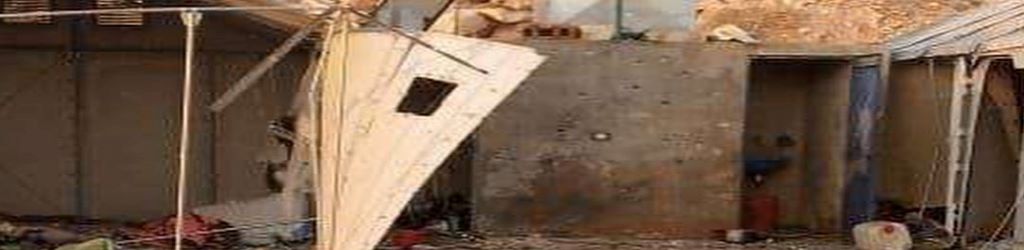
On 6 November 2022, a series of ground assaults and airstrikes struck multiple camps housing internally displaced persons in Syria’s Idlib governorate. The attacks reportedly involved the use of cluster munitions and impacted densely populated civilian areas, raising significant legal and humanitarian concerns. While attribution remains contested, reporting indicates possible involvement by the Syrian government and/or Russian forces.
According to the Syrian Civil Defense (White Helmets), at least nine civilians were killed, and dozens were injured. Among the dead was a four-month-old child. The camps affected—Maram, Wadi Khaled, Mahtat Mayah Kafr Ruhin, Watan, Murin Village, and B’ieba—are part of a broader network of displacement sites sheltering populations already uprooted by years of conflict.
Civilian Harm and Displacement Dynamics
The targeting of IDP camps underscores the acute vulnerability of displaced populations. Individuals residing in these sites have already experienced forced displacement and often lack access to adequate shelter, healthcare, and basic services. Attacks on such locations not only result in immediate casualties but also trigger secondary displacement, compounding humanitarian need.
In the aftermath of the strikes in Kafr Jalis, hundreds of families were reportedly displaced once again. This pattern of repeated displacement reflects a broader dynamic within the Syrian conflict, where civilians are frequently forced to move multiple times in search of relative safety.
Beyond direct violence, the cumulative effects of conflict further degrade living conditions. Damage to infrastructure limits access to clean water, sanitation, and medical care. These challenges are exacerbated by ongoing public health risks, including cholera outbreaks and the lingering effects of the COVID-19 pandemic.
Operational Context in Idlib
Idlib remains a highly volatile environment characterized by overlapping conflicts and competing armed actors. The region is controlled in part by opposition groups, including the Turkish-backed Syrian National Army (SNA) and Hay’at Tahrir al-Sham (HTS), which also engage in hostilities with one another.
A ceasefire agreement brokered in 2020 between Russia and Türkiye was intended to stabilize the region. However, repeated violations have undermined its effectiveness. Escalations in mid- to late-2022—including increased clashes among non-state armed groups and renewed airstrikes—have contributed to a deteriorating security environment.
The timing of the 6 November attacks, occurring shortly after reported hostilities involving Syrian government forces and opposition groups, suggests a potential linkage between battlefield developments and retaliatory or escalatory actions affecting civilian areas.
Civilian Infrastructure and Humanitarian Response
The Maram IDP camp, one of the sites impacted, reflects the broader humanitarian infrastructure supporting displaced populations in northwest Syria. Established with international support, including coordination with UN agencies, such camps provide essential services to civilians who have fled violence.
Organizations operating in these environments face significant operational constraints, including insecurity, resource limitations, and access challenges. Despite these constraints, they remain a critical lifeline for displaced populations. Attacks on camps not only harm residents but also disrupt humanitarian operations and undermine already fragile support systems.
When displacement sites become targets, the distinction between battlefield and civilian space collapses, undermining the core protections of international humanitarian law.”
Accountability and Protection Considerations
Attacks impacting civilian concentrations, particularly displacement camps, raise serious concerns under international humanitarian law. The principles of distinction, proportionality, and precaution require parties to a conflict to avoid targeting civilians and to minimize incidental harm.
The reported use of cluster munitions is especially concerning, given their indiscriminate nature and long-term risks to civilian populations. Their deployment in or near civilian areas may constitute a violation of international legal norms and, depending on the circumstances, could amount to a war crime.
From a policy perspective, the persistence of such incidents highlights gaps in enforcement and accountability mechanisms. Limited consequences for violations risk reinforcing patterns of conduct that endanger civilian populations.
Atrocity Prevention Lens
The attack on IDP camps in Idlib reflects several established risk factors for mass atrocity crimes, including the deliberate or indiscriminate targeting of civilians, the use of prohibited or inherently indiscriminate weapons, and the repeated displacement of vulnerable populations. Displacement sites are often early indicators of heightened atrocity risk, as their targeting signals a breakdown in civilian protection norms. Preventive approaches should prioritize enhanced monitoring, documentation of violations, and sustained diplomatic engagement aimed at reinforcing compliance with international humanitarian law and deterring further escalation.
Legal Framework
International Humanitarian Law (IHL)
Parties to an armed conflict are obligated to distinguish between civilians and combatants and between civilian objects and military objectives. IDP camps are civilian objects and are protected from attack unless they are being used for military purposes.
Principle of Distinction and Proportionality
Indiscriminate attacks, including those that fail to distinguish between military targets and civilians, are prohibited. Attacks expected to cause excessive civilian harm relative to anticipated military advantage violate the principle of proportionality.
Cluster Munitions
Cluster munitions are widely recognized as inherently indiscriminate due to their wide-area effect and unexploded remnants. Their use in civilian-populated areas may constitute a violation of international law and contribute to long-term civilian harm.
War Crimes
Serious violations of international humanitarian law, including intentionally directing attacks against civilians or civilian objects, may constitute war crimes and are subject to international accountability mechanisms.
Suggested Citation
“IDP Camp Attack in Syria.” Dispatches from the Field. The Genocide Report, Washington, DC, 22 November 2022.
Photo Credit
Maram IDP camp shelling on 6 November 2022 – courtesy of Dr. Kerem Kinik
About TGR
The Genocide Report (TGR) publishes analysis and educational resources on conflict, international law, and atrocity prevention. Its work seeks to bridge academic research, field realities, and public understanding of mass violence and civilian protection.