Dispatches from the Field — The Genocide Report
Washington, DC — 10 September 2019
Yemen’s conflict has produced one of the world’s most severe humanitarian crises, driven by sustained violence, institutional collapse, and restrictions on civilian access to essential resources.
Since 2015, Yemen has been engulfed in a complex conflict involving Houthi forces, the internationally recognized government, and a Saudi-led coalition. The war has contributed to the collapse of state institutions, widespread infrastructure destruction, and a rapidly deteriorating humanitarian situation.
Human Rights Violations and Civilian Impact
Civilians across Yemen have been exposed to a range of human rights violations. Reports from international organizations document patterns of forced displacement, arbitrary detention, and restrictions on humanitarian access.
Women and children have been particularly vulnerable, with documented cases of recruitment of child soldiers, gender-based violence, and trafficking. Journalists, political figures, and civil society actors have also faced intimidation, detention, and enforced disappearance.
Multiple parties to the conflict have been implicated in abuses, underscoring the complexity of accountability in the Yemeni context.
In Yemen, civilian suffering is not incidental—it is the cumulative result of prolonged conflict, institutional breakdown, and constraints on humanitarian access.”
Coalition Air Campaign and Conduct of Hostilities
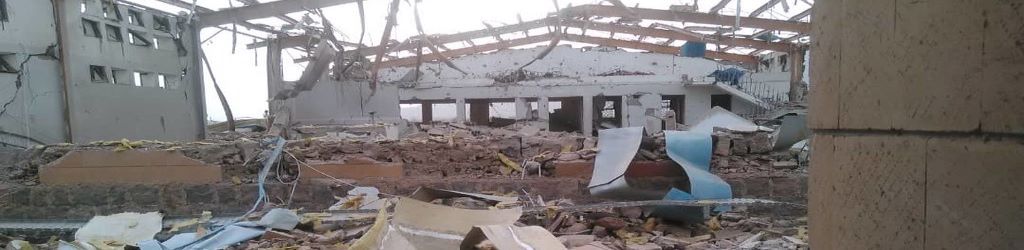
The Saudi-led coalition’s aerial campaign has been a major driver of civilian casualties. Airstrikes have affected densely populated areas and critical infrastructure, including hospitals and schools.
Investigations and UN reporting have raised concerns regarding the proportionality and targeting of certain strikes. The use of explosive weapons in populated areas has significantly increased the risk to civilians.
In some instances, coalition forces have been accused of employing munitions that are widely criticized for their impact in civilian environments. These actions have prompted international scrutiny and calls for restraint.
At the same time, Houthi forces have been accused of indiscriminate attacks, obstruction of aid, and the militarization of civilian areas, further contributing to civilian harm.
International Response and Arms Transfers
The conduct of the conflict has generated international debate over arms transfers and external support. Several governments and institutions have called for restrictions on the sale of weapons to parties involved in the conflict.
European actors, including the Netherlands and the European Parliament, have advocated for arms embargo measures aimed at reducing civilian harm. These efforts reflect broader concerns about the role of external support in sustaining the conflict.
The United States has also faced scrutiny for its support of the coalition, including the provision of military equipment and intelligence.
Humanitarian Conditions
The humanitarian situation in Yemen remains severe. Millions of civilians have been displaced, and at least 7 million – a significant portion of the population – face food insecurity and limited access to clean water.
Humanitarian organizations have reported challenges in delivering aid, including access restrictions and ongoing hostilities. Urban centers such as Taiz and Aden have experienced repeated disruptions, affecting large civilian populations.
Public health conditions have deteriorated alongside the conflict, with disease outbreaks and limited access to medical care compounding the crisis.
Atrocity Prevention Lens
Yemen presents several indicators associated with elevated atrocity risk, including widespread civilian harm, obstruction of humanitarian assistance, and the degradation of essential infrastructure.
Addressing these risks requires more than humanitarian response. It necessitates sustained diplomatic engagement, improved compliance with international humanitarian law, and mechanisms to ensure accountability for violations.a
Legal Framework
International Humanitarian Law (IHL)
Requires distinction, proportionality, and precaution in the conduct of hostilities and protects civilians and civilian infrastructure.
Geneva Conventions
Establish protections for civilians and restrict attacks on medical facilities and humanitarian personnel.
Arms Trade Treaty (ATT)
Obligates states to assess the risk that exported weapons may be used to commit serious violations of international law.
Suggested Citation
“Yemen’s Humanitarian Crisis.” Dispatches from the Field. The Genocide Report, Washington, DC, 10 September 2019.
Photo Credit
615 Cholera Treatment Center Bombed by Saudi-led Coalition – Felton Davis – Licensed by CC. 2.0 license.
About TGR
The Genocide Report (TGR) publishes analysis and educational resources on conflict, international law, and atrocity prevention. Its work seeks to bridge academic research, field realities, and public understanding of mass violence and civilian protection.