Dispatches from the Field — The Genocide Report
Washington, DC — 28 March 2023
(Part 2 in a Series on Crises to Watch in 2023)
Since the Taliban’s takeover in August 2021, Afghanistan has entered a deepening humanitarian and human rights crisis marked by economic collapse, widespread poverty, and the systematic erosion of fundamental freedoms—particularly for women and girls. With international engagement stalled and governance structures weakened, nearly two-thirds of the population now requires humanitarian assistance. The convergence of economic decline, climate stress, and institutional restrictions has created a multidimensional crisis, placing millions at risk and reversing decades of social and developmental progress.
Humanitarian Need
Afghanistan’s population of approximately 41.3 million faces staggering levels of need, with 28.3 million people requiring humanitarian assistance in 2023. Nearly half the population is women and girls, and almost half are under the age of fifteen, underscoring the long-term generational impact of the crisis.
While conflict historically drove humanitarian need, current conditions are shaped by a convergence of economic decline, climate-related shocks, and protection threats. The suspension of international development assistance—previously accounting for 75 percent of public spending—has contributed to widespread poverty, rising inflation, and the near-collapse of public health systems. Millions are now unable to access even the most basic services.
Economic Decline
Afghanistan is entering its second consecutive year of economic contraction. High unemployment, rising food prices, and increasing household debt have eroded coping mechanisms. Humanitarian assistance in 2022 prevented immediate catastrophe but has not stabilized conditions.
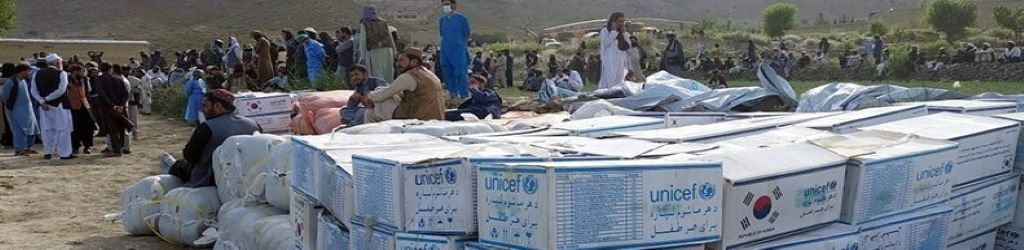
The country also faces severe environmental stress, including a third year of drought-like conditions. Seventeen million people are experiencing acute hunger, with six million at emergency levels—just one step from famine. Natural disasters, including a deadly earthquake in 2022, have further compounded vulnerability. The breakdown of financial systems and trade has intensified both economic hardship and humanitarian need.
Rights of Women and Girls
The situation for women and girls has deteriorated dramatically under Taliban rule. A series of decrees has effectively excluded them from public life, reversing two decades of progress. Women are barred from most employment, while girls are prohibited from attending secondary school, and women are prohibited from attending university.
Restrictions extend beyond education and employment. Women are banned from public spaces such as parks and gyms, face strict limitations on movement, and must adhere to rigid dress codes. The prohibition on women working with NGOs has had devastating humanitarian consequences, limiting access to essential services for millions of vulnerable individuals.
The crisis in Afghanistan is defined not only by economic collapse, but by the systematic erasure of women and girls from public life.”
Like Living in a Prison
Women and girls in Afghanistan are systematically denied fundamental rights, including access to education, healthcare, and freedom of movement. Many are unable to travel without a male guardian and are effectively confined to their homes.
Reports from across the country describe feelings of isolation, fear, and invisibility. The cumulative effect of these policies has created conditions in which women and girls experience daily life as one of confinement and control. The rapid reversal of rights has not only undermined individual dignity but has also destabilized broader social and economic systems.
UN Mission Renewed
In March 2023, the United Nations extended its mission in Afghanistan through 2024, maintaining its focus on promoting peace and stability. At the same time, the UN issued a $4.6 billion aid appeal—the largest single-country humanitarian request.
Despite these efforts, the lack of a unified international strategy and the Taliban’s resistance to cooperation continue to impede progress. The inability to effectively engage the de facto authorities remains a central obstacle to addressing Afghanistan’s economic collapse and humanitarian emergency.
Atrocity Prevention Lens
Afghanistan reflects a rapidly deteriorating protection environment, with acute risks centered on the systematic targeting of women and girls. The institutionalized exclusion from education, employment, and public life signals gender-based persecution and serves as a clear early warning indicator of potential mass atrocity conditions. These risks are compounded by economic collapse, widespread poverty, and weakened governance structures, which reduce resilience and increase population vulnerability. Preventive efforts must prioritize protection of at-risk groups, restoration of humanitarian access, and sustained international engagement to deter further normalization of repression.
Legal Framework
International Human Rights Law
Afghanistan remains bound by international human rights obligations, including protections for education, work, freedom of movement, and non-discrimination. The widespread denial of these rights—particularly for women and girls—constitutes a serious breach of international legal standards.
Gender-Based Persecution
Systematic restrictions imposed on women and girls may constitute gender-based persecution. When such acts are carried out as part of a widespread or systematic policy, they may rise to the level of crimes against humanity under international law.
Humanitarian Access
International law requires that humanitarian assistance be allowed to reach civilians in need. Restrictions on aid delivery, including bans on female humanitarian workers, significantly impede lifesaving operations and may violate obligations to protect civilian populations.
State Responsibility and Accountability
Despite the Taliban’s status as a de facto authority, obligations under international law remain applicable. The international community has a responsibility to pursue accountability mechanisms, apply diplomatic pressure, and support efforts aimed at protecting human rights and preventing further deterioration of conditions.
Suggested Citation
“Crisis in Afghanistan: Rights, Collapse, and Humanitarian Emergency.” Dispatches from the Field. The Genocide Report,
Washington, DC, 28 March 2023.
Photo Credit
Afghanistan earthquake response, June 2022, by Tasnim News Agency. Licensed under CC by 4.0.
Read Part 1: The Crisis in the Horn of Africa
About TGR
The Genocide Report (TGR) publishes analysis and educational resources on conflict, international law, and atrocity prevention. Its work seeks to bridge academic research, field realities, and public understanding of mass violence and civilian protection.