Dispatches from the Field — The Genocide Report
Washington, DC — 9 May 2023
Sudan’s current crisis is rooted in decades of authoritarian rule under Omar al-Bashir, whose government oversaw systemic repression, human rights violations, and genocide in Darfur. The 2019 overthrow of al-Bashir offered the promise of a democratic transition through a military-civilian government. That hope was short-lived: the 2021 coup staged by Gen. Abdel Fattah al-Burhan and Gen. Mohamed Hamdan Dagalo (Hemedti) reversed progress, plunging Sudan into violent internal conflict. Clashes between the Sudan Armed Forces (SAF) and the Rapid Support Forces (RSF) have escalated into non-international armed conflict, with widespread civilian harm, displacement, and a collapse in essential services.
From Transitional Hope to Military Conflict
The transitional government established after al-Bashir’s ouster raised expectations for democratic governance. However, tensions between the SAF and RSF intensified as power-sharing arrangements faltered. Disagreements over the integration of the RSF into the national army and leadership of the unified forces triggered violent confrontations. Since 15 April 2023, deadly clashes in Khartoum and other regions have killed over 500 civilians, injured more than 4,200, and led to arbitrary detentions. The risk of full-scale civil war remains high.
Historical Violations of International Humanitarian Law
Both the SAF and RSF have histories of gross human rights violations. During the Darfur campaign, government forces and allied militias, including the Janjaweed, committed genocide, crimes against humanity, and war crimes, including extrajudicial killings, torture, and sexual violence. Hemedti, as a leader within these forces, played a central role. Subsequent campaigns in Kordofan and Blue Nile by the SAF, as well as RSF operations after its formation in 2013, continued patterns of indiscriminate attacks, civilian targeting, and violent repression, including the 2019 Khartoum massacre of protesters. These precedents indicate high potential for recurring atrocities in the current conflict.
Rules of War in Sudan
Sudan’s conflict is classified as a non-international armed conflict (NIAC) under international humanitarian law (IHL), governed by the 1949 Geneva Conventions. IHL mandates the protection of civilians and non-combatants, including captured or surrendered combatants, and prohibits murder, torture, and degrading treatment. Current reports document attacks on health facilities, the hijacking of ambulances with patients aboard, looting of medical centers, and military occupation of hospitals—clear violations of IHL. Adherence to these norms is critical to reduce civilian suffering and mitigate the risk of atrocities.
Humanitarian Needs and the Impact on Civilians
Sudan faces a severe humanitarian crisis. Before the escalation, 15.8 million people required assistance, including 334,000 internally displaced persons and over 65,000 refugees crossing borders. Health and education services have collapsed: sixty percent of Khartoum’s health facilities are closed, hospitals face shortages of blood and medicines, and nearly 3 million children under five suffer from acute malnutrition. Attacks against humanitarian workers, including killings and suspension of aid operations, exacerbate civilian vulnerability. Immediate humanitarian pauses are essential to provide relief and uphold protection obligations.
Sudan has shifted from dictatorship to conflict, with civilians increasingly caught in the crossfire of competing military factions.”
Atrocity Prevention Lens
Sudan’s armed conflict presents clear indicators of elevated atrocity risk. Patterns of targeting civilians, historical precedents of genocide and mass crimes, and the collapse of state protections signal an urgent need for preventive action. Atrocity prevention strategies should include monitoring civilian protection, enforcing compliance with IHL, facilitating humanitarian access, and engaging international actors to mediate power disputes. Early intervention, documentation of violations, and the establishment of accountability mechanisms are essential to reduce the risk of widespread atrocities.
Legal Framework
Non-International Armed Conflict Classification
The clashes between SAF and RSF constitute an NIAC. Under IHL, all parties are legally obligated to distinguish between civilians and combatants, refrain from targeting civilian objects, and limit the effects of hostilities on the population.
Protection of Civilians
IHL provides safeguards for civilians, medical personnel, and humanitarian workers. Violations—including attacks on hospitals, the occupation of medical facilities, and arbitrary detention—may constitute war crimes under the Rome Statute.
Accountability and International Obligations
States and non-state actors are obligated to prevent mass atrocities and uphold international law. Parties that fail to respect IHL or target civilians can face prosecution under international criminal law, including through universal jurisdiction or referral to the International Criminal Court.
Suggested Citation
“From Dictatorship to Conflict: Sudan’s Escalating Crisis.” Dispatches from the Field. The Genocide Report, Washington, DC, 9 May 2023.
Photo Credit
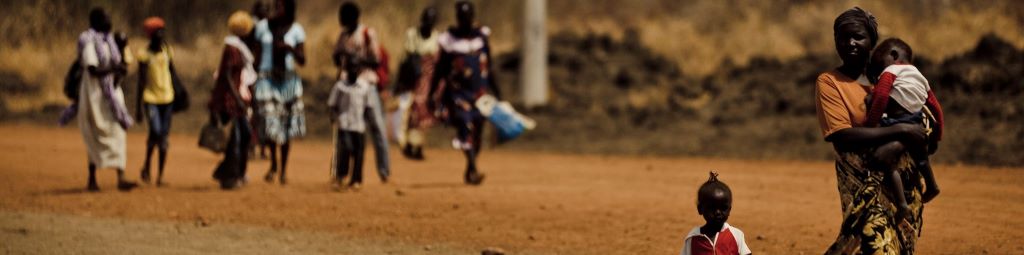
Women and children carry their belongings south. Tim Freccia/Enough Project. Licensed under CC by NC ND 2.0
About TGR
The Genocide Report (TGR) publishes analysis and educational resources on conflict, international law, and atrocity prevention. Its work seeks to bridge academic research, field realities, and public understanding of mass violence and civilian protection.