Lara Kajs
Dispatches from the Field — The Genocide Report
Washington, DC — 2 February 2015
By early 2015, global displacement reached unprecedented levels, with nearly sixty million people forced from their homes due to conflict, violence, and persecution. This surge reflects not only the scale of ongoing crises but also the international system’s limited capacity to respond effectively. From the Middle East to Africa and Southeast Asia, protracted conflicts and structural inequalities continue to drive displacement, placing immense strain on host countries and humanitarian frameworks.
Global Displacement Trends
According to the United Nations High Commissioner for Refugees (UNHCR), the number of individuals fleeing conflict and persecution has reached historic highs. Nearly sixty million people worldwide are displaced, including refugees, asylum seekers, and internally displaced persons (IDPs).
The burden of hosting displaced populations falls disproportionately on developing countries, which host more than 86 percent of the world’s refugees. This imbalance places significant pressure on already fragile economies and infrastructure, particularly in regions experiencing their own political and economic challenges.
Children represent a substantial portion of the displaced population, with nearly 30 million affected. The long-term implications include limited access to education, increased vulnerability to exploitation, and the risk of a generation growing up without stable national identity or opportunity.
Displacement on this scale is no longer a regional challenge—it is a global crisis requiring sustained international responsibility and coordinated action.”
Crisis in Syria
The conflict in Syria remains one of the primary drivers of global displacement. What began in 2011 as a crisis many believed would be temporary has evolved into a protracted conflict with far-reaching consequences.
More than twelve million Syrians—approximately half the country’s population—have been displaced. Of these, 7.7 million are internally displaced, while nearly four million have sought refuge in neighboring countries, including Egypt, Iraq, Jordan, Lebanon, and Turkey. In Lebanon alone, refugees account for approximately one in four residents, illustrating the profound demographic and economic impact on host nations.
The scale of displacement has depleted humanitarian resources and forced policy adaptations, including measures allowing refugees to work in host countries. However, without sustained international support, these measures are insufficient to offset the broader economic strain.
Displacement in Africa
Across Africa, displacement remains largely contained within the continent, with millions fleeing conflict yet remaining in neighboring states, facing similar economic challenges.
In South Sudan, civil war has displaced at least 1.4 million people internally, with food insecurity and malnutrition exacerbated by ongoing conflict. In the Democratic Republic of Congo, more than 2.6 million people are internally displaced, while hundreds of thousands have fled across borders.
Sudan continues to face significant humanitarian challenges, with nearly seven million people in need of assistance, many of whom are internally displaced. In the Central African Republic, over 500,000 individuals are internally displaced, with an additional 200,000 seeking refuge in neighboring countries already struggling with instability.
Violence in these regions often includes severe human rights abuses, such as mass rape and torture, contributing to cycles of displacement and prolonged humanitarian need.
Displacement in Myanmar
In Myanmar, displacement is driven by systemic discrimination and state policies. The Rohingya population, denied citizenship and subjected to restrictive government controls, faces widespread persecution and limited access to humanitarian aid.
An estimated 1.5 million individuals are displaced or living in camps across Rakhine, Kachin, and northern Shan states. Of these, more than 800,000 are considered stateless. Restrictions on humanitarian organizations, including limitations on terminology and access, have further constrained relief efforts and obscured the full scale of the crisis.
Strain on Host Countries and Global Response
The global refugee crisis has exposed significant gaps in international burden-sharing. While countries such as Lebanon, Turkey, Jordan, Iraq, and Egypt host large numbers of refugees, wealthier nations have been slower to expand resettlement programs.
Germany has taken a comparatively larger role in responding to the Syrian crisis, while other Western nations have contributed at lower levels relative to their capacity. This disparity highlights the need for more equitable responsibility-sharing mechanisms within the international system.
The economic and social strain on host countries is substantial. Increased population pressures affect housing, employment, education, and healthcare systems, raising the risk of secondary instability in already fragile regions.
A Global Imperative
The scale and persistence of displacement underscore the need for a coordinated global response. In 2014 alone, approximately 12 million Syrians were displaced, equating to tens of thousands of individuals forced to flee each day.
The refugee crisis is not confined to any single region. It is a global challenge with implications for security, economic stability, and human rights. Addressing it requires sustained international commitment, expanded resettlement efforts, and long-term strategies to resolve the conflicts driving displacement.
Atrocity Prevention Lens
Mass displacement is a key indicator of atrocity risk, often driven by widespread violence, persecution, and systemic human rights violations. The scale of current displacement highlights the failure of early prevention mechanisms and the need for more proactive intervention strategies. Strengthening monitoring systems, expanding humanitarian access, and addressing root causes of conflict are essential components of effective atrocity prevention.
Legal Framework
International Refugee Law
The 1951 Refugee Convention and its 1967 Protocol establish the legal right to seek asylum and outline the responsibilities of states to protect refugees. Central to this framework is the principle of non-refoulement, which prohibits the return of individuals to situations where they face serious harm.
International Human Rights Law
Displaced populations retain fundamental human rights protections, including access to adequate housing, education, and healthcare. Systemic denial of these rights, particularly in protracted displacement settings, raises significant legal and ethical concerns.
Suggested Citation
Kajs, Lara. “The Refugee Crisis: Sixty Million Displaced.” Dispatches from the Field. The Genocide Report, Washington, DC,
2 February 2015.
Photo Credit
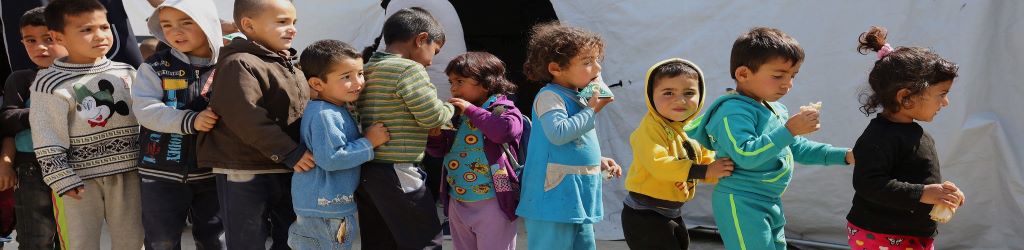
Syrian refugees line up during class break – World Bank Photo Collection – Licensed under CC 2.0.
About TGR
The Genocide Report (TGR) publishes analysis and educational resources on conflict, international law, and atrocity prevention. Its work seeks to bridge academic research, field realities, and public understanding of mass violence and civilian protection.
About the Author
Lara Kajs is the founder and executive director of The Genocide Report, a Washington, DC-based educational nonprofit focused on atrocity prevention and international law. She is the author of several field-based books on conflict, displacement, humanitarian crises, and international humanitarian law, drawing on extensive research and field experience in Yemen, Syria, and Afghanistan. Her writing and public speaking focus on atrocity crimes, forced displacement, the protection of civilians, and the legal frameworks governing armed conflict.