By Lara Kajs
Dispatches from the Field — The Genocide Report
Washington, DC — 30 August 2022
One year after the Taliban’s return to power, Afghanistan faces systematic repression, economic collapse, and growing concerns over terrorism, underscoring the gap between Taliban commitments and governing reality.
A year ago, the final evacuation flights departed Kabul, marking the end of the United States and allied presence in Afghanistan. As aircraft disappeared into the night, uncertainty gave way to a stark reality: Afghanistan had once again fallen under Taliban control.
Twelve months later, that uncertainty has been replaced by a clearer, more troubling picture—one defined by repression, institutional dismantling, and deepening humanitarian crisis.
Systematic Repression and Gender-Based Exclusion
The Taliban has reimposed a rigid system of governance rooted in its interpretation of religious and tribal norms. Early assurances made during negotiations—including commitments to amnesty and the protection of rights for women and minorities—have not materialized.
Instead, the Taliban has systematically dismantled legal and institutional protections. The Ministry of Women’s Affairs was abolished and replaced by the Ministry for the Promotion of Virtue and Prevention of Vice, an entity tasked with enforcing restrictive social codes.
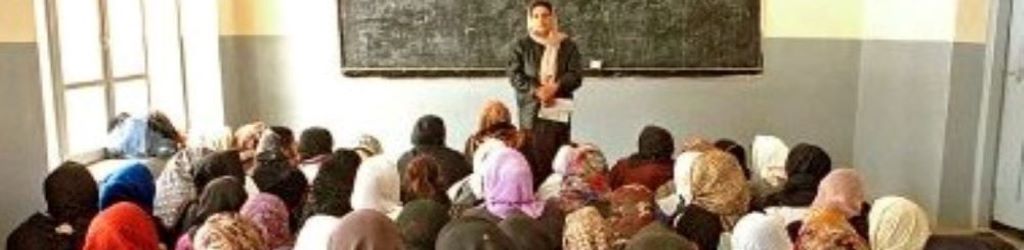
Women have been effectively removed from public life. Restrictions on movement, employment, and dress have significantly curtailed their autonomy. Girls’ access to education has been severely limited, reversing two decades of progress.
Enforcement mechanisms extend beyond formal institutions. Arbitrary arrests and punishments have been reported for violations of Taliban-imposed standards, affecting men and women alike. These measures reinforce a system of control that relies on both legal restriction and social coercion.
Human Rights Violations and Accountability Gaps
Despite initial promises of amnesty, credible reports have documented reprisals against former government officials, security personnel, and individuals associated with international forces. Allegations include extrajudicial killings, enforced disappearances, and arbitrary detention.
Journalists, activists, and civil society actors have faced intimidation, detention, and violence, contributing to the erosion of press freedom and civic space. These patterns reflect a broader environment of impunity.
International accountability mechanisms remain limited. While the International Criminal Court has ongoing jurisdiction over alleged crimes in Afghanistan, enforcement challenges and political constraints continue to impede progress.
Economic Collapse and Humanitarian Crisis
Afghanistan’s economy has deteriorated sharply under Taliban rule. The suspension of international aid—previously a cornerstone of public sector funding—triggered immediate fiscal instability.
A significant portion of the population now faces food insecurity, with humanitarian assistance serving as a primary lifeline. Reduced foreign trade, declining revenue, and limited access to financial systems have further constrained economic recovery.
Although humanitarian aid has partially resumed, funding gaps persist, raising concerns about the sustainability of relief efforts. The economic crisis has compounded existing vulnerabilities, particularly among women and displaced populations.
Terrorism and Regional Security Risks
The Taliban’s return to power has renewed concerns about Afghanistan’s role as a potential safe haven for terrorist organizations. Despite assurances to the contrary, assessments from UN monitoring bodies indicate continued ties between the Taliban and al-Qaeda.
These concerns were reinforced by the presence of al-Qaeda leader Ayman al-Zawahiri in Kabul before he died in a U.S. drone strike in August 2022. His location in a residence linked to Taliban affiliates raised significant questions about the group’s commitments.
At the same time, the Islamic State in Khorasan (ISIS-K) remains an active threat. Attacks such as the August 2021 Kabul airport bombing underscore the group’s capacity to destabilize the security environment and challenge Taliban authority.
Sanctions, Recognition, and Political Isolation
Afghanistan remains politically and economically isolated. International sanctions targeting Taliban leaders, combined with the freezing of state assets, continue to restrict financial flows.
Most countries have declined to formally recognize the Taliban government, limiting diplomatic engagement and complicating efforts to coordinate economic recovery. The question of Afghanistan’s representation at the United Nations remains unresolved.
This isolation presents a policy dilemma: balancing the need to avoid legitimizing Taliban rule with the imperative to address humanitarian needs and prevent further state collapse.
From Withdrawal to Reversion
The trajectory of the past year suggests a reversion rather than a transformation. Governance structures reflect many of the same dynamics that defined Taliban rule in the late 1990s, particularly in relation to human rights and international engagement.
Public sentiment has shifted accordingly. Initial expectations—however limited—have been replaced by growing disillusionment as restrictions intensify and economic conditions worsen.
The long-term implications extend beyond Afghanistan’s borders. Persistent instability, humanitarian crisis, and terrorist activity pose risks to regional and international security.
A year of Taliban rule has not marked a transition—it has marked a reversion.”
Atrocity Prevention Lens
The conditions emerging in Afghanistan—systematic repression, gender-based exclusion, impunity for abuses, and the dismantling of institutional protections—align with recognized risk factors for atrocity crimes. While not all patterns currently meet threshold definitions, the normalization of widespread human rights violations and the absence of accountability mechanisms increase the potential for escalation. Preventive efforts require sustained international engagement, support for documentation and monitoring, and targeted strategies to mitigate risks facing vulnerable populations, particularly women, minorities, and former government affiliates.
Legal Framework
International Human Rights Law
Afghanistan remains bound by international human rights obligations, including protections against discrimination, arbitrary detention, and extrajudicial killing. The systematic restriction of women’s rights raises serious concerns under these frameworks.
International Criminal Law
The International Criminal Court maintains jurisdiction over alleged crimes committed on Afghan territory, including crimes against humanity. Investigations into Taliban conduct remain ongoing, but face enforcement limitations.
Counterterrorism Obligations
International frameworks prohibit state support to terrorist organizations. Alleged links between the Taliban and al-Qaeda raise concerns regarding compliance with these obligations.
UN Sanctions Regime
The United Nations Security Council maintains sanctions on Taliban members, including asset freezes and travel bans. These measures aim to constrain leadership while influencing behavior.
Suggested Citation
Kajs, Lara. “A Year of Taliban Rule.” Dispatches from the Field. The Genocide Report, Washington, DC, 30 August 2022.
Photo Credit
Afghanistan: UNICEF Girls’ Education – UN Photo: Eskinder Debebe
About TGR
The Genocide Report (TGR) publishes analysis and educational resources on conflict, international law, and atrocity prevention. Its work seeks to bridge academic research, field realities, and public understanding of mass violence and civilian protection.
About the Author
Lara Kajs is the founder and executive director of The Genocide Report, a Washington, DC-based educational nonprofit focused on atrocity prevention and international law. She is the author of several field-based books on conflict, displacement, humanitarian crises, and international humanitarian law, drawing on extensive research and field experience in Yemen, Syria, and Afghanistan. Her writing and public speaking focus on atrocity crimes, forced displacement, the protection of civilians, and the legal frameworks governing armed conflict.