Lara Kajs
Dispatches from the Field — The Genocide Report
Washington, DC — 14 October 2025
Venezuela faces one of the most severe governance and human rights crises in the Western Hemisphere. Years of political repression, economic collapse, and institutional erosion under President Nicolás Maduro have produced widespread humanitarian suffering and one of the largest displacement crises in the world.
Systematic Repression and Political Control
Under Nicolás Maduro, Venezuela has experienced widespread human rights violations that have drawn sustained international concern. Government authorities have systematically restricted political dissent, curtailed freedom of expression, and deployed military and security forces to suppress protests and opposition activity.
Reports from human rights organizations document patterns of arbitrary detention, torture, and extrajudicial killings carried out by state security institutions. Opposition leaders, journalists, and civil society activists have faced imprisonment, harassment, or forced exile. These practices have contributed to the steady erosion of Venezuela’s democratic institutions and human rights protections.
Systematic repression, economic collapse, and institutional erosion in Venezuela have converged into one of the most severe human rights crises in the Western Hemisphere.”
Arbitrary Detention and Political Persecution
Thousands of political opponents, activists, and government critics have reportedly been detained on politically motivated charges. High-profile opposition figures—including Leopoldo López, Juan Guaidó, and María Corina Machado—have faced harassment, imprisonment, or forced exile.
Investigations by international human rights organizations describe severe mistreatment of detainees during interrogations, including beatings, electric shocks, and threats of sexual violence. Opposition members within Venezuela’s National Assembly have also faced harassment, arrest, and threats of prosecution, further weakening democratic governance and political pluralism.
Extrajudicial Killings and Security Force Violence
Human rights monitors have documented patterns of extrajudicial killings carried out by Venezuelan security forces, often during anti-crime or anti-gang operations in low-income communities.
One of the most controversial initiatives, the 2015 “Operation Liberation and Protection of the People” (OLP), involved large-scale raids across marginalized neighborhoods. These operations resulted in numerous reported killings, arbitrary arrests, and widespread allegations of abuse by security forces. Independent investigations have raised concerns that some deaths were staged to appear as armed confrontations rather than deliberate executions.
Persistent impunity for security personnel has contributed to ongoing concerns regarding accountability within Venezuela’s law enforcement institutions.
Suppression of Media and Civil Society
Freedom of expression has been significantly curtailed. Independent media outlets have faced closures, financial pressure, and regulatory restrictions, while journalists reporting on corruption, economic hardship, or political repression have experienced threats, harassment, and detention.
Internet access and social media platforms have also been subject to periodic restrictions, limiting the ability of journalists and civil society organizations to report on political developments.
Human rights defenders and non-governmental organizations documenting abuses have similarly faced intimidation campaigns, legal restrictions, and surveillance. These measures have reduced the space for independent civil society activity and hindered the documentation of human rights violations.
Indigenous Rights and Resource Exploitation
Indigenous communities in southern Venezuela have faced increasing pressure as state-backed mining and resource extraction activities expand across environmentally sensitive areas.
The development of mining projects within the Orinoco Mining Arc has led to environmental degradation, displacement of Indigenous populations, and increased violence linked to armed groups operating in the region. Community leaders and activists advocating for land rights and environmental protection have reported threats and intimidation.
Limited legal protections and weak institutional oversight have left many Indigenous communities vulnerable to both environmental harm and violence.
Economic Collapse and Humanitarian Crisis
Venezuela’s economic crisis has had severe humanitarian consequences. Hyperinflation, declining oil production, and years of economic mismanagement have resulted in shortages of food, medicine, and basic services.
Public healthcare infrastructure has deteriorated significantly, contributing to rising infant mortality rates and the resurgence of preventable diseases such as malaria and diphtheria. Malnutrition has become increasingly widespread, particularly among children and vulnerable populations.
Reports also indicate that access to state-distributed food and medical assistance has at times been politicized, with aid programs allegedly used to reward political loyalty or punish perceived opposition supporters.
Mass Displacement and Regional Impact
The combined effects of political repression, economic collapse, and humanitarian hardship have forced millions of Venezuelans to flee the country.
This exodus has created one of the largest displacement crises in the Western Hemisphere, placing significant strain on neighboring states throughout Latin America and the Caribbean. Migrants and asylum seekers frequently encounter legal barriers, discrimination, and violence while seeking protection abroad.
Internal displacement within Venezuela has also increased, leaving many individuals without reliable access to food, healthcare, or basic services.
Erosion of Judicial Independence
Venezuela’s judicial system has increasingly been used to reinforce executive power. Courts have issued rulings that align closely with government priorities, while judges perceived as independent have faced intimidation, removal, or exile.
Opposition-led institutions, particularly the National Assembly, have been systematically weakened. The creation of parallel political bodies, such as the Constituent Assembly, has allowed the government to bypass democratic oversight and consolidate political authority.
These developments have raised serious concerns about the independence of Venezuela’s legal institutions and the rule of law.
International Response and Accountability Efforts
International organizations and governments have repeatedly condemned Venezuela’s human rights record. Sanctions imposed by the United States, the European Union, and other governments have targeted senior officials accused of corruption and human rights violations.
The United Nations Human Rights Council established an independent fact-finding mission in 2018 to investigate alleged abuses by Venezuelan authorities. The International Criminal Court has also opened an investigation into alleged crimes against humanity committed by Venezuelan security forces during political crackdowns.
These processes represent significant steps toward international accountability, though meaningful domestic reform remains uncertain.
Prospects for Reform
Despite sustained repression, Venezuelan civil society groups, journalists, and opposition actors continue to advocate for democratic reforms and the protection of fundamental rights.
The trajectory of Venezuela’s crisis will depend in part on the resilience of domestic civil society and the continued engagement of international institutions seeking to promote accountability, political reform, and humanitarian assistance.
Atrocity Prevention Lens
Venezuela’s political repression, erosion of judicial independence, and widespread humanitarian hardship represent key warning indicators frequently monitored in atrocity prevention analysis. When state institutions are used to suppress dissent and accountability mechanisms are weakened, risks to civilian populations increase.
Sustained monitoring by international organizations, protection of civil society actors, and efforts to strengthen accountability mechanisms remain essential to preventing further large-scale abuses.
Legal Framework
Protection from Arbitrary Detention and Torture
International human rights law, including the International Covenant on Civil and Political Rights, prohibits arbitrary detention and torture. States are obligated to ensure due process and humane treatment of detainees.
Freedom of Expression and Political Participation
International legal standards protect the right to freedom of expression, peaceful assembly, and participation in political life. Restrictions on journalists, civil society organizations, and opposition figures may constitute violations of these protections.
Crimes Against Humanity
Systematic attacks against civilian populations—including widespread imprisonment, torture, and extrajudicial killings—may meet the legal threshold for crimes against humanity under international criminal law.
Accountability and International Jurisdiction
International bodies such as the International Criminal Court may exercise jurisdiction when national authorities are unwilling or unable to investigate serious international crimes.
Suggested Citation
“Venezuela’s Human Rights Crisis Under Nicolás Maduro.” Dispatches from the Field. The Genocide Report, Washington,
DC, 14 October 2025.
Photo Credit
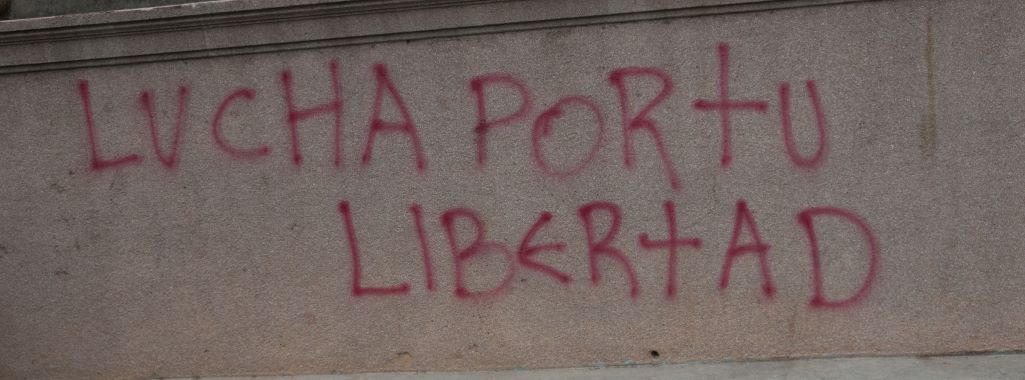
“Banner at demonstrations and protests against Chavismo and Nicolás Maduro governments 13” by Wilfredoorh. Licensed under CC BY NC ND 2.0
About TGR
The Genocide Report (TGR) publishes analysis and educational resources on conflict, international law, and atrocity prevention. Its work seeks to bridge academic research, field realities, and public understanding of mass violence and civilian protection.
About the Author
Lara Kajs is the founder and executive director of The Genocide Report, a Washington, DC-based educational nonprofit focused on atrocity prevention and international law. She is the author of several field-based books on conflict, displacement, humanitarian crises, and international humanitarian law, drawing on extensive research and field experience in Yemen, Syria, and Afghanistan. Her writing and public speaking focus on atrocity crimes, forced displacement, the protection of civilians, and the legal frameworks governing armed conflict.