By Lara Kajs
Dispatches from the Field—The Genocide Report
Washington, DC—7 May 2024
After more than a year of conflict, Sudan is facing one of the world’s most severe humanitarian crises, marked by widespread displacement, escalating violence, and the growing risk of famine. The convergence of armed conflict, obstruction of humanitarian aid, and deliberate attacks on civilians has created conditions that raise serious concerns under international humanitarian law and atrocity prevention frameworks.
Since April 2023, at least 15,000 people have been killed, more than 8 million displaced, and approximately 28 million require emergency humanitarian assistance. Nearly 18 million people are experiencing acute hunger. Despite the availability of aid supplies in key logistical hubs such as Port Sudan, insecurity, bureaucratic obstruction, and active hostilities continue to prevent assistance from reaching those most in need.
Conflict Dynamics and Civilian Harm
The violence in Sudan stems from ongoing fighting between the Sudanese Armed Forces (SAF) and the Rapid Support Forces (RSF). What began as a power struggle has evolved into a nationwide crisis marked by widespread attacks on civilian populations and infrastructure.
Both parties have been implicated in violations of international humanitarian law. Reports indicate that the SAF has restricted the delivery of humanitarian aid, while RSF forces have looted supplies. These actions have contributed directly to worsening food insecurity and may constitute war crimes, particularly in the context of starvation as a method of warfare.
The impact on civilians has been severe. Airstrikes, shelling, and ground assaults in densely populated areas have resulted in significant casualties and the destruction of homes, healthcare facilities, and essential infrastructure.
Without more resources, we will not be able to prevent a famine.” —OCHA Representative in Sudan
Darfur: Ethnic Violence and Escalation Risks
The situation in Darfur remains especially alarming. In and around El Fasher—a city hosting hundreds of thousands of displaced civilians—villages have been destroyed and populations subjected to repeated attacks. The city, one of the last major urban centers in Darfur not fully under RSF control, has been effectively besieged.
Reports indicate that RSF forces and allied militias have targeted non-Arab communities, particularly the Masalit, through killings, sexual violence, and the destruction of property. At the same time, SAF forces have been accused of arbitrary detention, torture, and extrajudicial killings.
Indiscriminate attacks by all parties, including strikes on civilian infrastructure such as hospitals and water systems, have compounded the humanitarian crisis. An estimated 80 percent of healthcare facilities in affected regions are no longer functional, leaving millions without access to basic medical care.
Hunger, Displacement, and the Collapse of Systems
Sudan’s humanitarian emergency is increasingly defined by hunger and systemic collapse. Approximately half the population relies on emergency food assistance to survive. Yet access remains severely constrained by insecurity and deliberate obstruction.
Humanitarian organizations report widespread looting of aid, attacks on relief convoys, and administrative barriers imposed by authorities. Restrictions on movement, delays in issuing visas and permits, and excessive import controls have all limited the ability of aid agencies to operate effectively.
These conditions mirror long-standing patterns of obstruction seen under previous regimes and have significantly undermined relief efforts. The result is a population increasingly cut off from food, water, and medical care—conditions that may meet the legal threshold for prohibited conduct under international law.
Children at Extreme Risk
Children account for a disproportionate share of those affected by the conflict. An estimated 24 million children have been exposed to violence, displacement, and deprivation.
Severe acute malnutrition affects approximately 730,000 children, with reports indicating that in parts of Darfur, a child dies every two hours from hunger-related causes. At the same time, more than 19 million children have lost access to education, increasing their vulnerability to exploitation and recruitment by armed groups.
Repeated displacement and the collapse of basic services have left children without access to healthcare, nutrition, or protection—conditions that carry long-term consequences for an entire generation.
Jeddah Talks and Continued Violations
Efforts to negotiate humanitarian commitments through the Jeddah Talks have produced limited results. While both SAF and RSF agreed to uphold international humanitarian law and facilitate aid delivery, violations have continued.
Humanitarian convoys have been attacked, and aid workers have been detained, injured, or killed. In one incident, a convoy organized by the International Committee of the Red Cross was struck, resulting in civilian casualties.
At the same time, authorities have imposed administrative and operational barriers that further restrict humanitarian access. These actions undermine the commitments made during negotiations and highlight the absence of effective enforcement mechanisms.
International Response and Accountability
International response efforts have struggled to match the scale of the crisis. A humanitarian conference in Paris raised approximately $2 billion, only half of the required funding. Meanwhile, displacement continues across borders into neighboring countries, placing additional strain on regional systems.
Calls for accountability have increased. The International Criminal Court has confirmed that it is investigating recent crimes in Darfur, while a UN-mandated fact-finding mission continues to document violations across the country.
There is growing pressure on international actors, including the UN Security Council and the African Union, to strengthen measures aimed at protecting civilians, enforcing arms embargoes, and ensuring compliance with international law.
Bottom Line
Sudan is facing a convergence of armed conflict, famine risk, and widespread violations of international law. The obstruction of humanitarian aid, targeted violence against civilians, and the destruction of essential infrastructure have created conditions that threaten the survival of millions.
Without immediate and sustained action to ensure humanitarian access, protect civilians, and enforce accountability, the crisis will continue to escalate—with potentially irreversible consequences.
Atrocity Prevention Lens
Sudan exhibits multiple indicators of mass atrocity risk, including large-scale displacement, targeted ethnic violence, and the deliberate obstruction of essential resources. The combination of famine conditions and ongoing attacks on civilians significantly heightens the risk of further large-scale atrocities. Preventive action must prioritize humanitarian access, civilian protection, and accountability mechanisms.
Legal Framework
International Humanitarian Law
Parties to conflict must distinguish between civilians and combatants and allow humanitarian assistance to reach those in need.
Prohibition of Starvation as a Method of Warfare
The deliberate restriction of food and essential supplies to civilians is prohibited and may constitute a war crime.
Rome Statute of the International Criminal Court
War crimes and crimes against humanity—including attacks on civilians and obstruction of aid—fall under ICC jurisdiction.
Arms Embargo on Darfur
All parties are obligated to comply with existing UN arms embargo measures.
Suggested Citation
Kajs, Lara. “Famine and Atrocities in Sudan.” Dispatches from the Field. The Genocide Report, Washington, DC, 7 May 2024.
Photo Credit
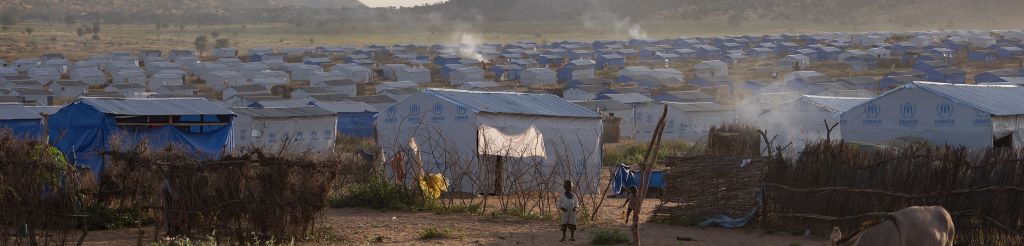
Sudanese Refugees in Chad by Global Partnership for Education. Licensed under CC by NC-ND 2.0
About TGR
The Genocide Report (TGR) publishes analysis and educational resources on conflict, international law, and atrocity prevention. Its work seeks to bridge academic research, field realities, and public understanding of mass violence and civilian protection.
About the Author
Lara Kajs is the founder and executive director of The Genocide Report, a Washington, DC-based educational nonprofit focused on atrocity prevention and international law. She is the author of several field-based books on conflict, displacement, humanitarian crises, and international humanitarian law, drawing on extensive research and field experience in Yemen, Syria, and Afghanistan. Her writing and public speaking focus on atrocity crimes, forced displacement, the protection of civilians, and the legal frameworks governing armed conflict.