By Lara Kajs
Dispatches from the Field—The Genocide Report
Washington, DC—12 September 2023
Human trafficking in Malawi reflects a convergence of structural vulnerabilities, weak enforcement mechanisms, and transnational criminal networks. As both a source and transit country, Malawi faces persistent challenges in addressing internal trafficking and cross-border exploitation. Patterns of coercion, deception, and economic manipulation—particularly affecting women, children, and displaced populations—underscore the need for coordinated legal, institutional, and community-based responses.
Trafficking Patterns and Internal Exploitation
Malawi functions as a regional hub for both labor and sex trafficking, with the majority of victims exploited within national borders. Traffickers frequently rely on deceptive recruitment practices, offering false promises of employment or education to lure individuals from economically disadvantaged regions.
Teenage boys and girls from southern Malawi are often transported to central and northern regions, where they are subjected to forced labor in agriculture, including tobacco farming, livestock handling, and brick-making. These forms of exploitation are characterized by coercion, restriction of movement, and the denial of wages or basic protections.
Women and girls face heightened risks of sexual exploitation. Many are trafficked into urban centers such as Lilongwe and Blantyre, where they are forced to work in bars or coerced into prostitution under conditions of neglect and control. Internal trafficking is frequently linked to broader transnational networks, with victims moved across borders into Zambia, Tanzania, Mozambique, and further to South Africa, Europe, and the Middle East. These routes reflect established corridors of exploitation that combine low operational risk for traffickers with high financial returns.
Displacement, Migration, and Heightened Vulnerability
Economic instability and displacement significantly increase susceptibility to trafficking. Individuals fleeing conflict or seeking improved livelihoods are often targeted due to limited access to legal protections and support systems.
The Dzaleka Refugee Camp near Lilongwe illustrates these compounded vulnerabilities. In 2022, an investigation by the United Nations Office on Drugs and Crime led to the rescue of more than 90 trafficking survivors, many originating from Ethiopia, Burundi, and the Democratic Republic of Congo. These individuals, already displaced by conflict, were subjected to further exploitation within the camp environment.
While several perpetrators were arrested across multiple nationalities, prosecutions remain difficult. Witness intimidation, fear of retaliation, and limited trust in legal institutions frequently prevent survivors from testifying. These barriers contribute to persistent under-prosecution and reinforce cycles of impunity.
Governance Challenges and Enforcement Gaps
Malawi has established a legal framework through the Trafficking in Persons Act of 2015, which criminalizes both labor and sex trafficking and provides for significant penalties. Despite this, implementation remains inconsistent.
Institutional weaknesses—such as limited investigative capacity, inadequate case identification systems, and insufficient prioritization of trafficking offenses—undermine enforcement efforts. Border monitoring and internal checkpoints lack the resources and training necessary to effectively identify victims and intercept traffickers.
Judicial inefficiencies further constrain accountability. Court delays, procedural interruptions, and case backlogs hinder timely adjudication, reducing the likelihood of successful prosecution. Survivors often face prolonged uncertainty, with limited access to legal remedies or protection mechanisms.
These systemic gaps contribute to an environment in which trafficking networks operate with relatively low risk, while victims face significant barriers to justice and recovery.
Human trafficking in Malawi is sustained not only by criminal networks, but by systemic vulnerabilities that leave victims unprotected and perpetrators largely unaccountable.”
Protection, Rehabilitation, and Prevention
Effective responses to human trafficking in Malawi require a comprehensive approach that integrates prosecution, victim protection, and prevention. Current protection mechanisms remain insufficient to meet the scale and complexity of the problem.
Survivors often lack access to safe shelter, medical care, and psychosocial support. Stigma and victim-blaming further discourage reporting and hinder reintegration. For those participating in legal proceedings, the absence of trauma-informed services increases the risk of re-traumatization.
Strengthening prevention efforts requires targeted awareness campaigns that address the specific vulnerabilities of women and adolescent girls. Community-level education, combined with institutional training for law enforcement, prosecutors, and judges, is essential to improving identification and response.
Enhanced collaboration between government entities, non-governmental organizations, and international partners can expand service provision and improve coordination. Access to dedicated funding mechanisms, including anti-trafficking funds, remains critical to sustaining victim support services and strengthening operational capacity.
Atrocity Prevention Lens
While human trafficking is often addressed within criminal justice frameworks, its scale and systemic nature in Malawi raise broader atrocity prevention concerns. Widespread exploitation of vulnerable populations—particularly women, children, and displaced persons—reflects underlying risk factors associated with mass human rights violations. Persistent impunity, weak institutional capacity, and social acceptance of exploitative practices contribute to an enabling environment for continued abuse. Strengthening accountability mechanisms, improving victim protection systems, and addressing root causes such as poverty and displacement are essential components of prevention. Without sustained intervention, trafficking networks may expand in scope and severity, further entrenching patterns of exploitation and harm.
Legal Framework
Domestic Legal Protections
Malawi’s Trafficking in Persons Act of 2015 establishes a legal basis for criminalizing human trafficking and provides penalties proportionate to the severity of the offense. The law also includes provisions for victim protection and prevention; however, gaps in implementation limit its effectiveness.
International Human Rights Law
Malawi is party to multiple international agreements that prohibit human trafficking and protect victims, including conventions addressing forced labor, child exploitation, and discrimination against women. These frameworks obligate the state to prevent trafficking, prosecute offenders, and provide assistance to victims.
International Criminal Law Considerations
In certain contexts, widespread or systematic trafficking—particularly when involving enslavement or sexual exploitation—may rise to the level of crimes against humanity under the Rome Statute. While the situation in Malawi does not meet this threshold as currently assessed, the legal framework provides an important reference point for understanding the gravity of such crimes.
Regional and Cross-Border Obligations
Given the transnational nature of trafficking networks, Malawi’s obligations extend to regional cooperation on law enforcement, victim repatriation, and information sharing. Strengthening these mechanisms is essential to disrupting trafficking routes and ensuring accountability across jurisdictions.
Suggested Citation
Kajs, Lara. “Human Trafficking in Malawi: Structural Vulnerabilities, Legal Gaps, and Protection Challenges.” Dispatches from the Field. The Genocide Report. Washington, DC, 12 September 2023.
Photo Credit
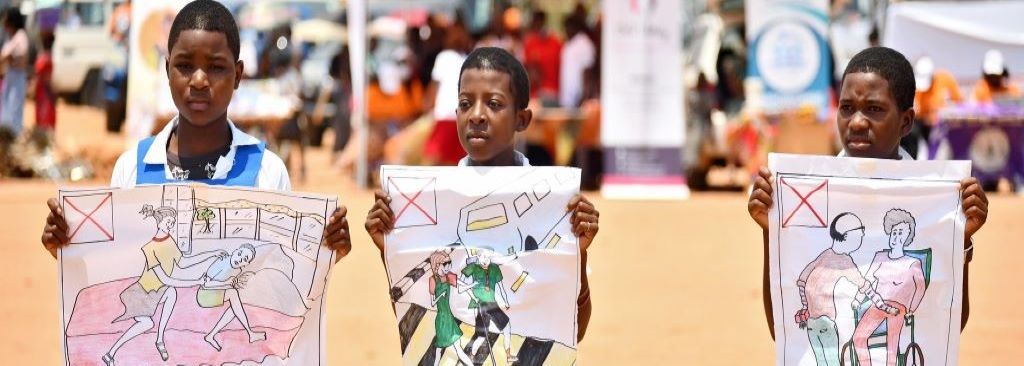
Orange the World 2021 – Malawi by UN Women Gallery. Licensed under CC by NC ND 2.0
About TGR
The Genocide Report (TGR) publishes analysis and educational resources on conflict, international law, and atrocity prevention. Its work seeks to bridge academic research, field realities, and public understanding of mass violence and civilian protection.
About the Author
Lara Kajs is the founder and executive director of The Genocide Report, a Washington, DC-based educational nonprofit focused on atrocity prevention and international law. She is the author of several field-based books on conflict, displacement, humanitarian crises, and international humanitarian law, drawing on extensive research and field experience in Yemen, Syria, and Afghanistan. Her writing and public speaking focus on atrocity crimes, forced displacement, the protection of civilians, and the legal frameworks governing armed conflict.