Dispatches from the Field — The Genocide Report
Washington, DC — 31 December 2015
Since the onset of the Syrian civil war and the escalation of conflicts in South Sudan, Myanmar, and other regions, the global humanitarian landscape has deteriorated significantly. By the end of 2015, displacement had reached record levels, placing unprecedented strain on humanitarian systems and host nations. The continued inability to address these crises in a timely and coordinated manner has amplified vulnerabilities among civilians, hindered international relief efforts, and raised urgent questions about resource allocation, protection mechanisms, and the international community’s capacity to prevent further humanitarian collapse.
Rapid Deterioration
By the end of 2015, the number of displaced persons globally had reached approximately 60 million, a threefold increase from 2014. United Nations projections indicated that in 2016, over 87 million people would require humanitarian assistance, necessitating a record $20.1 billion in aid. Conflict and instability have been the primary drivers of displacement, compounded by ongoing long-term crises in Syria, South Sudan, and Myanmar. Emerging hotspots in the Central African Republic, Democratic Republic of Congo, Burundi, Nigeria, and Yemen are expected to exacerbate humanitarian needs, creating sustained demand for international relief and peacekeeping efforts.
The global refugee crisis is no longer localized—it is a systemic challenge that demands comprehensive humanitarian coordination and sustained political commitment.”
Countries of Concern
Syria
The Syrian civil war, entering its fifth year, has resulted in more than four million refugees and nearly eight million internally displaced persons. Conflict has obstructed access for humanitarian organizations, limiting the delivery of medical care, food, and water. The influx of refugees into Lebanon, Jordan, Turkey, and Greece has strained local economies and heightened political instability. Without resolution, the need for humanitarian support will remain acute.
South Sudan
Civil war, compounded by poverty and drought, has displaced over 1.6 million internally and driven at least 600,000 across borders. Despite a peace agreement in August 2015, human rights violations, including extrajudicial killings and sexual violence, continue. Ongoing fighting underscores the persistent requirement for humanitarian interventions.
Myanmar
Continued persecution of the Rohingya population has forced at least 100,000 people to flee the country, with nearly 200,000 internally displaced and living in camps. Maritime migration exposes vulnerable populations to human trafficking and further exploitation.
Central African Republic
Conflict between ex-Seleka and anti-Balaka militias has left more than half the population in need of assistance. Malnutrition is widespread, humanitarian access is limited, and over 600,000 people are internally displaced. At least half a million people have crossed borders, seeking refuge in neighboring countries. Approximately 6,000 children have been recruited as soldiers.
Democratic Republic of Congo
Protracted conflict has resulted in over five million deaths since the 1990s. Nearly three million remain internally displaced, and 400,000 have fled to neighboring countries, highlighting the protracted nature of insecurity and humanitarian need.
Nigeria
Boko Haram’s insurgency has displaced over 1.5 million people internally, including 800,000 children, while more than 200,000 have sought refuge in neighboring countries, particularly Chad.
Yemen
In response to a political rebellion and coup by the Houthis, the Saudi-led coalition military intervention launched an aggressive campaign. At least 21 million civilians are in urgent need of shelter, food, water, and medical supplies, including 11 million children. Insecurity has severely limited humanitarian operations.
Burundi
Ethnic tensions between the Tutsi and Hutu communities and President Pierre Nkurunziza’s bid for a third term in 2015 triggered widespread violence. African Union peacekeeping initiatives have faced resistance, with the potential for escalating humanitarian crises.
Humanitarian Imperatives
There is no singular solution to the global humanitarian crisis. Across all affected regions, the need is clear: increased financial resources, expanded logistical support, and sustained political commitment are required to protect civilians, mitigate displacement, and uphold international obligations.
Atrocity Prevention Lens
Indicators of ongoing displacement, widespread human rights violations, and conflict-related instability highlight a significant risk of mass atrocity. Prevention strategies must include increased humanitarian access, support for local and international protection mechanisms, monitoring of forced displacement, and engagement with host governments to mitigate secondary crises. Sustained coordination between international organizations, NGOs, and local actors is essential to reduce civilian exposure to violence and prevent the exacerbation of existing vulnerabilities.
Legal Framework
International Humanitarian Law
Parties to armed conflict are obliged under the Geneva Conventions to protect civilians, provide humanitarian access, and prevent forced displacement. Attacks on civilians, obstruction of aid, and recruitment of child soldiers constitute violations of these obligations.
Refugee and Human Rights Law
The 1951 Refugee Convention and its 1967 Protocol establish the right to seek asylum from persecution. States hosting refugees have legal obligations to ensure protection and access to basic services. Human rights law further prohibits collective expulsions and discriminatory treatment based on nationality, religion, or ethnicity.
Suggested Citation
“The Need for Humanitarian Response.” Dispatches from the Field. The Genocide Report, Washington, DC,
31 December. 2015.
Photo Credit
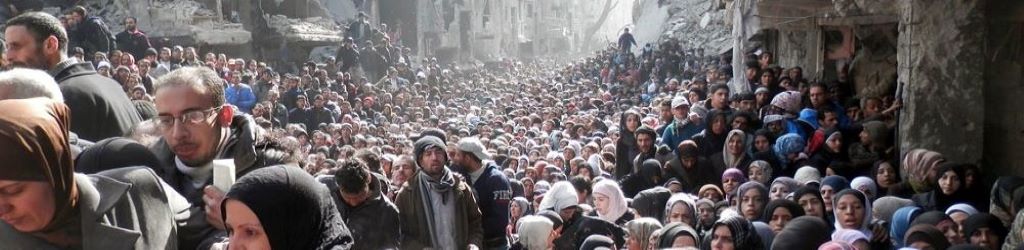
Refugees wait for humanitarian aid in Yarmouk, Syria, by UNRWA. Licensed under CC 2.0.
About TGR
The Genocide Report (TGR) publishes analysis and educational resources on conflict, international law, and atrocity prevention. Its work seeks to bridge academic research, field realities, and public understanding of mass violence and civilian protection.