Dispatches from the Field—The Genocide Report
Washington, DC—12 August 2025
Human rights violations remain among the leading drivers of global instability, conflict, and atrocity risk. From persecution and discrimination to forced displacement and mass violence, millions of individuals worldwide continue to suffer due to systemic abuses. Promoting and protecting human rights is not only a moral imperative but a cornerstone of atrocity prevention, international law, and global stability. This piece examines the role of the United Nations, international law, and civil society in advancing human rights while identifying persistent challenges and opportunities for global accountability.
Human rights are the basic freedoms and protections that belong to every individual, regardless of nationality, ethnicity, gender, religion, or background. While many nations have made progress in advancing global human rights, millions continue to face discrimination, persecution, starvation, and violence. Promoting these rights is essential not just for justice, but for peace, social cohesion, and sustainable development. When people are denied their fundamental rights, societies risk conflict, inequality, and systemic instability.
Promoting human rights globally is not a one-time campaign—it is an ongoing commitment to humanity, requiring courage, cooperation, and compassion from governments, organizations, and individuals alike.”
The UN: A Global Watchdog
The United Nations has been central to setting global norms for human rights, providing monitoring mechanisms, and advocating for accountability. The Universal Declaration of Human Rights (UDHR) of 1948 established foundational principles, including the right to life, freedom of expression, access to education, freedom from torture, and political participation. While not legally binding, the UDHR underpins the moral and legal architecture of international human rights law.
Key institutions, such as the Office of the High Commissioner for Human Rights (OHCHR) and the Human Rights Council (HRC), extend the UN’s reach. The OHCHR promotes human rights through advocacy, technical assistance, and research, collaborating with governments and civil society to uphold international standards. The HRC conducts Universal Periodic Reviews (UPR) and deploys Special Rapporteurs to monitor violations, issue recommendations, and investigate allegations. Peacekeeping and human rights missions provide on-the-ground protection, documentation, and humanitarian support in conflict zones.
Challenges and Limitations
Despite these mechanisms, the UN faces structural constraints. Geopolitical interests and veto powers of Security Council permanent members often impede decisive action, as seen in Syria, Myanmar, and Gaza. The enforcement of human rights obligations remains inconsistent; states may ratify treaties yet fail to implement their commitments due to limited political will, financial resources, or institutional capacity. Emerging technologies, online hate speech, and surveillance add new complexities to global human rights protection.
Setting Universal Standards
International human rights law relies on treaties, UN resolutions, and the jurisprudence of bodies such as the International Criminal Court (ICC). Treaties legally bind states to uphold agreed standards, while the ICC prosecutes individuals for war crimes, crimes against humanity, and genocide—holding perpetrators accountable when states fail to act. UN General Assembly and Security Council resolutions provide normative guidance, influence diplomacy, and establish expectations for compliance with human rights obligations.
Monitoring and Accountability
Monitoring human rights violations is essential to prevent escalation into mass atrocities. Special Rapporteurs, Independent Experts, and UN investigative missions document violations and support early-warning mechanisms for atrocity prevention. Effective accountability requires robust international cooperation, sufficient resourcing, and the protection of journalists, civil society actors, and whistleblowers who expose abuses.
Moving Forward Together
Promoting human rights is a collective responsibility. Governments, NGOs, businesses, and individuals all play roles in ensuring dignity, equality, and justice. Education, awareness campaigns, ethical business practices, and advocacy contribute to building inclusive societies resilient to abuse and mass violence. Upholding human rights is both preventive and protective: by enforcing standards and promoting accountability today, the global community reduces the risk of future atrocities.
Atrocity Prevention Lens
Human rights violations are often precursors to mass atrocities. Patterns of discrimination, repression, and systemic inequality signal elevated risks for genocide, crimes against humanity, and war crimes. Effective monitoring, early-warning mechanisms, and prompt enforcement of human rights norms are critical for atrocity prevention. Global engagement—including UN oversight, ICC prosecution, and civil society advocacy—reduces the likelihood that human rights abuses escalate into large-scale violence.
Legal Framework
Universal Declaration of Human Rights (UDHR)
The 1948 UDHR establishes fundamental rights and freedoms for all individuals, including life, liberty, security, and equality before the law. While non-binding, it provides the moral and legal foundation for subsequent treaties and international human rights instruments.
International Humanitarian Law (IHL)
During armed conflict, IHL—including the Geneva Conventions—prohibits targeting civilians and mandates the protection of human rights. States and non-state actors are legally obliged to distinguish between civilians and combatants and to prevent violations such as torture, forced displacement, and attacks on civilian infrastructure.
Rome Statute / ICC
The Rome Statute empowers the International Criminal Court to prosecute individuals for genocide, crimes against humanity, war crimes, and crimes of aggression. This legal framework reinforces accountability where states fail to prevent or punish violations of human rights.
Suggested Citation
“Promoting Global Human Rights.” Dispatches from the Field. The Genocide Report, Washington, DC, 12 August 2025.
Photo Credit
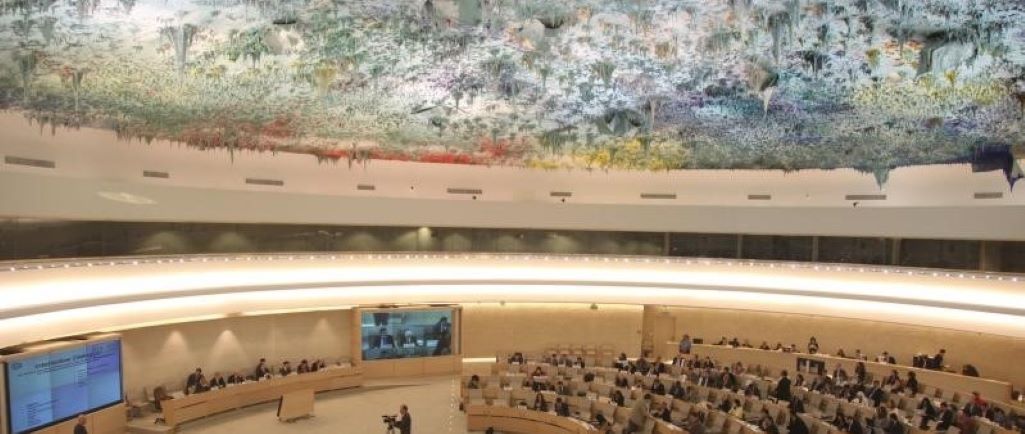
Human Rights Council – 14th Session by UN Geneva. Licensed under CC BY NC ND 2.0
About TGR
The Genocide Report (TGR) publishes analysis and educational resources on conflict, international law, and atrocity prevention. Its work seeks to bridge academic research, field realities, and public understanding of mass violence and civilian protection.