TGR
Dispatches from the Field — The Genocide Report
Washington, DC — 9 July 2015
Four years after gaining independence, South Sudan remains mired in violent conflict and institutional fragility. What began as a moment of historic optimism in 2011 quickly deteriorated into civil war by 2013, driven by political rivalries and deep ethnic divisions. As the country marks its independence anniversary, widespread displacement, economic decline, and escalating human rights violations underscore the gap between statehood and stability.
From Independence to Civil War
In 2011, South Sudan formally seceded from Sudan following a national referendum. However, by 2013, tensions between President Salva Kiir and former Vice President Riek Machar escalated into open conflict. What followed was a rapid descent into civil war, fracturing the country along political and ethnic lines.
Since the outbreak of violence, countless civilians have been killed. An estimated 1.5 million people have been internally displaced, while an additional 730,000 have fled to neighboring countries. Women and children account for nearly 90 percent of those displaced, reflecting the disproportionate burden borne by vulnerable populations.
Independence brought hope to South Sudan, but unresolved political divisions and unchecked violence have transformed celebration into crisis.”
Widespread Human Rights Violations
Reports indicate that both government and opposition forces have committed serious human rights violations and mass atrocities. These include acts of mass rape, torture, enforced disappearances, and targeted killings. Villages have been looted and destroyed, forcing civilians to flee under extreme conditions.
Sexual violence has been particularly severe, with accounts describing brutality that leaves survivors unable to safely escape conflict zones. The scale and systematic nature of these abuses point to patterns of violence that extend beyond isolated incidents.
In June 2015, the United Nations released findings documenting extreme abuses, including the gang rape, torture, and killing of women and girls by armed forces. In response, the South Sudanese government expelled senior UN officials, including a human rights investigator and the UN humanitarian coordinator, highlighting ongoing tensions between national authorities and international oversight mechanisms.
Humanitarian Crisis and Economic Decline
Beyond violence, South Sudan faces a severe humanitarian emergency. More than two million people are experiencing acute food insecurity, driven by conflict-related displacement, disrupted agricultural production, and limited access to aid.
Economic conditions have further deteriorated, with oil production—South Sudan’s primary source of revenue—reduced significantly. The lack of economic diversification has left the country highly vulnerable, with many analysts warning of potential state collapse if conditions do not improve.
Conditions Continue to Worsen
Despite its internal crisis, South Sudan continues to receive refugees from neighboring Sudan, compounding existing humanitarian pressures. Ongoing insecurity and instability hinder the ability of humanitarian organizations to deliver assistance effectively, leaving large segments of the population without adequate support.
The crisis in South Sudan is fundamentally driven by political conflict and governance failures. Without meaningful accountability and a resolution to the underlying causes of violence, humanitarian conditions are unlikely to improve.
Atrocity Prevention Lens
The situation in South Sudan reflects multiple indicators associated with mass atrocity risk, including widespread targeting of civilians, systematic sexual violence, forced displacement, and impunity for perpetrators. Prevention efforts must focus on strengthening accountability mechanisms, supporting civilian protection initiatives, and increasing international pressure on all parties to the conflict. Enhanced monitoring and documentation of abuses, alongside expanded humanitarian access, are essential to mitigating further harm.
Legal Framework
International Humanitarian Law
All parties to the conflict are bound by international humanitarian law, including the Geneva Conventions, which prohibit attacks on civilians, sexual violence, and the recruitment of child soldiers. Documented violations may constitute war crimes and crimes against humanity.
International Criminal Accountability
The scale and severity of reported abuses raise the potential for international criminal investigation. Mechanisms supported by the United Nations and the African Union play a critical role in documenting violations and advancing accountability for perpetrators.
Suggested Citation
TGR. “South Sudan’s Bittersweet Birthday: Independence Overshadowed by Conflict, Atrocity, and Humanitarian Collapse.” Dispatches from the Field. The Genocide Report, Washington, DC, 9 July 2015.
Photo Credit
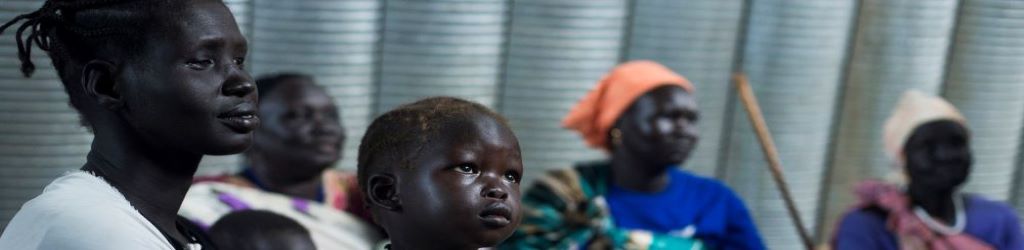
UN Humanitarian chief visits South Sudan by United Nations Photo – Licensed under CC 2.0
About TGR
The Genocide Report (TGR) publishes analysis and educational resources on conflict, international law, and atrocity prevention. Its work seeks to bridge academic research, field realities, and public understanding of mass violence and civilian protection.