Dispatches from the Field — The Genocide Report
Washington, DC — 30 October 2018
In Lebanon, the absence of legal status has become one of the most significant drivers of vulnerability for displaced Syrians, shaping access to work, movement, and basic services.
Lebanon, approximately the size of New Jersey, hosts the highest refugee-to-resident ratio in the world. More than one million Syrians, along with a long-established population of Palestinian refugees, have sought refuge within its borders.
For many Syrians in Lebanon, the question is no longer simply how to rebuild their lives, but whether to remain in increasingly restrictive conditions or return to a country where insecurity and risk persist.
Documentation and Legal Status
A central challenge facing Syrian refugees in Lebanon is the lack of legal residency. A significant proportion of the refugee population is undocumented, limiting freedom of movement and access to employment, education, and healthcare.
Residency regulations introduced in 2015 require Syrians to register through specific channels, often under conditions that restrict formal employment. Alternatively, refugees may seek local sponsorship, a process that is difficult to secure and often costly.
Renewal fees and administrative barriers have made it difficult for many refugees to maintain legal status. As a result, undocumented status has become widespread, reinforcing cycles of economic vulnerability and social exclusion.
Impact on Daily Life
The absence of documentation has far-reaching consequences. Movement is often restricted due to the presence of security checkpoints, particularly affecting men, who face higher risks of detention.
Limited access to lawful employment has contributed to increased reliance on informal labor markets. In many cases, children enter the workforce to support their families, disrupting access to education and increasing long-term vulnerability.
Access to healthcare remains constrained, with high costs placing services out of reach for many. Food insecurity is partially mitigated through humanitarian assistance, but living conditions remain precarious.
The psychological impact of displacement is also significant. Prolonged instability, combined with limited access to support services, has contributed to widespread trauma, particularly among children.
Legal and Policy Context
Lebanon is not a signatory to the 1951 Refugee Convention and does not formally recognize Syrians as refugees. Instead, they are treated as foreign nationals subject to domestic immigration regulations.
This legal framework has shaped national policy, prioritizing temporary presence over long-term integration. The absence of formal refugee status limits access to rights typically afforded under international protection regimes.
In displacement settings, legal status is not a formality—it determines access to protection, livelihoods, and, ultimately, survival.”
Repatriation and Protection Concerns
Discussions surrounding the return of Syrian refugees have intensified in recent years. Lebanese authorities have expressed opposition to long-term settlement and have supported initiatives aimed at facilitating return.
However, conditions in Syria remain unstable in many areas, raising concerns about the safety and sustainability of repatriation. International organizations have emphasized that returns must be voluntary, safe, and dignified.
Reports of detention, forced conscription, and enforced disappearance within Syria complicate the decision to return. For many refugees, the choice is not between safety and risk, but between different forms of insecurity.
Non-Refoulement and International Norms
Despite not being a party to the 1951 Convention, Lebanon has generally adhered to the principle of non-refoulement, which prohibits the return of individuals to territories where their lives or freedom may be threatened.
This principle remains a cornerstone of international refugee protection. Its continued observance is critical in ensuring that return processes do not expose individuals to harm.
Atrocity Prevention Lens
Large-scale displacement combined with legal precarity can increase vulnerability to exploitation, abuse, and rights violations. Restrictions on movement, employment, and documentation contribute to conditions in which protection risks are heightened.
Addressing these challenges requires coordinated international support, including burden-sharing, expanded resettlement pathways, and policies that enhance legal protection for displaced populations.
Legal Framework
1951 Refugee Convention & 1967 Protocol
Defines refugee status and outlines the rights of displaced persons, including protection from refoulement.
Principle of Non-Refoulement
A cornerstone of customary international law prohibits the forced return of individuals to danger.
International Human Rights Law
Protects access to basic rights, including education, healthcare, and freedom of movement, regardless of legal status.
Suggested Citation
“Undocumented in Lebanon.” Dispatches from the Field. The Genocide Report, Washington, DC, 30 October 2018.
Photo Credit
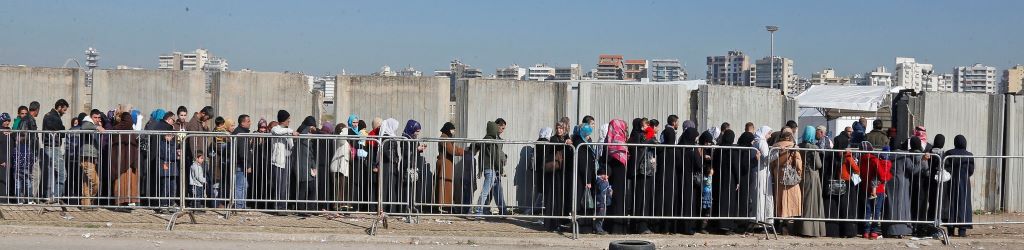
Syrian Refugees face an uncertain future by World Bank Photo – Licensed under CC 2.0
About TGR
The Genocide Report (TGR) publishes analysis and educational resources on conflict, international law, and atrocity prevention. Its work seeks to bridge academic research, field realities, and public understanding of mass violence and civilian protection.