Dispatches from the Field—The Genocide Report
Washington, DC— 24 February 2023
The conflict in Ukraine, which began with Russia’s unprovoked invasion on 24 February 2022, has resulted in unprecedented levels of violence, displacement, and humanitarian suffering. Across the country, civilians have been deliberately targeted, critical infrastructure destroyed, and basic services disrupted. The ongoing war continues to generate international concern, with implications that extend far beyond Ukraine’s borders, affecting global food security, energy markets, and the norms of international law.
Targeting Civilians
Throughout the invasion, Russia has systematically bombed non-military targets, resulting in tens of thousands of civilian casualties. Indiscriminate attacks have included the bombing of train stations, hospitals, schools, theaters, and residential buildings. Critical civilian energy infrastructure has also been deliberately targeted. Documented incidents, such as the massacres in Bucha, the destruction of Mariupol, and attacks in Kharkiv, illustrate the scale and systematic nature of the violence.
Displacement
The humanitarian consequences of the conflict have been staggering. Within the first 48 hours of the invasion, over 50,000 Ukrainians fled the country. As of January 2023, approximately 6.9 million people are internally displaced, while an estimated 8.1 million have sought refuge abroad. Displacement has compounded trauma, disrupted livelihoods, and placed extraordinary pressure on host countries and humanitarian organizations.
Global Consequences
The war in Ukraine has had significant international repercussions. Ukraine, long considered the “world’s breadbasket,” has experienced drastic reductions in grain exports, contributing to global food price spikes and increasing vulnerability to famine in regions such as the Horn of Africa and Yemen. The conflict has also disrupted energy supplies, creating economic and social pressures worldwide.
Ukrainian Resistance
Ukraine’s resistance has been formidable. Despite early predictions of a rapid Russian victory, the country’s armed forces and citizens have sustained prolonged defense efforts. The recapture of Dnipro in late 2022 demonstrates Ukraine’s capacity to push back, though renewed Russian offensives in 2023 continue to threaten stability and civilian safety.
Ukraine’s citizens and military forces have demonstrated extraordinary resilience, holding their ground despite the relentless assault on civilians and infrastructure.”
A Call for Peace
International efforts to halt hostilities have included multiple UN General Assembly resolutions and International Court of Justice rulings demanding that Russia cease military operations. Despite near-universal support from member states, these resolutions have been largely ignored, underscoring the limitations of diplomatic measures in the absence of enforcement mechanisms.
Impact of Sanctions
Sanctions have been employed as a tool to influence Russian behavior. While they serve as an alternative to military action, their effectiveness has been limited due to continued dependence on Russian energy and the resilience of the Russian economy. The conflict demonstrates the challenges of achieving compliance through economic measures alone.
Prosecuting War Crimes
Ongoing investigations by the UN Human Rights Council and the International Criminal Court aim to document violations, including war crimes and crimes against humanity. Although neither Ukraine nor Russia is a party to the Rome Statute, member states have referred allegations to the ICC. Historical precedents, such as the trials of Slobodan Milošević, Charles Taylor, and Hissène Habré, provide a framework for potential accountability for Ukraine’s civilian protections and broader international law compliance.
Atrocity Prevention Lens
Indicators of targeted civilian attacks, systematic displacement, and destruction of basic services suggest a high risk of continued atrocity crimes. Prevention strategies must include the monitoring of civilian infrastructure, documentation of violations, and support for protective measures for displaced populations. International support should prioritize humanitarian aid, safe corridors for civilians, and mechanisms to enforce compliance with international law.
Legal Framework
War Crimes
Deliberate attacks on civilians and civilian infrastructure constitute war crimes under Article 8 of the Rome Statute. Abductions, forced disappearances, sexual violence, and attacks on protected sites such as schools and hospitals are all prosecutable under this framework.
Crimes Against Humanity
Widespread or systematic attacks on civilian populations may constitute crimes against humanity. The acts documented in Ukraine—including deportation, persecution, and murder—fall under this category when committed as part of a policy or plan.
Genocide
The forced displacement and targeting of specific populations can constitute genocide if proven to be intended to destroy, in whole or in part, a national, ethnic, racial, or religious group, as outlined in Article 2 of the UN Genocide Convention.
Suggested Citation
“A Year of War in Ukraine.” Dispatches from the Field. The Genocide Report, 24 February 2023.
Photo Credit
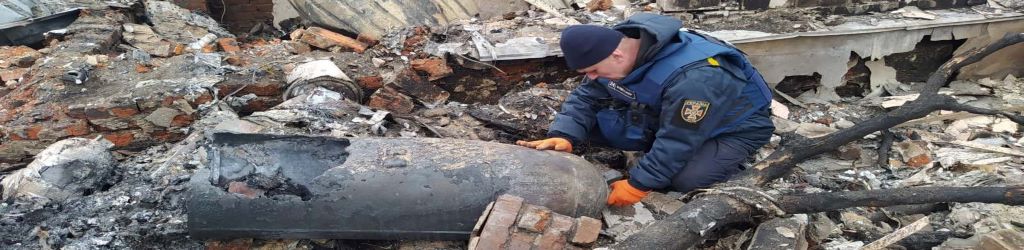
Servicemen of the Emergency Service of Ukraine dispose of Russian bombs during the battle of Chernihiv on 9 March 2022. In total, the Emergency Service worked on 22 requests for bomb disposal that day. Disposal of Russian bombs in Chernihiv, 9 March 2022 by State Emergency Service of Ukraine. Licensed under CC by 4.0
About TGR
The Genocide Report (TGR) publishes analysis and educational resources on conflict, international law, and atrocity prevention. Its work seeks to bridge academic research, field realities, and public understanding of mass violence and civilian protection.