Lara Kajs
Dispatches from the Field — The Genocide Report
Washington, DC — 26 May 2016
Kenya’s 2016 announcement of plans to close the Dadaab refugee complex marked a critical inflection point in global displacement policy, raising urgent questions about state responsibility, regional stability, and the limits of international burden-sharing. As one of the largest and longest-standing refugee settlements in the world, Dadaab represents not only a humanitarian challenge but also a test case for how the international community responds to protracted displacement crises.
The Scale and History of Dadaab
Dadaab is home to more than 350,000 refugees and has, for over two decades, functioned as a de facto city. Established in 1991 as a temporary response to the collapse of the Somali state, the camp has evolved into a long-term settlement hosting generations of displaced populations.
Refugees residing in Dadaab have fled a range of abuses, including armed conflict, sexual violence, arbitrary detention, and persecution. The camp’s population includes individuals from Somalia as well as Ethiopia, Rwanda, Uganda, the Democratic Republic of the Congo, and Sudan. For many, particularly those born in the camp, Dadaab represents the only home they have ever known.
Despite its scale and longevity, Dadaab has remained administratively classified as a temporary solution, with limited pathways to citizenship or long-term integration within Kenya. This has contributed to conditions of protracted displacement and, in many cases, de facto statelessness.
Efforts to dismantle long-standing refugee settlements without viable alternatives risk triggering renewed displacement, instability, and potential violations of international law.”
Security Framing and Closure Justifications
The Kenyan government has consistently framed the proposed closure of Dadaab as a national security imperative. Officials, including Interior Minister Joseph Nkaissery, argued that the camp had been exploited by the Somali militant group Al-Shabaab as a conduit for weapons smuggling and logistical operations.
Government statements emphasized the need to protect Kenyan citizens from terrorist threats, positioning the closure as a preventive security measure. However, the scale of the proposed action—relocating more than 350,000 individuals within a compressed timeframe—raises significant operational and legal concerns.
The feasibility of such a large-scale movement remains questionable, as does the capacity to ensure that returns or relocations would occur in a safe, orderly, and voluntary manner. Absent robust safeguards, forced displacement on this scale risks exposing refugee populations to further harm and instability.
Risks of Forced Return and Regional Instability
The potential closure of Dadaab raises acute concerns regarding forced repatriation to Somalia, where conditions of insecurity and armed conflict persist. Returning refugees to environments where their lives or freedom may be threatened would constitute a serious breach of international protection norms.
Beyond legal considerations, the abrupt displacement of hundreds of thousands of individuals risks exacerbating regional instability. Vulnerable populations—including women, children, and unaccompanied minors—would face heightened exposure to exploitation, violence, and trafficking.
The situation is further complicated by the presence of individuals who have spent their entire lives in Dadaab. With no legal status in Kenya and limited ties to countries of origin, these populations face profound uncertainty regarding their future, highlighting the long-term consequences of unresolved displacement.
International Burden-Sharing and Policy Gaps
Kenya’s decision to pursue closure must also be understood within the broader context of international burden-sharing. The government has expressed frustration over declining financial and logistical support, particularly as global attention has shifted toward other crises, including the Syrian conflict.
Reduced international engagement has placed disproportionate strain on host countries such as Kenya, which continue to accommodate large refugee populations with limited resources. In this context, threats to close Dadaab may also function as a political signal aimed at prompting greater international support.
The absence of sustained, equitable burden-sharing mechanisms has contributed to policy responses that prioritize deterrence and displacement over protection and durable solutions.
Atrocity Prevention Lens
The proposed closure of Dadaab intersects with atrocity prevention concerns by increasing the vulnerability of already at-risk populations. Forcible return to conflict-affected areas may expose refugees to serious human rights violations, including violence by armed actors and persecution based on identity or perceived affiliation.
The policy environment also reflects broader risk indicators, including the securitization of refugee populations and the erosion of protection norms. When refugee communities are framed primarily as security threats, it can contribute to justification frameworks for exclusionary or coercive measures.
Preventive strategies must prioritize the protection of displaced populations through adherence to international legal standards, expansion of resettlement pathways, and sustained international support for host countries. Without such measures, protracted displacement situations risk evolving into more acute humanitarian and protection crises.
Legal Framework
1951 Refugee Convention and 1967 Protocol
Kenya is a signatory to both the 1951 Refugee Convention and its 1967 Protocol, which establish the legal foundation for the protection of refugees. Central to these instruments is the principle of non-refoulement, which prohibits the return of individuals to territories where they face threats to life or freedom. Any forced return of refugees from Dadaab to Somalia would raise serious concerns under this framework.
Customary International Law
The principle of non-refoulement is also widely recognized as part of customary international law, binding on all states regardless of treaty ratification. This reinforces the obligation to ensure that refugee returns are voluntary, safe, and conducted with dignity.
International Human Rights Law
International human rights law prohibits arbitrary displacement and protects individuals from discrimination and inhumane treatment. Policies that result in forced relocation without adequate safeguards may violate these protections, particularly where vulnerable populations are affected.
Suggested Citation
Kajs, Lara. “Dadaab Refugee Camp: Kenya’s Closure Threats and the Persistence of Protracted Displacement.” Dispatches from the Field. The Genocide Report, Washington, DC, 26 May 2016.
Photo Credit
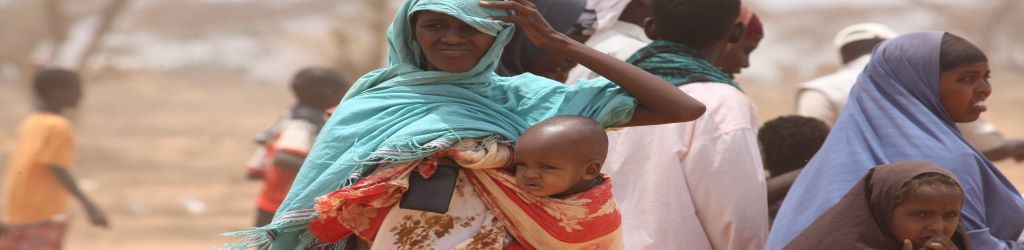
People of Dadaab by Riy Licensed under CC 2.0.
Author’s Note (Updated 2026)
Despite repeated threats by the Kenyan government to close the Dadaab refugee complex since 2016, the camp remains operational. Periodic policy shifts, repatriation efforts, and international pressure have shaped its status, underscoring the enduring challenges of protracted displacement and the absence of durable solutions for refugee populations in the region.
About TGR
The Genocide Report (TGR) publishes analysis and educational resources on conflict, international law, and atrocity prevention. Its work seeks to bridge academic research, field realities, and public understanding of mass violence and civilian protection.
About the Author
Lara Kajs is the founder and executive director of The Genocide Report, a Washington, DC-based educational nonprofit focused on atrocity prevention and international law. She is the author of several field-based books on conflict, displacement, humanitarian crises, and international humanitarian law, drawing on extensive research and field experience in Yemen, Syria, and Afghanistan. Her writing and public speaking focus on atrocity crimes, forced displacement, the protection of civilians, and the legal frameworks governing armed conflict.