By Lara Kajs
Dispatches from the Field — The Genocide Report
Washington, DC — 14 March 2023
(Part 1 of a Series on Crises to Watch in 2023)
The Horn of Africa is facing a convergence of crises that reflect the intersection of protracted conflict, climate-induced shocks, and structural governance challenges. While global attention remains fixed on higher-profile conflicts, the scale and severity of humanitarian need across Somalia, Ethiopia, and the broader region continue to intensify. The United Nations estimates that in 2023 alone, $51.5 billion is required to assist approximately 230 million people globally, with a significant proportion concentrated in regions such as the Horn. These overlapping crises are not isolated; they are mutually reinforcing, creating conditions that heighten vulnerability, displacement, and the risk of atrocity crimes.
Over the coming weeks, Dispatches from the Field will examine key crises shaping global instability in 2023. This analysis begins with the Horn of Africa, a region whose strategic importance has historically drawn external influence while undermining internal stability.
Strategic Importance and Enduring Instability
For more than a century, the Horn of Africa has occupied a central place in geopolitical competition. Its proximity to the Red Sea and major global trade routes has made it a focal point for external powers, from colonial administrations to contemporary security partnerships. This strategic significance, however, has often translated into internal fragmentation, proxy dynamics, and weakened governance structures.
Today, the region remains one of the most complex conflict environments globally. Multiple non-international armed conflicts persist, driven by political grievances, identity-based tensions, and competition over resources. These dynamics are compounded by interstate rivalries and fragile state institutions, limiting the capacity for sustained conflict resolution.
Climate Crisis and Food Insecurity
The climate crisis has intensified existing vulnerabilities across the Horn. Repeated failed rainy seasons in Somalia and Ethiopia have contributed to one of the most severe droughts in decades. The result is widespread food insecurity, with millions facing acute hunger and malnutrition.
The scale of need is stark. A disproportionate share of the global population experiencing food insecurity resides in Africa, despite the continent representing a smaller percentage of the global population. In the Horn, the erosion of agricultural systems, livestock losses, and disrupted markets have created a persistent cycle of dependency and vulnerability.
In the Horn of Africa, climate stress and armed conflict are not separate crises—they are mutually reinforcing drivers of instability and mass suffering.”
Somalia: State Fragility and Humanitarian Constraints
Somalia exemplifies the convergence of environmental and conflict-driven crises. Severe drought conditions have led to widespread displacement, with millions seeking access to humanitarian assistance. The destruction of livelihoods, particularly livestock, has further eroded resilience.
Decades of conflict have weakened state institutions, limiting the government’s ability to respond effectively. This fragility is exacerbated by dependence on imported grain, much of which historically originated from Russia and Ukraine, leaving Somalia exposed to external supply disruptions.
Al-Shabaab and Restricted Humanitarian Access
The presence of Al-Shabaab continues to significantly constrain humanitarian operations. The group’s control over territory and its targeting of aid delivery mechanisms have reduced access to vulnerable populations. In addition, international counterterrorism frameworks have created operational risks for humanitarian actors, who must navigate legal and financial restrictions when operating in areas under the group’s influence.
As economic conditions deteriorate, Al-Shabaab has increased taxation on local populations and humanitarian flows. Reports of retaliatory actions, including the destruction of water sources, underscore the extent to which civilians are directly impacted by the conflict. While local resistance and government operations have intensified, the risk of escalation remains high.
Ethiopia: Conflict, Displacement, and Humanitarian Gaps
Ethiopia faces a similarly complex crisis, driven by drought, conflict, and economic strain. Millions of individuals are experiencing food insecurity, while humanitarian funding gaps continue to limit the scope of response efforts. Access to essential services, including healthcare and water, remains critically low in many affected areas.
The legacy of conflict, particularly in the Tigray region, has compounded these challenges. Although a ceasefire agreement has raised expectations for improved humanitarian access, the durability of the agreement remains uncertain. Ongoing tensions, coupled with intercommunal violence in other regions, continue to drive displacement and instability.
Unexploded Ordnance and Civilian Risk
The presence of unexploded ordnance (UXOs) presents an additional layer of risk for civilian populations. These hazards have resulted in injuries and fatalities, particularly among vulnerable groups such as children. Efforts to mitigate these risks through mine action and awareness campaigns are ongoing but remain limited in scope relative to the scale of contamination.
Atrocity Risks in Tigray and Beyond
Reports of ethnic cleansing, starvation as a method of warfare, and attacks on civilian infrastructure in Tigray and neighboring regions raise significant concerns under international law. These actions, if substantiated, may constitute war crimes or crimes against humanity.
The lack of accountability mechanisms and limited transparency further exacerbates these risks. Without credible pathways to justice, cycles of violence are likely to persist, undermining both immediate humanitarian response and long-term stability.
Atrocity Prevention Lens
The Horn of Africa presents a high-risk environment for atrocity crimes due to the convergence of armed conflict, identity-based violence, food insecurity, and weak governance structures. Indicators include mass displacement, restricted humanitarian access, the use of starvation as a weapon, and documented patterns of ethnic targeting. Preventing escalation requires coordinated international engagement focused on ensuring humanitarian access, supporting inclusive political processes, strengthening early warning mechanisms, and prioritizing accountability for violations. Without sustained intervention, these intersecting risks may deepen cycles of violence and entrench conditions conducive to mass atrocity.
Legal Framework
International Humanitarian Law
International humanitarian law governs the conduct of parties in armed conflict, including the protection of civilians and restrictions on methods of warfare. The use of starvation as a weapon and attacks on civilian infrastructure are prohibited under the Geneva Conventions and customary international law.
Rome Statute of the International Criminal Court
The Rome Statute establishes jurisdiction over war crimes, crimes against humanity, and genocide. Acts such as ethnic cleansing, widespread attacks against civilians, and obstruction of humanitarian aid may fall within the Court’s mandate where jurisdictional requirements are met.
Protection of Civilians and Humanitarian Access
International legal frameworks require parties to conflict to allow and facilitate rapid and unimpeded humanitarian access. Deliberate obstruction of aid or targeting of humanitarian workers may constitute violations of international law.
Customary International Law
Customary norms reinforce obligations to protect civilians and prohibit indiscriminate or disproportionate attacks. These norms apply regardless of treaty ratification and are binding on all parties to the conflict.
Suggested Citation
“Crisis in the Horn of Africa: Conflict, Climate, and Compounding Vulnerabilities.” Dispatches from the Field. The Genocide Report, Washington, DC, 14 March 2023.
Photo Credit
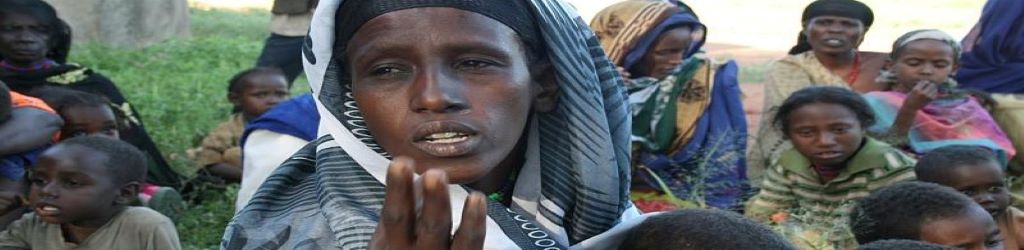
Food Crisis in the Horn of Africa by IFRC. Licensed under CC by ND 2.0
About TGR
The Genocide Report (TGR) publishes analysis and educational resources on conflict, international law, and atrocity prevention. Its work seeks to bridge academic research, field realities, and public understanding of mass violence and civilian protection.
About the Author
Lara Kajs is the founder and executive director of The Genocide Report, a Washington, DC-based educational nonprofit focused on atrocity prevention and international law. She is the author of several field-based books on conflict, displacement, humanitarian crises, and international humanitarian law, drawing on extensive research and field experience in Yemen, Syria, and Afghanistan. Her writing and public speaking focus on atrocity crimes, forced displacement, the protection of civilians, and the legal frameworks governing armed conflict.