Dispatches from the Field — The Genocide Report
Washington, DC — 19 December 2022
Türkiye’s military escalation following the Istanbul bombing reflects a pattern of cross-border operations that risk civilian harm, undermine humanitarian conditions, and challenge the credibility of international norms on civilian protection.
The 13 November 2022 terrorist attack in Istanbul’s Beyoğlu district, which killed six and injured dozens, prompted an immediate military response from Türkiye directed toward Kurdish groups in Syria and Iraq. Although no group claimed responsibility, Ankara attributed the attack to the Kurdistan Workers’ Party (PKK) and affiliated actors, including the Syrian Democratic Forces (SDF). Both groups denied involvement. Despite the uncertainty surrounding attribution, Türkiye initiated a large-scale aerial campaign, significantly escalating hostilities across northern Syria and Iraq.
Türkiye, the European Union, and the United States designate the PKK as a terrorist organization. Ankara further considers the People’s Defense Units (YPG), a primary component of the SDF, to be an extension of the PKK. These designations have formed the basis for repeated Turkish military operations targeting Kurdish-controlled areas, including regions critical to ongoing counter-ISIS efforts.
Operation Claw-Sword
Operation Claw-Sword involved extensive airstrikes targeting over 500 sites, many located in densely populated areas. Civilian populations, including those already displaced by years of conflict, were directly affected. Reports indicate strikes occurring in close proximity to residential areas, resulting in damage to homes and additional displacement.
Critical civilian infrastructure was also impacted. Airstrikes hit schools, healthcare facilities, and a COVID-19 treatment center, as well as energy and water infrastructure. Damage to grain silos, power stations, and fuel sources disrupted essential services, compounding humanitarian vulnerabilities. Roads frequently used by civilians and humanitarian actors were also targeted, forcing several aid organizations to suspend operations.
The degradation of infrastructure contributed to widespread power outages and communication disruptions, further isolating affected populations. These conditions have intensified an already severe humanitarian crisis in northeast Syria.
Military escalation framed as counterterrorism risks normalizing civilian harm and eroding international standards designed to protect populations in conflict.”
Political Declaration on the Use of Explosive Weapons
The timing of the strikes is notable. Türkiye had recently joined 81 states in endorsing the Political Declaration on the Protection of Civilians from the Use of Explosive Weapons in Populated Areas. The declaration reflects a growing international consensus aimed at limiting the humanitarian consequences of such weapons.
Strikes on civilian infrastructure and populated areas raise significant concerns regarding compliance with the principles underpinning the declaration. Attacks affecting civilian objects, including medical and educational facilities, may also constitute violations of international humanitarian law, particularly where they fail to distinguish between military and civilian targets or result in disproportionate harm.
Historical Patterns and Minority Targeting
Türkiye’s military operations in northern Syria reflect broader patterns of engagement with Kurdish populations. During prior incursions, including the 2019 offensive, Turkish forces and affiliated armed groups were accused of indiscriminate shelling, unlawful detention, and abuses against civilians.
These actions have contributed to sustained displacement and instability in Kurdish-majority regions. The cumulative impact of repeated military operations has reinforced perceptions of systematic targeting and has deepened existing grievances among affected populations.
Regional Stability and Escalation Risks
Türkiye’s continued military operations risk further destabilizing a region already weakened by prolonged conflict. A potential ground offensive would likely result in additional displacement and strain humanitarian systems that remain severely under-resourced.
International responses have been limited and, at times, contradictory. While condemning terrorism, key actors, including the United States, have reaffirmed their alliance with Türkiye, a NATO member. This dual posture reflects broader tensions between strategic alliances and the enforcement of international norms.
The absence of consistent accountability mechanisms risks signaling tolerance for actions that may undermine civilian protection and regional stability.
Atrocity Prevention Lens
The situation in northern Syria and Iraq reflects multiple indicators of atrocity risk, including ongoing armed conflict, targeting of civilian infrastructure, forced displacement, and identity-based violence against Kurdish populations. Repeated cross-border operations, coupled with limited accountability, increase the likelihood of further escalation and normalization of harm against civilians. Prevention strategies require sustained diplomatic engagement, clear conditionality in military cooperation, and reinforcement of international norms governing civilian protection. Without these measures, patterns of impunity may deepen, increasing both the scale and frequency of violations.
Legal Framework
International Humanitarian Law
The conduct of hostilities is governed by international humanitarian law, including the principles of distinction, proportionality, and precaution. Attacks directed against civilian populations or infrastructure, as well as indiscriminate or disproportionate strikes, constitute violations of these principles.
Protection of Civilians
The Political Declaration on the Use of Explosive Weapons in Populated Areas reinforces existing legal obligations by emphasizing the need to limit civilian harm. While not legally binding, it reflects evolving standards of state conduct and expectations regarding the protection of civilians.
War Crimes and Crimes Against Humanity
Deliberate or indiscriminate attacks against civilians, destruction of critical infrastructure, and acts such as torture or extrajudicial killings may constitute war crimes. Where such acts are widespread or systematic, they may also meet the threshold for crimes against humanity under international law.
State Responsibility and Accountability
States are responsible for ensuring that their military operations comply with international law. Mechanisms for accountability include domestic investigations, international judicial bodies, and the application of universal jurisdiction. The effectiveness of these mechanisms depends on political will and international cooperation.
Suggested Citation
“Türkiye’s Aggression in Northern Syria and Iraq.” Dispatches from the Field. The Genocide Report, Washington, DC,
19 December 2022.
Photo Credit
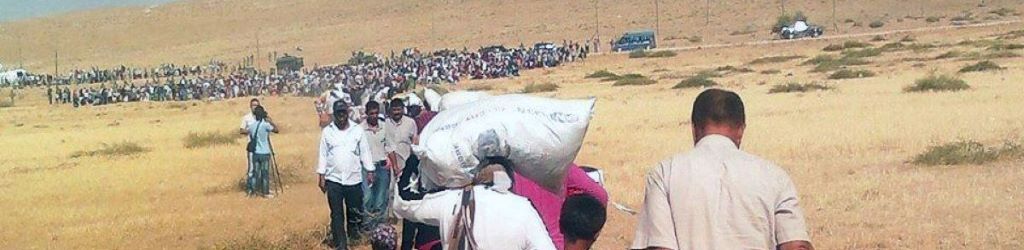
“Massive influx of Syrian Kurdish refugees into Türkiye” by EU Civil Protection and Humanitarian Aid. Licensed under CC by NC ND 2.0
About TGR
The Genocide Report (TGR) publishes analysis and educational resources on conflict, international law, and atrocity prevention. Its work seeks to bridge academic research, field realities, and public understanding of mass violence and civilian protection.