By Lara Kajs
Dispatches from the Field — The Genocide Report
Washington, DC — 9 January 2026
The reported U.S. military operation in Venezuela in January 2026 has triggered significant legal and geopolitical debate, raising urgent questions about the limits of unilateral force under international law. Framed by U.S. officials as a law enforcement action, the operation instead reflects a direct use of military force against a sovereign state, challenging established legal norms governing sovereignty, self-defense, and the prohibition on aggression.
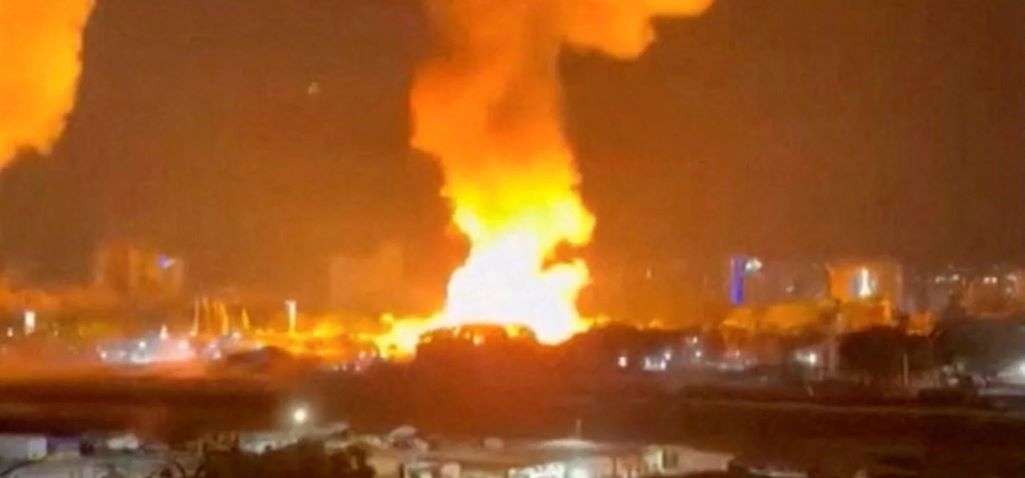
On 3 January 2026, United States military forces carried out a major operation in Venezuela, including air and ground strikes, and the arrest and extradition of President Nicolás Maduro and his wife, Cilia Flores. In the lead-up to the operation, the United States targeted vessels in the Caribbean Sea and the Pacific Ocean and extrajudicially killed 115 individuals whom the Trump administration claimed—without providing evidence—were narco-terrorists.
While the U.S. government has characterized the operation as a targeted “law enforcement” action against alleged drug traffickers, legal experts, foreign governments, and international bodies have widely concluded that the use of force violated core principles of international law, particularly the UN Charter, and may constitute a crime of aggression under the Rome Statute.
When military force is used without legal justification, the line between law enforcement and war collapses, undermining the international legal order.”
Use of Force, Self-Defense, and Crimes of Aggression
Prohibition on the Use of Force
Article 2(4) of the United Nations Charter requires all Member States to refrain from the threat or use of force against the territorial integrity or political independence of any state, except in narrowly defined circumstances. This principle is a cornerstone of modern international law. Military invasions, airstrikes, and armed incursions are presumed unlawful unless a recognized exception applies. Regime change, arrests, or unilateral “law enforcement” operations do not qualify.
Limits of Self-Defense Under Article 51
Article 51 permits self-defense only in response to an armed attack or an imminent threat. Any action must meet the requirements of necessity and proportionality. The U.S. operation constituted a unilateral use of military force on Venezuelan territory. There is no clear evidence of an armed attack or an imminent threat posed by Venezuela. Alleged criminal activity, including drug trafficking, does not meet the Article 51 threshold. Consequently, self-defense cannot justify the operation.
Crime of Aggression Under the Rome Statute
International law experts have characterized the operation as potentially constituting a crime of aggression. Article 8 bis of the Rome Statute defines this crime as the use of armed force by a state against the sovereignty, territorial integrity, or political independence of another state. Examples include invasion, military occupation, and bombardment—all relevant here.
UN Security Council Authorization
Articles 39–42 of the UN Charter establish that only the Security Council may authorize the use of force to address threats to international peace and security. No Security Council resolution authorized U.S. military action against Venezuela, meaning the operation bypassed the collective security framework.
Violation of Sovereignty and Territorial Integrity
International law protects state sovereignty and political independence. UN General Assembly Resolution 2625 (1970) affirms that no state may intervene in another state’s internal or external affairs. Extradition must occur through formal legal processes, not unilateral military action. The operation violated these norms and may constitute unlawful abduction.
A Dangerous Precedent
Permitting a powerful state to use military force without legal justification sets a dangerous precedent. It undermines the UN Charter and weakens the broader international legal order. The U.S. operation in Venezuela blurs the line between law enforcement and armed conflict, threatening to normalize unilateral interventions driven by political or economic interests rather than adherence to international law.
Call for Accountability and Protection of Civilians
The Genocide Report urges the United States to uphold international humanitarian and human rights law and to prioritize the protection of civilians in Venezuela. All alleged violations by the Maduro government should be independently investigated, and those responsible must be held accountable in impartial courts to ensure justice for victims and survivors.
Photo credit: 26-01-03 01 Venezuela Under Attack by Felton Davis. Licensed under Public Domain Mark 1.0
Atrocity Prevention Lens
Unilateral military operations by major powers, particularly in politically sensitive or volatile regions, carry significant risks for civilian populations. Such actions can escalate armed conflict, destabilize governance structures, and undermine international norms designed to protect human life. Analysts focused on atrocity prevention highlight the importance of legal restraint, independent investigation, and adherence to international humanitarian law as essential safeguards against mass human rights violations.
Legal Framework
Prohibition on the Use of Force
Article 2(4) of the UN Charter prohibits the use of force against another state’s sovereignty or political independence, except in narrowly defined circumstances.
Self-Defense
Article 51 allows force only in response to an armed attack or imminent threat, subject to necessity and proportionality. Alleged criminal activity does not justify military action under international law.
Security Council Authorization
Military action may only be authorized collectively by the UN Security Council when international peace and security are threatened.
Protection of Civilians
International humanitarian law, including the Geneva Conventions, obligates states to distinguish between civilian and military targets and prohibits attacks expected to cause disproportionate harm to civilians.
About TGR
The Genocide Report (TGR) publishes analysis and educational resources on conflict, international law, and atrocity prevention. Its work seeks to bridge academic research, field realities, and public understanding of mass violence and civilian protection.
About the Author
Lara Kajs is the founder and executive director of The Genocide Report, a Washington, DC-based educational nonprofit focused on atrocity prevention and international law. She is the author of several field-based books on conflict, displacement, humanitarian crises, and international humanitarian law, drawing on extensive research and field experience in Yemen, Syria, and Afghanistan. Her writing and public speaking focus on atrocity crimes, forced displacement, the protection of civilians, and the legal frameworks governing armed conflict.