By Lara Kajs
Dispatches from the Field — The Genocide Report
Washington, DC, — 7 December 2022
Global protest movements highlight the systematic repression of women and girls in authoritarian contexts, where gender-based restrictions, violence, and state control intersect to deny fundamental human rights.
Across multiple regions, protest movements have emerged in response to systemic violence and discrimination against women and girls. These demonstrations reflect broader demands for fundamental human rights, including access to education, freedom of movement, and participation in public life. While contexts differ, the underlying grievances share a common foundation: the institutionalization of gender-based oppression and the normalization of violence against women.
Gender Oppression in Afghanistan
Since the Taliban’s return to power in August 2021, restrictions on women and girls have intensified rapidly, reversing two decades of progress. Women face severe limitations on movement, education, and employment, while enforcement mechanisms rely on both state actors and social coercion.
Policies requiring male guardianship for travel and restricting access to public spaces have effectively confined many women to their homes. The exclusion of girls from secondary education and the prohibition of women from attending universities have further entrenched gender inequality. These measures not only restrict individual freedoms but also contribute to broader social and economic marginalization.
Enforcement practices have included public beatings and arbitrary detention. Reports indicate that male family members are pressured or punished for perceived failures to control female relatives, reinforcing a system in which gender-based violence is both normalized and diffused across society.
Women who engage in peaceful protest or advocacy have been specifically targeted. The arrest of activist Zarifa Yaqubi, detained without explanation while organizing a women’s rights initiative, illustrates the risks faced by those attempting to challenge these policies. Such actions signal a broader effort to suppress dissent and silence advocacy.
Protest and Repression in Iran
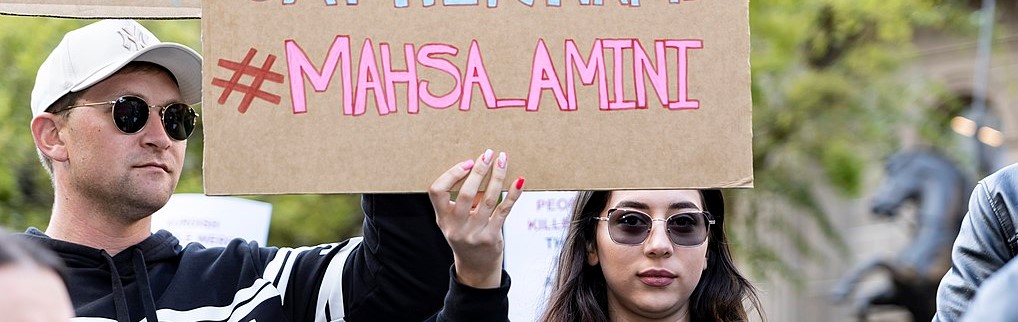
In Iran, protests following the death of Mahsa Amini in September 2022 have evolved into a nationwide movement. Initially triggered by the enforcement of mandatory hijab laws, the demonstrations have expanded to encompass broader demands for political and social reform.
The response by Iranian authorities has been marked by widespread repression. Security forces have used lethal force against demonstrators, resulting in hundreds of deaths, including children. Thousands have been arrested, and reports indicate the use of intimidation, arbitrary detention, and the threat of capital punishment to suppress dissent.
Individual cases, such as the killing of Ghazaleh Chalabi during protests, have become emblematic of the risks faced by participants. The scale and persistence of the protests, spanning numerous cities and institutions, reflect both the depth of public grievance and the limits of state control.
International observers and officials have expressed concern regarding the escalation of violence and restrictions on freedom of expression. The targeting of protesters, including minors, underscores the severity of the state response.
Subverting the Protest
Statements by Iranian officials suggesting potential reforms, including the reported dissolution of the morality police, have introduced ambiguity into the government’s response. However, subsequent reversals and inconsistent messaging raise questions regarding the durability and sincerity of such measures.
Legal and institutional frameworks supporting mandatory dress codes remain in place, and enforcement practices may be adapted rather than eliminated. The possibility that limited concessions are intended to diffuse protest momentum highlights the strategic dimension of state responses to dissent.
The continuation of arrests, threats, and punitive measures indicates that underlying structures of control remain largely intact.
It’s About Human Rights
While specific triggers for protest differ, movements in both Afghanistan and Iran converge around fundamental demands for human rights. These include the right to education, freedom of expression, bodily autonomy, and participation in public life.
The cases of Mahsa Amini, Ghazaleh Chalabi, and Zarifa Yaqubi illustrate the personal risks associated with asserting these rights. Their experiences reflect broader patterns of gender-based violence and repression, as well as the persistence of resistance despite such risks.
International recognition that women’s rights are human rights, affirmed at the 1995 Beijing Conference, provides a normative framework for evaluating these situations. However, the gap between recognition and enforcement remains significant.
Where gender-based repression is institutionalized, protest becomes both an act of resistance and a demand for recognition under international law.”
Advocacy and Global Awareness
The annual 16 Days of Activism Against Gender-Based Violence, spanning from 25 November to 10 December, serves as a global platform to raise awareness and promote accountability. These initiatives highlight the prevalence of gender-based violence and seek to challenge entrenched social and political norms.
In the context of ongoing protests, such advocacy efforts reinforce the connection between local movements and global human rights frameworks. They also underscore the role of international attention in supporting, though not substituting for, domestic efforts to secure change.
Atrocity Prevention Lens
The situations in Afghanistan and Iran demonstrate multiple indicators of atrocity risk, including systematic discrimination, widespread repression of civilian populations, and the normalization of gender-based violence. The institutionalization of restrictions targeting women and girls, combined with the use of force against protesters, increases the likelihood of escalation into broader patterns of abuse. Prevention strategies must prioritize international monitoring, support for civil society actors, and the application of diplomatic and economic pressure on responsible authorities. Addressing gender-based repression as a central component of atrocity prevention is critical, as such patterns often serve as early warning indicators of more extensive human rights violations.
Legal Framework
Crimes Against Humanity
Systematic repression, including imprisonment, torture, and persecution based on gender, may constitute crimes against humanity when conducted as part of a widespread or systematic attack against a civilian population.
Gender Persecution
International law increasingly recognizes gender-based persecution as a distinct category of crime. Policies that intentionally deprive women and girls of fundamental rights, including access to education and freedom of movement, may meet this threshold.
International Human Rights Law
Restrictions on freedom of expression, assembly, and movement violate core human rights protections enshrined in international treaties. The use of force against peaceful protesters further contravenes these obligations.
Protection of Human Rights Defenders
International frameworks emphasize the protection of individuals advocating for human rights. The targeting of activists through arbitrary detention and intimidation represents a violation of these protections and undermines broader accountability efforts.
Suggested Citation
Kajs, Lara. “In Protest.” Dispatches from the Field. The Genocide Report, Washington, DC, 7 December 2022.
Photo Credit
Solidarity with Iranian Protests (52382966731) by Matt Hirkac from Geelong/Melbourne, Australia
About TGR
The Genocide Report (TGR) publishes analysis and educational resources on conflict, international law, and atrocity prevention. Its work seeks to bridge academic research, field realities, and public understanding of mass violence and civilian protection.
About the Author
Lara Kajs is the founder and executive director of The Genocide Report, a Washington, DC-based educational nonprofit focused on atrocity prevention and international law. She is the author of several field-based books on conflict, displacement, humanitarian crises, and international humanitarian law, drawing on extensive research and field experience in Yemen, Syria, and Afghanistan. Her writing and public speaking focus on atrocity crimes, forced displacement, the protection of civilians, and the legal frameworks governing armed conflict.