By Lara Kajs
Dispatches from the Field—The Genocide Report
Washington, DC—26 August 2025
Gaza is facing a catastrophic humanitarian emergency, where decades of conflict, ongoing military operations, and systemic restrictions on aid have converged to create widespread famine. International organizations warn that hundreds of thousands of civilians, particularly children, are at immediate risk of starvation, malnutrition, and disease. The situation highlights both the human cost of protracted conflict and the urgent need for enforceable international humanitarian interventions.
A famine is sweeping across Gaza, driven by relentless conflict, economic blockade, and systematic restrictions on humanitarian aid. The result: mass hunger, widespread disease, and a population on the brink of collapse. Gaza’s famine is a man-made crisis that could be resolved through immediate, unconditional access for aid agencies and a ceasefire.
Impact on Gaza’s Population
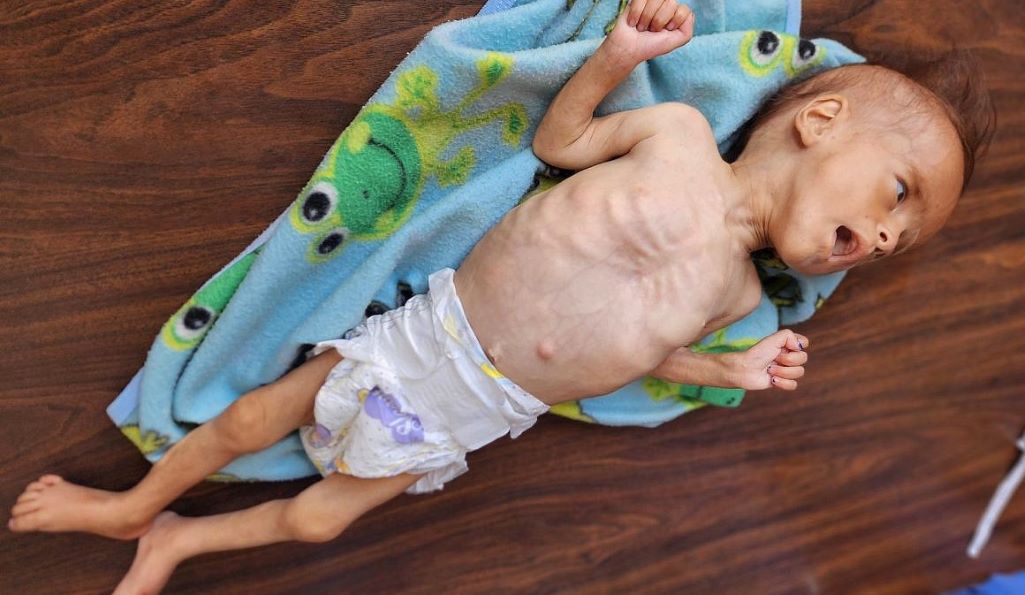
On 22 August, after the Integrated Food Security Phase Classification (IPC) reported that Gaza is experiencing a full-blown famine. Over 500,000 people currently face starvation, with projections rising to 640,000 by September. UNICEF and the World Food Programme (WFP) warned that at least 470,000 Gazans are in IPC Phase 5—facing catastrophic hunger—while thousands of children and mothers suffer from acute malnutrition. Maternal and child malnutrition rates are soaring, with fatalities mounting.
More than 80% of Gaza’s population is now food insecure. Children are especially vulnerable, with thousands at risk of stunting and severe malnutrition. Hospitals, overwhelmed and undersupplied, cannot treat basic dehydration or preventable diseases. Limited access to clean water and sanitation has fueled cholera outbreaks and other public health crises.
Alongside physical deprivation, psychological trauma is pervasive. Families displaced multiple times live in overcrowded shelters or open spaces, exposed to ongoing bombardment, hunger, and insecurity. The generational impact of constant violence and deprivation leaves deep scars on Gaza’s youth.
Systemic Destruction and Economic Collapse
Continuous airstrikes, ground incursions, and the destruction of critical infrastructure—water systems, hospitals, and food supply chains—have made much of Gaza uninhabitable. The agricultural sector, already constrained by import restrictions, has been decimated: 70–75% of cropland destroyed, nearly 95% of livestock lost, and irrigation systems shattered. Markets are empty, commercial activity has halted, and food prices are far beyond what families can afford.
Humanitarian organizations report severe restrictions on aid convoys and fuel supplies. Even when aid arrives, it is insufficient and often fails to reach the most vulnerable. The UN and international NGOs have described Gaza’s condition as “man-made starvation.”
Gaza’s famine is not a natural disaster—it is a man-made catastrophe that could be ended tomorrow by allowing aid in and enforcing an unconditional ceasefire.”
Violation of Humanitarian Law and International Inaction
Starvation as a weapon constitutes a grave violation of international law. Additional Protocol I to the Geneva Conventions and the Rome Statute prohibit the use of starvation of civilians as a method of warfare. Israel’s blockade, destruction of infrastructure, and militarized aid restrictions constitute deliberate harm to civilians—collective punishment that may meet thresholds of genocide.
Despite widespread condemnation and urgent calls for action, diplomatic efforts have yielded limited results. UN resolutions, sanctions calls, and advocacy by the EU, NGOs, and international bodies remain largely unenforced. The UN warns that without immediate intervention, Gaza’s famine may become irreversible.
The International Criminal Court (ICC) issued arrest warrants for Israeli leaders Benjamin Netanyahu and Yoav Gallant for war crimes, specifically using starvation as a weapon. The International Court of Justice (ICJ) has ordered Israel to permit unhindered humanitarian aid and restore essential services. Reports indicate noncompliance.
More than 200 EU diplomats have urged sanctions, arms embargoes, trade restrictions, and corporate accountability linked to settlements. TGR has called for targeted sanctions, suspension of arms transfers, and ICC cooperation. Without decisive global action, the world risks witnessing mass civilian deaths and a preventable atrocity.
Gaza’s famine is not a natural disaster. It is the product of war, political neglect, and systemic obstruction of humanitarian relief. Upholding international humanitarian law is imperative. States must act immediately to ensure accountability, deliver life-saving assistance, and restore basic human rights in Gaza.
Photo credit: Eight-month-old Salam Wadi at an UNRWA clinic in Gaza City, 9 July 2025. (Hussein Owda/UNRWA).
Atrocity Prevention Lens
Gaza’s famine reflects multiple high-risk indicators associated with mass atrocity crimes, including widespread civilian deprivation, forced displacement, destruction of essential infrastructure, and restrictions on humanitarian access. These conditions significantly increase vulnerability among civilian populations, particularly children, and create an environment in which large-scale loss of life becomes increasingly likely.
From an atrocity prevention perspective, the use of starvation, whether intentional or as a consequence of policy decisions, represents a critical escalation risk. The convergence of food insecurity, public health collapse, and ongoing military operations creates a trajectory toward irreversible humanitarian catastrophe. Preventing further escalation requires immediate, sustained humanitarian access, protection of civilian infrastructure, and coordinated international action to address both the symptoms and structural drivers of the crisis.
Legal Framework
International Humanitarian Law
International humanitarian law, including the Geneva Conventions, requires parties to a conflict to distinguish between civilians and combatants and prohibits attacks on civilian objects, including infrastructure essential for survival such as water systems and food supply chains.
Prohibition of Starvation as a Method of Warfare
Additional Protocol I to the Geneva Conventions and the Rome Statute explicitly prohibit the use of starvation of civilians as a method of warfare, including the denial of humanitarian aid and essential resources.
Collective Punishment
International law prohibits collective punishment against civilian populations. Policies that impose widespread suffering on civilians for actions they did not commit may constitute serious violations of international humanitarian law.
International Criminal Court (ICC)
The ICC has jurisdiction over war crimes, crimes against humanity, and genocide. The use of starvation as a weapon of war may constitute a prosecutable offense under the Rome Statute.
International Court of Justice (ICJ)
The ICJ issues binding rulings on state obligations under international law. Orders requiring the provision of humanitarian aid and protection of civilians carry legal weight and are central to state compliance with international legal standards.
Genocide Convention
The 1948 Genocide Convention defines genocide as acts committed with the intent to destroy, in whole or in part, a protected group. Establishing intent remains a key legal threshold, particularly in assessing whether patterns of conduct meet the criteria for genocide.
About TGR
The Genocide Report (TGR) publishes analysis and educational resources on conflict, international law, and atrocity prevention. Its work seeks to bridge academic research, field realities, and public understanding of mass violence and civilian protection.
About the Author
Lara Kajs is the founder and executive director of The Genocide Report, a Washington, DC-based educational nonprofit focused on atrocity prevention and international law. She is the author of several field-based books on conflict, displacement, humanitarian crises, and international humanitarian law, drawing on extensive research and field experience in Yemen, Syria, and Afghanistan. Her writing and public speaking focus on atrocity crimes, forced displacement, the protection of civilians, and the legal frameworks governing armed conflict.