By Lara Kajs
Dispatches from the Field—The Genocide Report
Washington, DC4— September 2023
Global displacement has reached unprecedented levels, driven by protracted conflict, persecution, human rights violations, and environmental stressors. The number of forcibly displaced persons has surpassed 110 million, doubling over the past decade and reflecting a sustained failure to resolve underlying drivers of displacement. Concentrated primarily in a small number of conflict-affected states, displacement has evolved from a temporary humanitarian challenge into a long-term structural condition with significant implications for civilian protection, regional stability, and international governance.
Scale and Drivers of Displacement
A disproportionate share of global displacement originates from a limited number of countries, notably Afghanistan, Syria, and Ukraine. These cases illustrate how protracted conflict generates sustained population movements over years or decades. In the case of Syria, more than a decade of conflict has produced one of the largest and most enduring displacement crises, with the majority of refugees remaining within the Middle East. Türkiye continues to host the largest refugee population globally, reflecting both geographic proximity and regional burden-sharing dynamics.
Beyond armed conflict, displacement is increasingly linked to intersecting pressures, including economic instability, governance failures, and climate-related disruptions. These overlapping drivers complicate response efforts and contribute to the persistence of displacement over time.
The burden of hosting displaced populations falls disproportionately on low- and middle-income countries, which host approximately three-quarters of the global displaced population. This concentration places significant strain on national infrastructure, public services, and local economies, often exacerbating existing vulnerabilities in host communities.
Protection Risks and Humanitarian Impact
Displaced populations face elevated protection risks compared to non-displaced civilians. These include heightened exposure to violence, exploitation, and systemic neglect. Women and children, who constitute the majority of displaced persons, are particularly vulnerable to sexual violence, trafficking, arbitrary detention, and other forms of abuse.
Mortality rates among displaced populations are significantly higher, reflecting limited access to healthcare, inadequate shelter, and food insecurity. Access to essential services—including education and livelihoods—is frequently disrupted, contributing to long-term socioeconomic marginalization.
Humanitarian actors play a central role in addressing these needs; however, resource constraints and access limitations often prevent comprehensive coverage. The scale of displacement has outpaced the capacity of existing systems, resulting in persistent gaps in assistance and protection.
Protracted Displacement and Camp Realities
Displacement is rarely short-term. Refugees remain displaced for an average of two decades, while many internally displaced persons experience prolonged or repeated displacement. Camps and informal settlements often evolve into semi-permanent environments, where generations are born and raised without durable solutions.
The Dadaab refugee complex in Kenya exemplifies this dynamic, hosting hundreds of thousands of refugees, many of whom have lived there for decades. Similar patterns are evident in conflict-affected states such as Yemen, Afghanistan, and Syria, where internal displacement has persisted for years, often involving multiple displacements as frontlines shift.
These conditions create cycles of dependency, limit economic opportunity, and complicate prospects for voluntary return or integration. Prolonged displacement also increases exposure to protection risks, particularly in overcrowded or under-resourced environments.
Global displacement is no longer a temporary humanitarian emergency; it is a prolonged condition shaping the security, stability, and future of entire regions.”
Refugees and Internally Displaced Persons
International law distinguishes between refugees and internally displaced persons based on whether an individual has crossed an international border. Under the 1951 Convention Relating to the Status of Refugees, refugees are entitled to specific legal protections, including non-refoulement and access to asylum procedures.
Internally displaced persons, by contrast, remain within their country of origin and therefore do not benefit from a distinct legal status under international law. While they retain the same rights as other civilians, the absence of a dedicated legal regime creates gaps in protection, particularly when the state is unable or unwilling to fulfill its responsibilities.
This distinction is significant given that internally displaced persons constitute the majority of the global displaced population, numbering more than 70 million. Many remain in active conflict zones, where they are exposed to ongoing violence and frequently lack access to humanitarian assistance.
Responsibility to Protect and Institutional Constraints
Primary responsibility for the protection of internally displaced persons rests with the state in which they reside. This reflects the principle of sovereignty; however, it also creates a critical vulnerability when states fail to protect their populations or are themselves parties to the conflict.
In such cases, the Responsibility to Protect framework provides a normative basis for international engagement. Where populations face mass atrocity risks and national authorities are unable or unwilling to respond, the international community may take collective action through diplomatic, humanitarian, or, in extreme cases, coercive measures.
Operationally, the international response to internal displacement relies on a “cluster approach,” in which multiple agencies coordinate the delivery of assistance across sectors such as food security, shelter, healthcare, and protection. While this model facilitates collaboration, it also reflects the absence of a single authoritative body responsible for internally displaced persons, contributing to coordination challenges and uneven outcomes.
Guiding Principles on Internal Displacement
The UN Guiding Principles on Internal Displacement establish a comprehensive framework for the protection of internally displaced persons. Although not legally binding, they consolidate existing human rights and humanitarian law standards applicable to displacement.
The Principles affirm that arbitrary displacement is prohibited and that displaced persons are entitled to fundamental rights, including access to food, shelter, healthcare, education, and freedom of movement. They also emphasize protection from violence, participation in public life, and the right to pursue economic activities.
Importantly, the Principles recognize the right of internally displaced persons to voluntary, safe, and dignified return, resettlement, or local integration. They further call for restitution, compensation, or reparation for losses suffered as a result of displacement.
Despite broad international acceptance, implementation remains inconsistent and dependent on state capacity and political will. This gap between normative standards and practice continues to shape the lived realities of millions of displaced persons.
Atrocity Prevention Lens
Mass displacement is both a consequence and an indicator of atrocity risk. Large-scale population movements often reflect underlying patterns of violence, persecution, or systematic rights violations. When displacement is accompanied by targeting of civilians, destruction of infrastructure, or denial of humanitarian access, the risk of further atrocities increases. Internally displaced persons are particularly vulnerable due to their proximity to conflict zones and limited protection mechanisms. Strengthening early warning systems, ensuring humanitarian access, and reinforcing accountability for violations are critical to preventing escalation. Durable solutions to displacement must also address root causes, including conflict resolution, governance failures, and structural inequality.
Legal Framework
1951 Refugee Convention and 1967 Protocol
The Refugee Convention establishes the legal definition of a refugee and outlines the rights and protections afforded to individuals who cross international borders due to persecution. Central to this framework is the principle of non-refoulement, which prohibits the return of individuals to situations where they face serious harm.
International Humanitarian Law
International humanitarian law protects civilians during armed conflict, including those who are displaced. It prohibits forced displacement unless required for civilian safety or imperative military reasons and mandates humane treatment and access to essential services.
International Human Rights Law
Human rights law guarantees fundamental rights to all individuals, including displaced persons, without discrimination. These rights include access to food, healthcare, education, and protection from violence and exploitation.
Guiding Principles on Internal Displacement
While not legally binding, the Guiding Principles provide an authoritative framework for the protection of internally displaced persons. They reflect and reinforce existing legal obligations and serve as a benchmark for state and international action.
Suggested Citation
Kajs, Lara. “Global Displacement: Scale, Protection Gaps, and the Limits of International Response.” Dispatches from the Field
The Genocide Report. Washington, DC, 4 September 2023.
Photo Credit
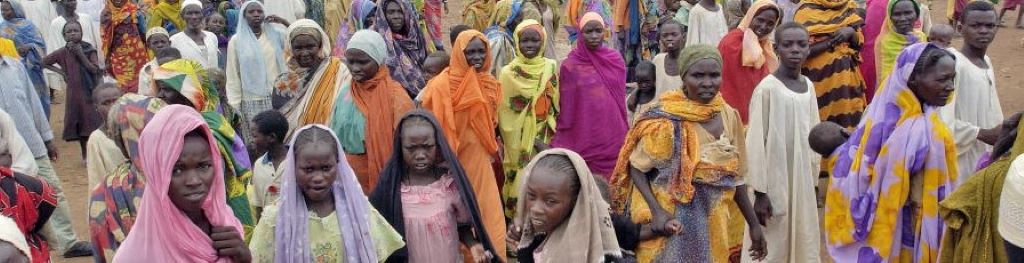
Internally Displaced Persons Camp in Sudan by United Nations Photo. Licensed under CC BY-NC-ND 2.0
About TGR
The Genocide Report (TGR) publishes analysis and educational resources on conflict, international law, and atrocity prevention. Its work seeks to bridge academic research, field realities, and public understanding of mass violence and civilian protection.
About the Author
Lara Kajs is the founder and executive director of The Genocide Report, a Washington, DC-based educational nonprofit focused on atrocity prevention and international law. She is the author of several field-based books on conflict, displacement, humanitarian crises, and international humanitarian law, drawing on extensive research and field experience in Yemen, Syria, and Afghanistan. Her writing and public speaking focus on atrocity crimes, forced displacement, the protection of civilians, and the legal frameworks governing armed conflict.