By Lara Kajs
Dispatches from the Field — The Genocide Report
Washington, DC — 11 December 2020
The protection of civilians lies at the core of international humanitarian law, yet contemporary conflicts continue to expose the limits of legal frameworks when political will and enforcement are absent.
International Humanitarian Law (IHL) governs the conduct of armed conflict, with the central aim of limiting its effects on civilians and those no longer participating in hostilities. It establishes rules on the protection of civilian populations and restricts the means and methods of warfare.
Despite the clarity of these legal obligations, the implementation of civilian protection—commonly referred to as Protection of Civilians (POC)—remains uneven across conflict environments.
Humanitarian Actors and Military Forces
Humanitarian organizations operate under principles of neutrality, impartiality, and independence. In practice, however, their ability to deliver assistance often depends on interaction with military actors, particularly in insecure environments.
Military forces, including state armed forces and peacekeeping missions, may provide logistical support or security. Under IHL, parties to a conflict bear responsibility for facilitating humanitarian access and protecting relief personnel in areas under their control.
This relationship creates an inherent tension. While cooperation can enable access and protection, it may also blur perceptions of neutrality—potentially increasing risks for humanitarian personnel and limiting their ability to operate across conflict lines.
Peacekeeping and Legal Ambiguity
The role of peacekeeping forces in civilian protection highlights ongoing legal and operational ambiguity. Unlike occupying powers, peacekeeping missions operate under mandates that vary in scope and authority, often including explicit POC responsibilities.
However, the extent of their obligations under International Humanitarian Law (IHL) and International Human Rights Law (IHRL) remains contested in practice.
The failure to protect civilians in Srebrenica illustrates the consequences of unclear mandates, limited capacity, and political constraints. Despite the presence of peacekeepers, thousands of civilians were left unprotected, underscoring the gap between legal commitments and operational realities.
Defining Protection of Civilians
One of the central challenges in implementing POC is the lack of a universally applied operational definition. Interpretations vary among states, militaries, and humanitarian organizations, often shaped by political priorities and strategic objectives.
Establishing a shared understanding of POC is critical for effective coordination. Without it, actors may pursue divergent approaches, leading to gaps in protection or unintended harm to civilian populations.
Humanitarian organizations employ different strategies to advance civilian protection. Some rely on confidential engagement with parties to a conflict, while others emphasize public advocacy. These approaches are not mutually exclusive but reflect differing assessments of how best to influence behavior.
Military actors, by contrast, may interpret POC through a security lens, sometimes prioritizing force-based measures. In certain contexts, such as the placement of military assets within civilian areas, such strategies may increase risks to the populations they intend to protect.
The protection of civilians is not a conceptual ideal—it is a legal obligation repeatedly tested, and too often undermined, in modern conflict.”
Coordination and Operational Risk
The growing number of actors in contemporary conflicts has increased the need for coordination. Humanitarian organizations, military forces, and peacekeeping missions often operate simultaneously within the same environment.
While coordination can enhance protection outcomes, it also carries risks. Perceived alignment with one party to a conflict may compromise humanitarian neutrality and expose personnel to retaliation from opposing forces.
Balancing coordination with independence remains a central challenge in the implementation of POC.
Case Study: Yemen
The conflict in Yemen demonstrates the consequences of sustained violations of IHL and the erosion of civilian protections.
Since 2015, civilians have borne the brunt of hostilities. Airstrikes, shelling, and ground operations have damaged or destroyed critical infrastructure, including hospitals, schools, and water systems. The resulting humanitarian crisis includes widespread displacement, food insecurity, and the collapse of public health systems.
Disease outbreaks, including cholera, have further compounded the crisis. These conditions reflect not only the direct impact of conflict but also the cumulative effects of restricted humanitarian access and prolonged instability.
International bodies, including the United Nations Human Rights Council, have documented repeated violations of international humanitarian law by multiple parties to the conflict.
Case Study: Syria
The conflict in Syria illustrates the systematic erosion of civilian protection in a complex, multi-actor war.
What began as protests in 2011 evolved into a protracted conflict involving state forces, non-state armed groups, and international actors. Across the conflict, civilians have been exposed to repeated violations, including attacks on civilian infrastructure, mass displacement, and restricted access to humanitarian assistance.
Hospitals, schools, and essential services have been targeted or destroyed, significantly limiting access to care and basic necessities. Humanitarian access has frequently been politicized, used as leverage in negotiations rather than treated as a legal obligation.
The Syrian case underscores a central challenge of POC: the existence of legal frameworks does not guarantee compliance, particularly in conflicts characterized by fragmented authority and competing external interests.
Atrocity Prevention Lens
The failure to uphold POC obligations is often an early indicator of broader atrocity risks. Patterns such as attacks on civilians, obstruction of humanitarian access, and the targeting of essential infrastructure signal a deterioration of legal and moral constraints on the use of force.
Strengthening civilian protection requires not only legal frameworks but also political will, enforcement mechanisms, and sustained international engagement.
Legal Framework
International Humanitarian Law (IHL)
Establishes rules governing armed conflict, including the protection of civilians and restrictions on methods of warfare.
Geneva Conventions
Provide the core legal protections for civilians, detainees, and those hors de combat.
International Human Rights Law (IHRL)
Applies alongside IHL, particularly in areas under state control, ensuring fundamental rights and protections.
UN Peacekeeping Mandates
Define the scope and authority of peacekeeping operations, including responsibilities related to civilian protection.
Suggested Citation
Kajs, Lara. “Protection of Civilians (POC).” Dispatches from the Field. The Genocide Report, Washington, DC, 11 December 2020.
Photo Credit
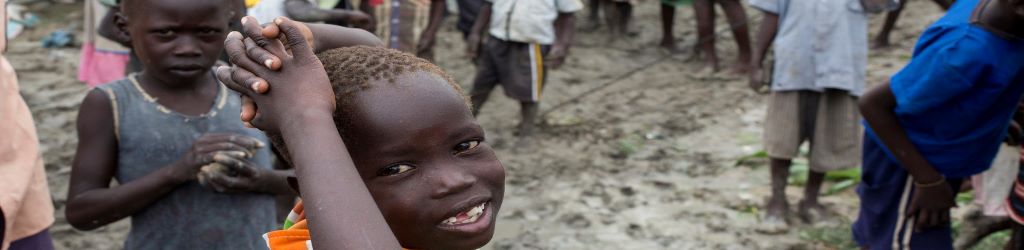
Protection of Civilians Site – Malakal, South Sudan – UN Photo/JC McIlwaine
About TGR
The Genocide Report (TGR) publishes analysis and educational resources on conflict, international law, and atrocity prevention. Its work seeks to bridge academic research, field realities, and public understanding of mass violence and civilian protection.
About the Author
Lara Kajs is the founder and executive director of The Genocide Report, a Washington, DC-based educational nonprofit focused on atrocity prevention and international law. She is the author of several field-based books on conflict, displacement, humanitarian crises, and international humanitarian law, drawing on extensive research and field experience in Yemen, Syria, and Afghanistan. Her writing and public speaking focus on atrocity crimes, forced displacement, the protection of civilians, and the legal frameworks governing armed conflict.