By Lara Kajs
Dispatches from the Field — The Genocide Report
Washington, DC — 11 March 2022
The Syrian conflict reflects the escalation of state repression into a protracted, multi-actor war, marked by widespread violations of international law and a sustained humanitarian crisis.
The Syrian conflict originated in 2011 as part of the broader wave of uprisings associated with the Arab Spring. Protests initially centered on demands for political reform, accountability, and improved economic conditions following decades of centralized rule under Hafez al-Assad and his successor, Bashar al-Assad.
State authorities responded with force, deploying security services against demonstrators. As protests expanded, the government’s response escalated, contributing to the rapid militarization of the conflict. Over time, Syria transitioned from a domestic uprising to a complex and protracted war involving multiple state and non-state actors.
What began as a domestic uprising evolved into a protracted conflict sustained by external support, fragmented opposition, and limited diplomatic leverage.”
Patterns of Violence and Violations of International Law
The conflict has been characterized by widespread and systematic violence against civilians. Documented abuses include the use of chemical weapons, deployment of indiscriminate munitions such as barrel bombs, siege tactics, torture, enforced disappearances, and extrajudicial killings.
Attacks on civilian infrastructure—including residential areas and medical facilities—have been repeatedly documented, raising serious concerns under international humanitarian law. Reports of sexual violence and mass detention further illustrate the scope of violations.
While responsibility for abuses extends across multiple actors, a significant portion has been attributed to state forces and affiliated groups. These patterns have contributed to sustained allegations of war crimes and crimes against humanity.
Displacement and Humanitarian Crisis
The humanitarian impact of the conflict has been extensive. Approximately half of Syria’s pre-war population has been displaced, with millions seeking refuge in neighboring countries and millions more internally displaced.
States such as Türkiye, Jordan, and Lebanon host large refugee populations, placing sustained pressure on national infrastructure and resources. Inside Syria, humanitarian needs remain acute, with millions requiring ongoing assistance.
Food insecurity is widespread, and large segments of the population face limited access to adequate nutrition. Children have been disproportionately affected, particularly in areas experiencing prolonged deprivation.
The healthcare system has been severely degraded. Damage to infrastructure, combined with repeated attacks on medical facilities, has significantly reduced access to care. Broader economic decline—including currency devaluation and inflation—has further exacerbated vulnerability, contributing to high levels of poverty.
Internationalization of the Conflict
As the conflict evolved, external actors became increasingly involved, transforming Syria into a theater of regional and international competition.
The Syrian government has received sustained support from Russia and Iran. Russian military intervention, particularly through airpower, has played a decisive role in reinforcing government positions. Iranian support, including affiliated militias, has supplemented ground operations.
Opposition forces have received varying levels of backing from external actors, including Türkiye, the United States, the United Kingdom, France, and Gulf states. These relationships have been fluid and often fragmented, contributing to a lack of cohesion among opposition groups.
Parallel military campaigns have further complicated the conflict. A U.S.-led coalition targeted extremist organizations, while Turkish operations focused on border security and Kurdish-affiliated forces. The presence of multiple actors with overlapping and sometimes competing objectives has prolonged the conflict and complicated resolution efforts.
Accountability and Legal Constraints
Efforts to pursue accountability for violations have faced significant structural barriers. Allegations of war crimes and crimes against humanity have been documented extensively; however, enforcement mechanisms remain limited.
The International Criminal Court has jurisdictional constraints, as Syria is not a party to the Rome Statute. Efforts to refer the situation to the Court through the UN Security Council have been blocked by vetoes, reflecting broader geopolitical divisions.
Alternative mechanisms, including investigative bodies and universal jurisdiction cases pursued by individual states, have sought to address accountability gaps. However, these efforts remain partial and limited in scope.
Prospects for Conflict Resolution
Diplomatic efforts to resolve the conflict have centered on frameworks such as the 2012 Geneva Communiqué, which calls for a negotiated political transition. Despite multiple rounds of UN-mediated talks, progress has been limited.
Entrenched positions among key actors—particularly regarding the role of Bashar al-Assad in any transitional arrangement—have impeded negotiations. External stakeholders continue to shape the conflict’s trajectory, often prioritizing strategic interests over compromise.
The persistence of fragmented control, ongoing violence, and economic instability suggests that resolution will require sustained diplomatic engagement and alignment among major actors. Without these conditions, the conflict is likely to remain in a state of prolonged stalemate.
Atrocity Prevention Lens
The Syrian conflict illustrates how early indicators—state repression, restrictions on civic space, and targeted violence against civilians—can escalate into widespread and sustained atrocity crimes. Once entrenched, such conflicts become significantly more difficult to contain or resolve. Strengthening early warning systems, reinforcing accountability mechanisms, and ensuring timely international response are critical to preventing similar trajectories in future crises.
Legal Framework
Geneva Conventions and Additional Protocols
Establish protections for civilians and regulate the conduct of hostilities, including prohibitions on targeting non-combatants and civilian infrastructure.
Chemical Weapons Convention
Prohibits the development, production, and use of chemical weapons, including agents such as sarin.
Rome Statute of the International Criminal Court
Defines war crimes and crimes against humanity, though jurisdiction depends on state participation or Security Council referral.
UN Security Council Authority
Holds primary responsibility for maintaining international peace and security, though enforcement actions are subject to political dynamics, including veto power.
Suggested Citation
Kajs, Lara. “Bashar al-Assad’s Syria.” Dispatches from the Field. The Genocide Report, Washington, DC, 11 March 2022.
Photo Credit
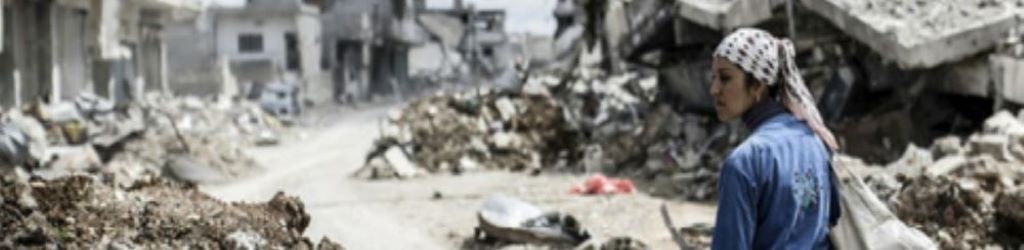
Dera’a, Syria, Vita. Licensed under CC 2.0 license
About TGR
The Genocide Report (TGR) publishes analysis and educational resources on conflict, international law, and atrocity prevention. Its work seeks to bridge academic research, field realities, and public understanding of mass violence and civilian protection.
About the Author
Lara Kajs is the founder and executive director of The Genocide Report, a Washington, DC-based educational nonprofit focused on atrocity prevention and international law. She is the author of several field-based books on conflict, displacement, humanitarian crises, and international humanitarian law, drawing on extensive research and field experience in Yemen, Syria, and Afghanistan. Her writing and public speaking focus on atrocity crimes, forced displacement, the protection of civilians, and the legal frameworks governing armed conflict.