Dispatches from the Field — The Genocide Report
Washington, DC — 5 January 2023
UN Security Council action and international investigations signal a pathway toward accountability in Myanmar, yet without enforcement, these measures risk becoming symbolic responses to ongoing atrocity crimes.
Since the February 2021 military coup, Myanmar’s population has been subjected to widespread and systematic abuses by Tatmadaw forces. Extrajudicial killings, torture, enforced disappearances, arbitrary detention, and the targeting of ethnic minority groups have become defining features of the conflict. Sexual violence and starvation have been used as methods of warfare. These patterns of abuse underscore the urgent need for accountability mechanisms capable not only of documenting crimes but also of enabling justice.
Myanmar’s military has intensified operations against civilian populations, including through airstrikes and artillery attacks in residential areas. Ethnic minority communities, particularly the Rohingya, remain acutely vulnerable, often caught between Tatmadaw operations and non-state armed groups. Violence in Rakhine State and other regions reflects both the continuation and escalation of long-standing patterns of persecution.
Independent Investigative Mechanism for Myanmar
The Independent Investigative Mechanism for Myanmar (IIMM), established by the UN Human Rights Council in 2018, plays a central role in advancing accountability. Its mandate is to collect, preserve, and analyze evidence of serious international crimes committed since 2011. The Mechanism has compiled extensive documentation, including witness testimony, satellite imagery, and digital evidence.
By preparing case files for use in national, regional, and international courts, the IIMM represents a critical bridge between documentation and prosecution. However, its effectiveness ultimately depends on whether states and international institutions are willing to act on the evidence collected.
Violence Against Women and Children
Crimes against humanity in Myanmar include systematic violence against women and children. These crimes remain among the most underreported and under-investigated despite their severity. Children have been subjected to arbitrary detention, torture, and forced recruitment, while sexual violence has been used deliberately to intimidate and punish civilian populations.
Investigative findings indicate that rape and sexual violence are not incidental but form part of a broader strategy employed by military and associated forces. Such patterns reinforce the conclusion that these acts constitute international crimes requiring urgent accountability.
Violence Against the Rohingya
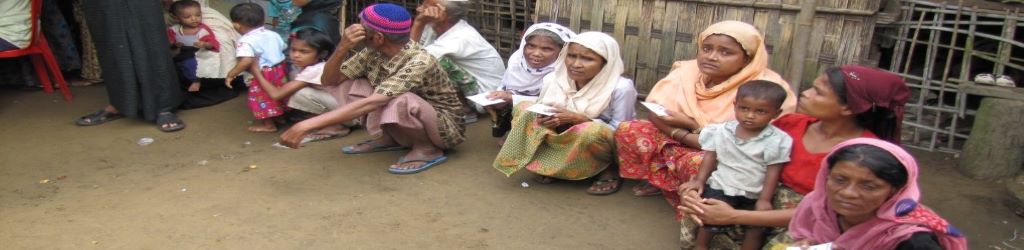
The Rohingya population continues to face the consequences of decades of systemic discrimination, statelessness, and targeted violence. The mass displacement triggered by the 2017 attacks forced hundreds of thousands to flee to Bangladesh, with many remaining in precarious conditions in refugee and internally displaced persons camps.
Despite consistent expressions of the desire to return, safe and dignified repatriation remains unlikely without credible accountability for past atrocities. Evidence gathered by the IIMM is already supporting ongoing proceedings before international legal bodies, including the International Court of Justice and the International Criminal Court.
Resolution 2669
UN Security Council Resolution 2669 represents a notable development as the first resolution on Myanmar since 1948. It acknowledges ongoing abuses, condemns the execution of pro-democracy activists, and calls for the release of arbitrarily detained individuals. It also demands an immediate cessation of violence and emphasizes the need for humanitarian access.
The resolution further reflects international concern regarding the military’s declaration of a state of emergency and its impact on civilian populations. While symbolically significant, its practical impact remains contingent on compliance and enforcement.
Junta Abuses and Humanitarian Impact
The military junta has continued to perpetrate widespread abuses, including extrajudicial killings, torture, and indiscriminate attacks on civilians. These actions have resulted in thousands of deaths and mass arrests, while displacing more than one million people.
Humanitarian conditions have deteriorated significantly, with millions requiring assistance. The deliberate obstruction of humanitarian aid further exacerbates suffering and reflects the use of deprivation as a method of control.
The Rohingya and other displaced populations remain particularly vulnerable, facing risks including human trafficking and gender-based violence during displacement.
The Limits of International Action
While Resolution 2669 marks an escalation in international engagement, it falls short of addressing the full scope of the crisis. The absence of stronger measures, such as a global arms embargo or referral to the International Criminal Court, limits its effectiveness.
Initial proposals reportedly included restrictions on arms transfers, but these provisions were removed during negotiations. This outcome underscores the political constraints that often shape international responses to atrocity situations.
Sustained pressure, including targeted sanctions and coordinated international action, remains necessary to alter the behavior of the junta and mitigate ongoing abuses.
Without enforcement, international resolutions risk becoming symbolic gestures in the face of systematic atrocity crimes.”
Atrocity Prevention Lens
Myanmar exhibits multiple established indicators of atrocity risk, including ongoing armed conflict, systematic targeting of civilian populations, entrenched impunity, and the use of identity-based violence against ethnic minorities. The continued obstruction of humanitarian assistance and suppression of political opposition further exacerbate these risks. Prevention strategies must prioritize coordinated international action, including sanctions targeting military leadership and affiliated economic networks, strengthened support for accountability mechanisms, and sustained diplomatic pressure. Early warning indicators have long been present in Myanmar; the current challenge lies in mobilizing effective and sustained preventive action to halt escalation and protect vulnerable populations.
Legal Framework
International Humanitarian Law
The conduct of hostilities in Myanmar is governed by international humanitarian law, including the Geneva Conventions and customary international law. Indiscriminate attacks against civilians, the targeting of civilian infrastructure, and the obstruction of humanitarian assistance constitute violations of these legal standards.
Crimes Against Humanity
Widespread and systematic attacks directed against civilian populations, including murder, torture, enforced disappearance, and sexual violence, meet the legal threshold for crimes against humanity under the Rome Statute of the International Criminal Court.
Genocide Convention
Acts committed against the Rohingya, including killing, causing serious bodily or mental harm, and deliberately inflicting conditions of life calculated to bring about destruction, have been examined under the Genocide Convention. Ongoing proceedings before the International Court of Justice reflect the seriousness of these allegations.
Accountability Mechanisms
The Independent Investigative Mechanism for Myanmar supports the application of international criminal law by facilitating evidence collection and case preparation. Jurisdictional pathways include international courts, as well as domestic prosecutions under principles such as universal jurisdiction.
Suggested Citation
“Resolutions and Investigations for Myanmar.” Dispatches from the Field. The Genocide Report, Washington, DC,
5 January 2023.
Photo Credit
“Myanmar/Burma: Little hope for Rohingya IDPs” by EU Civil Protection and Humanitarian Aid. Licensed under CC by ND 2.0
About TGR
The Genocide Report (TGR) publishes analysis and educational resources on conflict, international law, and atrocity prevention. Its work seeks to bridge academic research, field realities, and public understanding of mass violence and civilian protection.