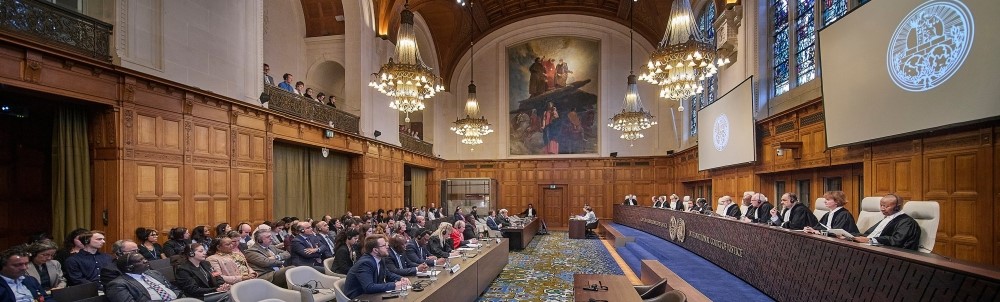
International law provides the legal framework through which the international community seeks to protect civilians, prevent mass atrocities, regulate armed conflict, and pursue accountability for serious human rights violations.
Many of the principles discussed throughout The Genocide Report—including genocide prevention, atrocity prevention, civilian protection, refugee rights, and accountability for war crimes—are rooted in international treaties, conventions, customary law, and international institutions developed in the aftermath of the Second World War.
These legal frameworks establish both rights and responsibilities. They define prohibited conduct, outline protections for vulnerable populations, and provide mechanisms through which states, international organizations, and courts may respond to violations.
These resources introduce some of the most important legal instruments and institutions shaping contemporary humanitarian protection and international justice. Together, these frameworks form the foundation of modern international humanitarian law, international criminal law, international human rights law, and refugee protection.
While international law does not always prevent conflict or atrocity, it establishes critical standards for the protection of civilians, the conduct of armed actors, and the pursuit of justice when violations occur.
At The Genocide Report, we believe that legal literacy is an essential component of atrocity prevention. Understanding these frameworks helps students, educators, policymakers, journalists, researchers, and the public better recognize both the protections that exist under international law and the challenges involved in enforcing them.
International Law