Mass atrocities do not occur without warning.
Genocide, crimes against humanity, war crimes, and ethnic cleansing are often portrayed as sudden eruptions of violence. In reality, they typically emerge through identifiable patterns of discrimination, exclusion, dehumanization, political instability, impunity, and escalating attacks against civilian populations.
Atrocity prevention is the effort to identify and address those risks before large-scale violence occurs. Rather than waiting until civilians are displaced, targeted, or killed, prevention focuses on recognizing warning signs early and strengthening the institutions, policies, and protections that reduce the likelihood of mass violence.
What Are Atrocity Crimes?
Atrocity prevention focuses on four categories of mass violence:
Genocide
Acts committed with the intent to destroy, in whole or in part, a national, ethnic, racial, or religious group.
Crimes Against Humanity
Widespread or systematic attacks directed against civilian populations, including murder, torture, persecution, deportation, and other serious abuses.
War Crimes
Serious violations of international humanitarian law committed during armed conflict, including deliberate attacks against civilians and protected persons.
Ethnic Cleansing
The forced removal of a population from a territory through violence, intimidation, or coercion. Although not a standalone crime under international law, ethnic cleansing frequently involves acts that constitute genocide, crimes against humanity, or war crimes.
Understanding Early Warning
Research shows that atrocities rarely emerge spontaneously. Most develop through a gradual process in which risks accumulate over time.
Common warning indicators include identity-based discrimination, political exclusion, weakened rule of law, corruption, impunity, and the use of dehumanizing rhetoric against targeted populations. Restrictions on independent media, attacks on civil society organizations, the mobilization of armed groups, and escalating violence against minority communities may also signal heightened risk.
The presence of these indicators does not guarantee atrocities will occur. However, they may signal heightened risk and the need for closer monitoring and preventative action.
How Prevention Works
Effective atrocity prevention operates at multiple levels.
Structural Prevention
Structural prevention focuses on reducing the conditions that make mass violence more likely over time. This includes strengthening the rule of law, supporting accountable institutions, protecting minority rights, addressing discrimination, and promoting peaceful mechanisms for resolving political disputes. The objective is not to eliminate conflict—which is a normal feature of all societies—but to ensure that tensions do not escalate into organized violence against civilian populations.
Operational Prevention
When warning signs become more acute, prevention efforts shift toward immediate risk reduction. Operational prevention focuses on situations where violence appears increasingly imminent or where attacks against civilians have already begun. Responses may include diplomatic intervention, mediation efforts, targeted sanctions, civilian protection measures, peacekeeping operations, humanitarian access initiatives, and efforts to counter incitement or dangerous misinformation. The goal is to interrupt pathways toward mass violence before atrocities occur or expand.
Why Prevention Matters
The costs of prevention are often far lower than the costs of responding to mass violence after it begins.
The international community failed to prevent the 1994 genocide in Rwanda despite numerous warning signs. Similar patterns of escalating risk preceded atrocities in Bosnia, Darfur, Myanmar, Iraq, Syria, Gaza, and elsewhere.
These cases demonstrate a central lesson of prevention work. By the time the world is debating whether genocide or crimes against humanity are occurring, civilian populations have often already suffered catastrophic harm.
Successful prevention rarely generates headlines because its greatest achievement is the violence that never occurs.
Atrocity Prevention in U.S. Policy
In 2018, the United States adopted the Elie Wiesel Genocide and Atrocities Prevention Act, which established atrocity prevention as a national security interest and created mechanisms for identifying and responding to emerging risks.
The Act requires training, risk assessment, and coordination across government agencies to improve the ability of policymakers to recognize warning signs before crises escalate.
Prevention, Protection, and Accountability
Atrocity prevention is grounded in the recognition that the protection of civilian populations is both a legal obligation and a moral imperative. The objective is not merely to respond to violence after it occurs, but to reduce the likelihood that communities will experience catastrophic harm in the first place.
When prevention fails, accountability remains essential. International criminal law, human rights mechanisms, and documentation efforts play a critical role in ensuring that perpetrators are investigated and that victims are not forgotten.
Prevention and accountability are, therefore, complementary goals. One seeks to stop atrocities before they occur. The other seeks justice when they do.
The challenge is not whether the warning signs exist. The challenge is whether governments, institutions, and societies act upon them in time.
Photo Credit
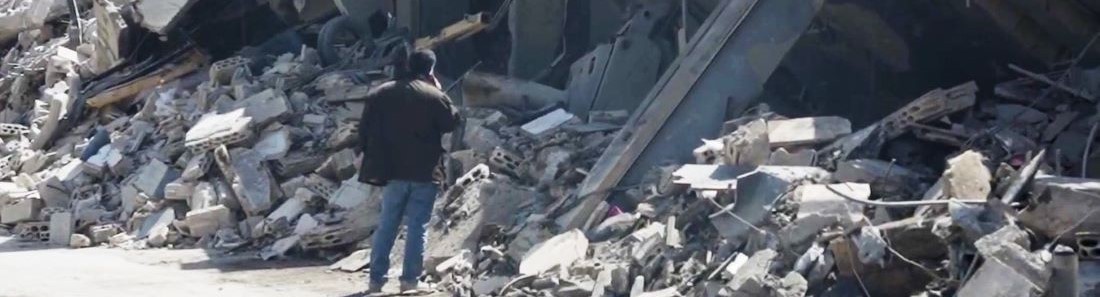
Civilian infrastructure, destroyed by airstrikes in August 2018. Sa’ada, Yemen. Licensed under CC-BY-NC-ND 2.0