Ethnic cleansing is the deliberate removal of an ethnic, religious, national, or cultural group from a particular territory through force, intimidation, violence, or other coercive measures. Although the term is widely used in political, legal, and academic discussions, it is not formally defined as an independent crime under international law. Nevertheless, acts associated with ethnic cleansing often constitute war crimes, crimes against humanity, or genocide.
The concept gained international prominence during the conflicts in the former Yugoslavia during the 1990s, where campaigns of forced displacement, persecution, and violence were used to alter the demographic composition of territories. Since then, the term has been applied to numerous situations in which populations have been forcibly removed because of their identity.
Understanding ethnic cleansing is important because it highlights how discrimination, exclusion, and identity-based targeting can escalate into large-scale human rights violations and atrocity crimes.
What Is Ethnic Cleansing?
Ethnic cleansing generally refers to policies or actions designed to remove a specific group from a geographic area. The objective is often to create a more ethnically, religiously, or politically homogeneous territory.
Methods used in ethnic cleansing may include:
• Forced displacement
• Deportation
• Intimidation and threats
• Arbitrary detention
• Destruction of homes and property
• Sexual violence
• Persecution
• Cultural destruction
• Mass killings
In many cases, the threat of violence alone is sufficient to force communities to flee. In others, large-scale atrocities accompany efforts to eliminate the targeted populations.
The result is often the destruction of long-established communities and the loss of cultural, religious, and historical connections to a particular region.
Ethnic Cleansing and Genocide
Ethnic cleansing and genocide are related but distinct concepts. Ethnic cleansing generally seeks to remove a population from a territory. Genocide seeks to destroy, in whole or in part, a national, ethnic, racial, or religious group.
While these goals differ, the two can overlap. Campaigns of ethnic cleansing may involve killings, persecution, and other acts that meet the legal definition of genocide. Likewise, genocidal campaigns often include forced displacement and the destruction of communities.
Determining whether a specific situation constitutes ethnic cleansing, genocide, or both depends on the facts, evidence, and legal analysis of the intent and actions involved.
Understanding this distinction is important because the legal consequences and accountability mechanisms may differ, even when the human suffering is immense.
Historical Examples
Throughout history, populations have been forcibly displaced because of their ethnicity, religion, nationality, or identity.
One of the most widely recognized examples occurred during the conflicts in the former Yugoslavia, where Bosniak, Croat, and Serb communities were targeted through campaigns of forced removal, detention, violence, and persecution. The term “ethnic cleansing” became widely used during this period to describe efforts to alter the demographic makeup of contested territories.
Other examples include mass expulsions, population transfers, and campaigns of persecution that have occurred in various regions around the world throughout the twentieth and twenty-first centuries.
While each situation is unique, many exhibit similar patterns of discrimination, dehumanization, exclusion, and efforts to remove targeted populations from their homes.
Cultural Destruction and Identity
Ethnic cleansing often extends beyond the removal of people.
Places of worship, cemeteries, schools, cultural sites, and historical monuments may be destroyed or damaged in an effort to erase community presence and identity. Languages, traditions, and cultural practices can also come under attack.
This destruction is significant because communities are defined not only by where they live, but by their shared history, culture, and connection to place. The loss of cultural heritage can have lasting consequences that continue long after violence has ended.
Displacement and Humanitarian Consequences
Ethnic cleansing frequently produces large-scale displacement.
Families may flee with little warning, leaving behind homes, livelihoods, possessions, and community networks. Many become refugees or internally displaced persons, often facing years of uncertainty and hardship.
The humanitarian consequences can include:
• Loss of shelter and livelihoods
• Food insecurity
• Limited access to healthcare and education
• Family separation
• Psychological trauma
• Long-term instability
Even when conflict subsides, return may be difficult or impossible if homes have been destroyed, property has been confiscated, or security conditions remain fragile.
Ethnic Cleansing and Atrocity Prevention
Ethnic cleansing rarely occurs without warning. It is often preceded by discrimination, hate speech, exclusionary policies, political manipulation, identity-based targeting, and efforts to portray certain groups as outsiders or threats. These warning signs are important indicators of potential atrocity risk.
Recognizing early patterns of persecution allows governments, international organizations, civil society, and local communities to respond before violence escalates. Education, accountability, inclusive governance, and the protection of minority rights are critical tools in preventing identity-based violence.
The history of ethnic cleansing demonstrates the dangers of division, intolerance, and impunity. Understanding these patterns helps strengthen efforts to protect vulnerable populations and uphold the principle that all people have the right to live safely and with dignity in their communities.
Preventing ethnic cleansing requires vigilance, education, respect for human rights, and a commitment to confronting discrimination before it evolves into violence. By learning from past experiences, societies can work toward a future in which diversity is protected rather than feared and where communities are not forced from their homes because of who they are.
Photo Credit
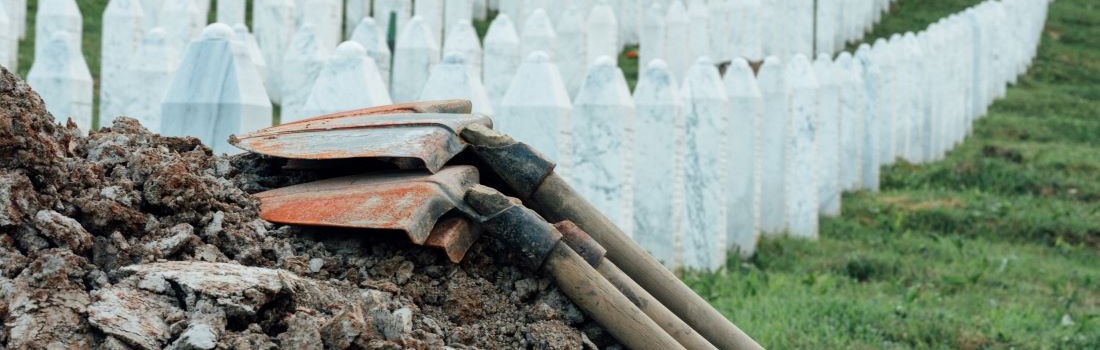
Shovels for Burying Identified Victims of the Srebrenica Massacre, Potoĉari, Bosnia by Adam Cohn. Licensed under CC By-NC-ND 2.0.