Mass atrocities do not occur without warning. Genocide, crimes against humanity, war crimes, and ethnic cleansing are often preceded by identifiable patterns of discrimination, exclusion, dehumanization, impunity, and escalating violence. While the timing and circumstances of atrocities vary, researchers, policymakers, and human rights organizations have identified common warning signs that frequently emerge before large-scale violence occurs.
Recognizing these indicators is one of the most important components of atrocity prevention. Early awareness creates opportunities for governments, international organizations, civil society, educators, journalists, and local communities to respond before violence escalates and civilian populations are placed at risk.
Understanding early warning indicators is not about predicting the future with certainty. Rather, it is about recognizing conditions and behaviors that increase the likelihood of mass violence and taking action to address them.
Why Early Warning Matters
Mass atrocities are often portrayed as sudden events, but history demonstrates that they usually develop over time.
The Holocaust, the Rwanda Genocide, the genocide in Srebrenica, the Cambodian Genocide, and other atrocities were preceded by warning signs that appeared months or years before the violence reached its peak.
These warning signs frequently include discrimination, hate speech, political instability, exclusionary policies, attacks on civil society, and the erosion of legal protections.
Identifying these patterns allows decision-makers and communities to intervene earlier, strengthen protections for vulnerable populations, and reduce the risk of escalation.
Dehumanization and Hate Speech
One of the most common warning indicators is the use of language that portrays a group as less than human, dangerous, criminal, or undeserving of rights.
Dehumanizing language may compare individuals to animals, diseases, pests, or threats to society. Such narratives can reduce empathy and normalize discrimination or violence against targeted populations.
Hate speech, incitement, and the deliberate spread of misinformation often contribute to social divisions and create an environment in which violence becomes more acceptable.
Throughout history, propaganda and dehumanization have played significant roles in many cases of mass atrocity.
Discrimination and Exclusion
Systematic discrimination can signal increasing risk.
Targeted groups may experience restrictions on political participation, education, employment, movement, property ownership, or access to public services. Laws and policies may be used to marginalize certain communities or deny equal protection under the law.
When discrimination becomes normalized or institutionalized, it can create conditions in which broader violations become more likely.
Protecting equal rights and ensuring inclusive governance are important safeguards against escalation.
Identity-Based Targeting
Mass atrocities often involve the targeting of people because of their ethnicity, religion, nationality, race, political affiliation, or other group identity. Identity-based rhetoric may portray certain groups as threats to national security, cultural values, economic stability, or social cohesion.
When leaders or influential actors encourage hostility toward specific communities, the risk of violence can increase significantly. Monitoring these narratives is an important component of atrocity prevention.
Impunity and Weak Rule of Law
When perpetrators of violence are not held accountable, the risk of future abuses increases.
Impunity can take many forms, including failure to investigate crimes, politically motivated prosecutions, corruption, or the absence of independent judicial institutions.
A weak rule of law environment may allow armed groups, security forces, or political actors to engage in abusive conduct without consequence. Strong institutions, independent courts, and accountability mechanisms are critical protections against escalating violence.
Arbitrary Detention and Repression
The suppression of political opposition, journalists, human rights defenders, civil society organizations, and minority communities can be a significant warning sign. Arbitrary arrests, enforced disappearances, restrictions on free expression, and attacks on independent media may indicate growing efforts to silence dissent and consolidate power.
These actions often reduce transparency and make it more difficult to identify and respond to emerging risks. Open societies with strong civic participation are generally more resilient against mass violence.
Armed Groups and Escalating Violence
The growth of armed militias, extremist organizations, or other non-state actors can increase instability and create conditions for large-scale abuses.
Warning indicators may include:
• Increased political violence
• Armed confrontations
• Attacks on civilians
• Destruction of property
• Forced displacement
• Militarization of society
Escalating violence often reflects deeper social, political, or economic tensions that require attention before they intensify.
Forced Displacement and Population Movements
Large-scale displacement may serve as both a warning sign and a consequence of atrocity risk. Communities may flee due to fear, targeted violence, discrimination, or deteriorating security conditions. Population movements can reveal patterns of persecution and provide important information about emerging threats.
Monitoring displacement trends helps humanitarian organizations and policymakers identify populations that may require additional protection.
The Role of Education and Prevention
Preventing atrocities requires more than responding to violence after it occurs.
Education, public awareness, inclusive governance, respect for human rights, and strong institutions all contribute to reducing risk. Journalists, educators, researchers, civil society organizations, and local communities play an important role in identifying warning signs and promoting accountability.
Atrocity prevention is most effective when warning indicators are recognized early and addressed before violence becomes widespread.
From Warning to Action
No single indicator guarantees that mass atrocities will occur. However, the accumulation of warning signs should prompt increased attention, monitoring, and preventive action.
History has repeatedly shown that genocide, crimes against humanity, war crimes, and ethnic cleansing are not inevitable. They are the result of decisions, policies, and actions taken by individuals and institutions.
By recognizing warning indicators, strengthening accountability, protecting human rights, and promoting inclusive societies, it is possible to reduce risks and build resilience against future atrocities.
Understanding early warning indicators is ultimately about protecting people. Awareness creates opportunities for action, and action can save lives. The lessons of history demonstrate that vigilance, education, and prevention remain among the most effective tools available to reduce the risk of mass violence and uphold human dignity.
Photo Credit
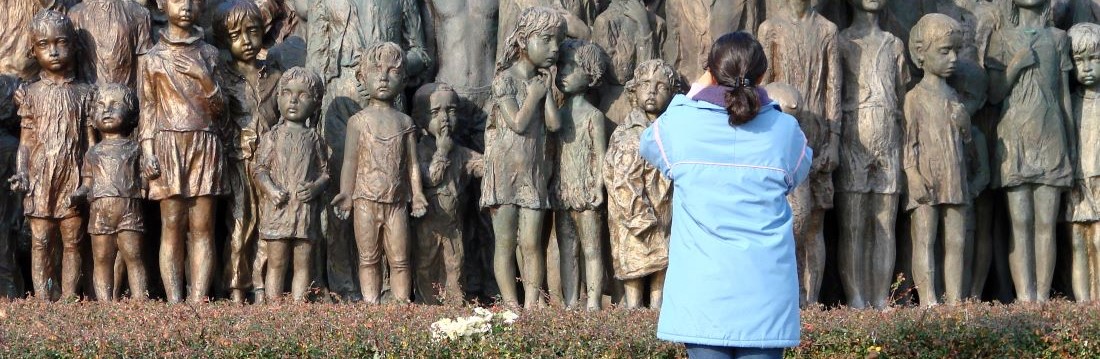
Lidice Memorial – A visitor (Griselda Ramirez) photographs Memorial to Child Victims of War, by Marie Uchytilova, near Prague, Czech Republic, by Adam Jones, PhD. Global Photo Archive. Licensed under CC BY-SA 2.0.