War crimes are serious violations of the laws and customs of war that occur during armed conflict. These crimes are prohibited under international humanitarian law and are among the most serious offenses recognized by the international community. They are committed when individuals, military forces, or organized groups violate the legal protections established to limit the suffering caused by war.
Although armed conflict is often associated with destruction and loss of life, international law does not permit unrestricted violence. Even during war, there are rules governing how hostilities are conducted and how civilians, prisoners of war, medical personnel, and humanitarian workers must be treated. War crimes occur when those rules are deliberately violated.
Understanding war crimes is essential to promoting accountability, protecting civilians, and preventing future atrocities.
The Laws of War
The modern framework governing armed conflict is primarily derived from the Geneva Conventions of 1949 and their Additional Protocols, as well as customary international humanitarian law.
These legal frameworks seek to balance military necessity with humanitarian considerations by establishing protections for those who are not participating in hostilities or who can no longer fight.
International humanitarian law applies during both international armed conflicts between states and many non-international armed conflicts involving organized armed groups.
The fundamental principles include distinction, proportionality, military necessity, and humanity. Parties to a conflict must distinguish between combatants and civilians, avoid excessive civilian harm, and take precautions to minimize suffering.
What Constitutes a War Crime?
War crimes may include a wide range of prohibited acts committed during armed conflict.
Examples include:
• Intentionally targeting civilians
• Attacking hospitals, schools, or protected civilian infrastructure
• Torture or inhumane treatment of prisoners of war
• Taking hostages
• Sexual violence during conflict
• Using prohibited weapons
• Recruiting or using child soldiers
• Deliberately obstructing humanitarian assistance
• Destroying property without military necessity
• Executing captured combatants
• Pillage and looting
• Starvation of civilians as a method of warfare
These acts are prohibited because they violate established legal protections intended to reduce human suffering during conflict.
Protecting Civilians During Conflict
One of the central objectives of international humanitarian law is the protection of civilians.
Civilians are not lawful targets unless and for such time as they directly participate in hostilities. Even when attacking legitimate military objectives, parties to a conflict must take precautions to minimize civilian harm.
The protection of civilians extends to hospitals, medical personnel, humanitarian workers, places of worship, schools, refugee camps, and other protected civilian objects.
When these protections are ignored, civilian populations often bear the greatest burden of war through death, injury, displacement, trauma, and the destruction of essential services.
Common Misconceptions About War Crimes
One of the most common misconceptions is that every civilian death during war automatically constitutes a war crime. International humanitarian law recognizes that civilian casualties may occur during lawful military operations. The legal question is whether the attack complied with the principles of distinction, proportionality, and precaution.
Similarly, the existence of a military objective does not provide unlimited authority to attack. Commanders remain obligated to avoid excessive civilian harm and to take reasonable steps to protect civilians.
Determining whether a specific act constitutes a war crime often requires detailed legal and factual analysis.
Accountability for War Crimes
Individuals who commit war crimes can be held criminally responsible under international and domestic law.
Accountability mechanisms include national courts, military tribunals, hybrid courts, and international institutions such as the International Criminal Court. Special tribunals have also been established to prosecute war crimes committed during specific conflicts.
Responsibility may extend beyond those who directly commit crimes. Military commanders and political leaders can also be held accountable when they order, facilitate, or fail to prevent crimes committed by forces under their control.
Investigations often rely on witness testimony, forensic evidence, satellite imagery, official documents, and other forms of documentation.
War Crimes and Atrocity Prevention
War crimes are often among the earliest indicators of broader patterns of atrocity risk. Attacks on civilians, indiscriminate violence, hate speech, forced displacement, and the erosion of legal protections can signal escalating threats to vulnerable populations.
Preventing war crimes requires more than prosecution after violations occur. It depends on strong institutions, military training, respect for international law, independent monitoring, and political leadership committed to civilian protection.
Education also plays a critical role. Understanding the rules of armed conflict helps strengthen public awareness, supports accountability efforts, and reinforces the principle that even in war, there are limits to what is permissible.
War does not eliminate human rights or legal obligations. The laws of war exist because human dignity must be protected, even in the most difficult circumstances. Holding perpetrators accountable and strengthening respect for international humanitarian law remain essential components of civilian protection, international justice, and atrocity prevention.
Photo Credit
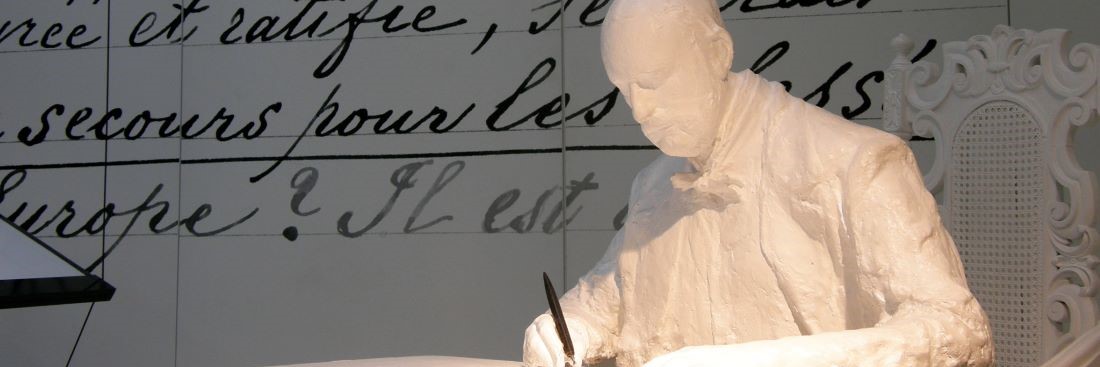
Henry Dunant by keepps. Licensed under CC BY-NC-SA 2.0.