International law shapes many of the world’s most important responses to conflict, human rights abuses, displacement, and mass atrocities. It establishes rules governing the conduct of states, provides protections for civilians during war, defines fundamental human rights, and creates mechanisms for accountability when serious crimes occur.
Yet international law is often perceived as complex, inaccessible, or relevant only to lawyers and diplomats. Treaties, conventions, courts, and legal doctrines can be difficult to navigate, particularly for those seeking to understand how international law operates in practice.
The purpose of this section is to make international law more accessible. These educational resources provide clear explanations of key legal concepts, institutions, and principles that shape the international legal system. Whether you are a student, researcher, policymaker, journalist, educator, or simply interested in global affairs, understanding these legal frameworks can help explain how the international community seeks to protect human dignity, regulate armed conflict, and promote accountability.
International law is not a single body of rules. It consists of multiple legal systems and institutions that address different aspects of international relations. Some rules are found in treaties and conventions negotiated by states. Others develop through customary international law and long-standing international practice. Together, these sources create a framework that influences how states interact and how the international community responds to crises.
Explore the Topics
Customary International Law Explained
Learn how international law develops through state practice and legal obligation, even when rules are not formally written into treaties.
Rule of Law Explained
Explore the foundational principle that all states, institutions, and individuals are equally bound by international law. Learn why consistent application of legal standards is essential to accountability, civilian protection, and the credibility of the international legal system.
International Human Rights Law Explained
Explore the international legal framework designed to protect the rights and freedoms of individuals around the world.
International Humanitarian Law Explained
Understand the laws that regulate armed conflict, protect civilians and noncombatants, and seek to reduce human suffering during war.
Refugee Rights Explained
Explore the legal protections available to individuals fleeing persecution, violence, and conflict under international refugee law.
Civilian Protection in Armed Conflict Explained
Examine the legal principles designed to reduce civilian suffering during war and armed conflict.
Command Responsibility Explained
Discover how military commanders and civilian leaders may be held accountable for crimes committed by those under their authority.
Accountability and International Justice Explained
Explore the institutions and mechanisms used to investigate and prosecute serious international crimes.
Universal Jurisdiction Explained
Learn how national courts can prosecute certain international crimes regardless of where they occur.
Why International Law Matters
International law influences decisions made by governments, courts, humanitarian organizations, peacekeeping missions, and international institutions every day. It provides standards for protecting civilians during conflict, safeguarding human rights, assisting refugees, preventing atrocities, and promoting accountability for serious crimes.
While international law does not eliminate conflict or prevent every violation, it establishes important rules, responsibilities, and expectations that help shape international behavior. It also provides a framework through which victims may seek justice and through which states and international organizations can respond to crises.
Understanding international law is essential to understanding many of the most pressing global challenges of our time. By strengthening public knowledge of these legal principles, we can contribute to more informed discussions about conflict, human rights, civilian protection, and accountability in an increasingly interconnected world.
Photo Credit
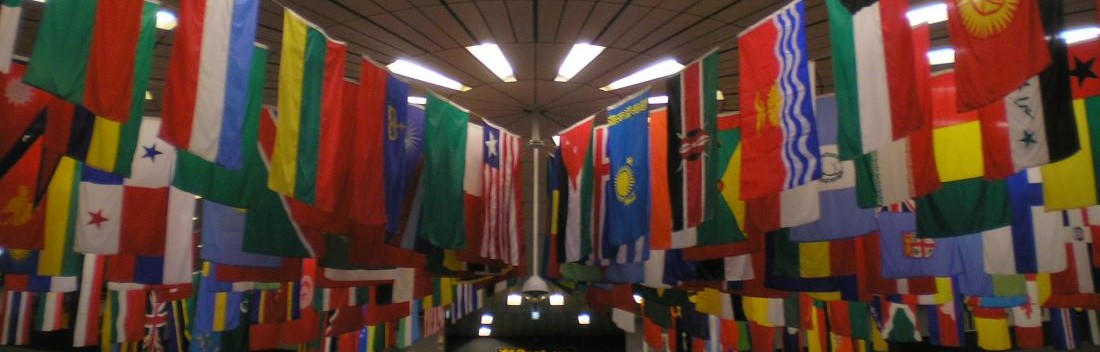
Flags inside the UN Headquarters, NYC by Youth Network for Nuclear Disarmament. Licensed under CC BY-NC 2.0