Command responsibility is a legal doctrine in international law that holds military commanders and civilian leaders accountable for crimes committed by forces under their authority when they knew, or should have known, that such crimes were occurring and failed to prevent them or punish those responsible.
The principle recognizes that serious violations of international law are not always committed by individuals acting independently. In many situations, atrocities occur within organized structures where leaders exercise authority over military units, security forces, militias, or other groups. Command responsibility helps ensure that those in positions of power cannot avoid accountability simply because they did not personally carry out unlawful acts.
Today, command responsibility is an established principle of international criminal law and plays an important role in efforts to prosecute war crimes, crimes against humanity, and genocide.
The Development of Command Responsibility
The concept of command responsibility has roots in military traditions that long recognized the obligation of commanders to maintain discipline among their forces. However, the doctrine gained significant legal prominence following the Second World War.
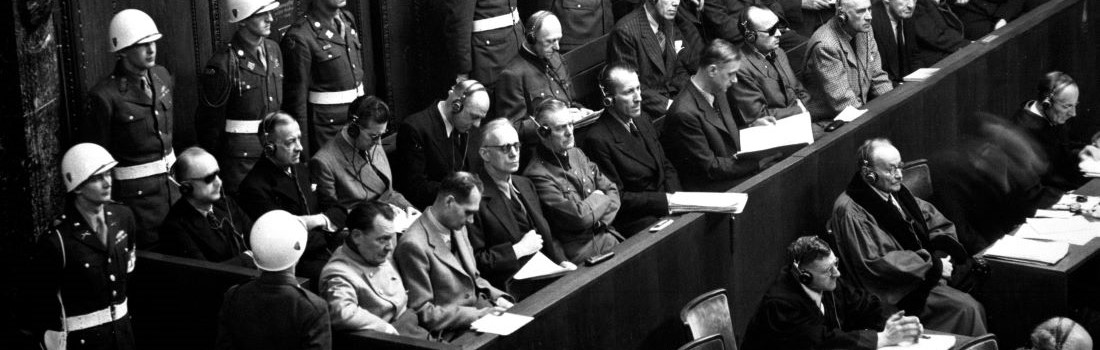
During the post-war tribunals, prosecutors sought to address not only the actions of those who directly committed atrocities but also the responsibility of leaders who allowed such crimes to occur. The trials demonstrated that large-scale violations of international law often result from failures of leadership, oversight, and accountability.
One of the most influential early cases involved Japanese General Tomoyuki Yamashita, who was prosecuted by a United States military commission after the war. The case helped establish the principle that commanders may bear responsibility for crimes committed by forces under their control when they fail to exercise appropriate authority and supervision.
Over time, the doctrine evolved through decisions of international tribunals and was eventually incorporated into modern international criminal law, including the Rome Statute of the International Criminal Court.
Understanding the Doctrine
Command responsibility does not require proof that a commander personally committed a crime. Instead, liability arises from a failure to act.
International courts generally examine three key elements when assessing command responsibility.
First, there must be a superior-subordinate relationship. The accused must have exercised effective authority or control over those who committed the crimes.
Second, the superior must have known, or should have known, that crimes were being committed or were about to be committed. This standard recognizes that leaders cannot deliberately ignore information that would alert them to unlawful conduct.
Third, the superior must have failed to take reasonable measures to prevent the crimes or punish those responsible after the fact.
The doctrine, therefore, focuses on responsibility arising from omission rather than direct participation.
Military and Civilian Leaders
Although command responsibility is often associated with military commanders, the doctrine can also apply to civilian leaders.
Political officials, government authorities, security chiefs, and others exercising effective control over subordinates may be held accountable when they fail to prevent or address serious violations of international law.
Modern conflicts frequently involve complex chains of command that extend beyond traditional military structures. As a result, international courts have increasingly examined the role of civilian leaders in situations involving widespread violence, persecution, and mass atrocities.
The central question is not an individual’s title but whether they possessed sufficient authority and control to influence the conduct of those committing the crimes.
Command Responsibility and International Crimes
The doctrine of command responsibility is most commonly associated with serious international crimes.
War crimes may give rise to command responsibility when military leaders fail to prevent unlawful attacks, mistreatment of detainees, torture, or other violations of International Humanitarian Law.
Crimes against humanity may involve situations in which civilian or military leaders fail to prevent widespread or systematic attacks directed against civilian populations.
Command responsibility may also arise in cases involving genocide when leaders fail to act despite knowledge of efforts to destroy protected groups.
In each case, prosecutors must establish the specific elements of the doctrine while also proving that the underlying crimes occurred.
Command Responsibility in International Courts
The doctrine has played a significant role in the work of international criminal tribunals.
The International Criminal Tribunal for the Former Yugoslavia and the International Criminal Tribunal for Rwanda both issued important decisions that helped clarify the legal standards governing command responsibility.
These tribunals examined questions relating to effective control, knowledge, and the measures leaders must take to prevent or punish criminal conduct.
The doctrine was later codified in Article 28 of the Rome Statute of the International Criminal Court, which establishes standards for both military commanders and civilian superiors.
Through these decisions and legal developments, command responsibility has become a central component of international criminal accountability.
Challenges and Criticisms
While command responsibility is widely recognized, its application can be complex.
Modern conflicts often involve fragmented chains of command, multiple armed actors, and informal power structures that make it difficult to determine who exercised effective control over perpetrators.
Establishing what a commander knew, or should have known, may also present significant evidentiary challenges. Prosecutors frequently rely on documents, communications, witness testimony, and patterns of conduct to demonstrate knowledge and authority.
Some critics argue that the doctrine risks holding leaders responsible for actions beyond their control. Others contend that strong accountability mechanisms are necessary precisely because senior leaders possess the authority to influence the conduct of those under their command.
International courts have sought to balance these concerns by requiring evidence of effective control and a failure to take reasonable preventive or punitive measures.
Command Responsibility and Atrocity Prevention
Command responsibility plays an important role in atrocity prevention because it reinforces the obligations of leaders during times of crisis and conflict.
Many atrocities occur within organized institutions where commanders, officials, and political leaders possess the authority to influence behavior. Establishing legal accountability for failures of leadership helps create incentives for stronger oversight, discipline, and compliance with international law.
The doctrine also reinforces the principle that preventing atrocities is not solely the responsibility of individual perpetrators. Leaders who possess the ability to stop abuses have a legal and moral obligation to act.
By emphasizing accountability at all levels of authority, command responsibility contributes to broader efforts to reduce impunity and strengthen protections for civilian populations.
Command responsibility is a fundamental principle of international criminal law that recognizes the role of leadership in preventing and responding to serious violations of international law. By holding commanders and civilian superiors accountable for failures to prevent or punish crimes committed by those under their authority, the doctrine helps ensure that responsibility extends beyond direct perpetrators.
As international courts continue to address war crimes, crimes against humanity, and genocide, command responsibility remains an important mechanism for promoting accountability and reinforcing the obligations of those entrusted with power. Understanding this doctrine provides valuable insight into how international law seeks to address both individual wrongdoing and failures of leadership that contribute to mass atrocities.
Related International Law Resources
• Rome Statute
• Geneva Conventions
• Additional Protocol I
• International Criminal Court Explained
• Accountability and International Justice Explained
Photo Credit
Public Domain – Nuremberg Trials 1945-46, by Ping News. Licensed under Public Domain Mark 1.0.