Lara Kajs
Dispatches from the Field — The Genocide Report
Washington DC — 27 April 2026
Cross-border hostilities and regional dynamics raise the stakes for civilian protection in southern Lebanon
Escalating hostilities along the Israel-Lebanon border have introduced a new phase of risk within an already volatile regional environment. As exchanges intensify between Israeli forces and Hezbollah, civilian populations in southern Lebanon are increasingly exposed to the effects of cross-border conflict. While international attention has largely centered on developments in the Gaza Strip, the northern front reflects a broader pattern of sustained escalation rather than isolated incidents.
This escalation must be understood within the wider operational environment that has emerged across the region. The expansion of hostilities beyond a single geographic theater increases both the complexity of conflict management and the risk of miscalculation. In this context, Lebanon is not a peripheral front, but part of a multi-layered conflict dynamic in which localized exchanges carry wider regional implications.
Patterns of Escalation and Civilian Exposure
Recent months have seen a sustained pattern of cross-border exchanges, including rocket fire, drone activity, artillery shelling, and airstrikes. These operations, while framed within military objectives, are occurring in close proximity to civilian areas, increasing the likelihood of incidental harm. The frequency and persistence of these exchanges suggest a shift from episodic confrontation to a more normalized pattern of engagement.
In southern Lebanon, civilian communities are situated within areas affected by military activity, where infrastructure damage and disruption to daily life have become increasingly common. Agricultural zones, which form a critical part of local livelihoods, have also been affected, contributing to longer-term economic strain. On the Israeli side of the border, precautionary evacuations and disruptions to civilian life reflect the reciprocal nature of exposure in cross-border conflict environments.
These dynamics underscore the reality that civilian populations are not removed from the operational environment—they are embedded within it.
Civilian Exposure and Displacement
The escalation has generated significant patterns of civilian displacement on both sides of the border. In Lebanon, more than 1.2 million people have been internally displaced, with over 140,000 currently housed in collective shelters facing acute shortages of food and essential services. In the south, residents have relocated away from high-risk areas, often with limited resources and uncertain prospects for return.
Since April 2026, more than 130,000 people have crossed into Syria to escape intensifying hostilities, approximately half of whom are children. These cross-border movements are placing additional strain on host communities and already fragile infrastructure.
Displacement is not only a humanitarian concern but also a protection issue. As populations move, they often face reduced access to services, increased economic vulnerability, and heightened exposure to secondary risks. In contexts where displacement becomes prolonged, the cumulative effects can significantly degrade community resilience.
Beyond physical displacement, the persistent threat environment has psychological and social consequences. The normalization of periodic strikes, warnings, and evacuations contributes to an atmosphere of instability that affects civilian life well beyond immediate zones of impact.
Regional Spillover Risk
The escalation between Israel and Hezbollah reflects a broader regional dynamic involving interconnected actors and overlapping strategic interests. The presence of external relationships, including those linked to Iran, adds a layer of complexity to the conflict environment.
Multi-front dynamics increase the risk that localized escalation may evolve into broader regional confrontation. Pressure applied in one theater can generate responses in another, creating a networked escalation pattern that is difficult to contain. In such environments, the distinction between localized conflict and regional war becomes increasingly blurred.
The risk is not solely the expansion of geographic scope, but the acceleration of escalation cycles driven by reactive decision-making and strategic signaling. Once multiple fronts are active, the margin for miscalculation narrows considerably.
Escalation across borders does not remain contained—it expands the geography of civilian risk.”
Escalation Dynamics and the Risk of Normalization
One of the most significant risks in the current environment is the normalization of cross-border hostilities. As exchanges become more frequent and predictable, they risk being absorbed into the expected pattern of conflict rather than being treated as indicators of escalation.
This normalization can erode restraint. Actions that may once have triggered significant international concern or diplomatic intervention may, over time, generate more limited responses. In this context, the threshold for what is considered acceptable or manageable conflict shifts incrementally.
Such shifts are consequential. The normalization of violence in civilian-adjacent areas increases the likelihood that broader escalation will occur without clear triggering events. Instead, conflict expands through accumulation rather than singular rupture.
Humanitarian and Infrastructure Strain
Lebanon’s existing economic and governance challenges significantly constrain its capacity to respond to renewed escalation. Years of financial instability, currency devaluation, and institutional fragility have weakened state structures and reduced the availability of public services.
In this context, even limited infrastructure damage can have disproportionate effects. Disruptions to electricity, water systems, and healthcare access compound existing vulnerabilities and place additional pressure on humanitarian actors. The reliance on external assistance further underscores the limited capacity of domestic systems to absorb shocks.
Displacement, combined with infrastructure strain, creates a feedback loop in which humanitarian needs expand while response capacity remains constrained.
Constraints on Civilian Protection
Efforts to ensure civilian protection are complicated by the conflict’s operational and political characteristics. The involvement of non-state actors, such as Hezbollah, introduces challenges in the application and enforcement of international norms.
Cross-border engagements also complicate attribution and accountability, particularly where actions occur within contested or densely populated environments. In addition, geopolitical considerations may limit external actors’ willingness to apply consistent pressure, particularly when regional alliances or strategic interests are involved.
These constraints do not negate legal obligations but do affect the mechanisms through which those obligations are enforced. In such environments, gaps between legal standards and operational realities become more pronounced.
Atrocity Prevention Lens
The current escalation presents several indicators associated with increased atrocity risk, including sustained civilian exposure to hostilities, patterns of displacement, and the normalization of violence in populated areas. These factors, when combined, create conditions in which harm to civilians may expand in both scale and frequency.
Preventive strategies must focus on reinforcing compliance with international humanitarian law, maintaining sustained international attention on civilian protection concerns, and supporting diplomatic efforts aimed at de-escalation. Early recognition of escalation patterns remains essential to preventing further deterioration.
Legal Framework
International Humanitarian Law
All parties to the conflict are bound by the principles of distinction, proportionality, and precaution. These obligations apply to both state and non-state actors engaged in hostilities.
Protection of Civilians
Civilians must not be the object of attack. Parties are required to take all feasible precautions to minimize incidental harm and protect civilian infrastructure.
Accountability and Enforcement
Violations of international humanitarian law may constitute war crimes. Ensuring accountability requires effective investigative mechanisms and the political will to pursue enforcement at both domestic and international levels.
Suggested Citation
Kajs, Lara. “Lebanon on the Edge: Escalation and Civilian Risk in a Regional Conflict.” Dispatches from the Field. The Genocide Report, Washington, DC, 27 April 2026.
Photo Credit
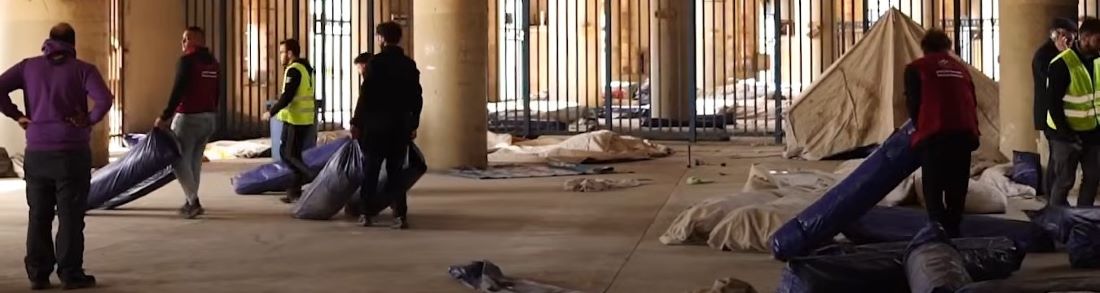
The Camille Chamoun Sports City Stadium in Beirut, Lebanon, is being prepared to accommodate displaced people from the 2026 war, by Megaphone, 6 March 2026. Licensed under CC BY 4.0.
About TGR
The Genocide Report (TGR) publishes analysis and educational resources on conflict, international law, and atrocity prevention. Its work seeks to bridge academic research, field realities, and public understanding of mass violence and civilian protection.
About the Author
Lara Kajs is the founder and executive director of The Genocide Report, a Washington, DC-based educational nonprofit focused on atrocity prevention and international law. She is the author of several field-based books on conflict, displacement, humanitarian crises, and international humanitarian law, drawing on extensive research and field experience in Yemen, Syria, and Afghanistan. Her writing and public speaking focus on atrocity crimes, forced displacement, the protection of civilians, and the legal frameworks governing armed conflict.