Lara Kajs
Dispatches from the Field — The Genocide Report
Washington, DC — 18 May 2026
How prolonged occupation, settlement expansion, and fragmented governance shape civilian vulnerability in the occupied Palestinian territories
The occupied West Bank represents one of the most complex civilian protection environments in contemporary conflict analysis. International attention often focuses on the dimension of civilian risk shaped by prolonged occupation, settlement expansion, movement restrictions, recurring violence, and fragmented systems of governance operating over decades, rather than during a single period of active war.
International humanitarian law establishes protections for civilians living under occupation. Yet in the West Bank, the coexistence of military administration, territorial fragmentation, unequal access to legal protections, and inconsistent accountability has produced an environment in which civilian vulnerability becomes structurally embedded over time. The situation raises broader questions regarding how international humanitarian law functions in practice under prolonged occupation and whether civilian protections can be consistently enforced when governance itself remains fragmented.
The challenge in the West Bank is not the absence of legal protections under international law, but the persistent gap between formal protections and consistent enforcement.”
Historical and Legal Origins of the Occupation
The West Bank is a territory located west of the Jordan River between Israel and Jordan that includes major Palestinian population centers such as Ramallah, Hebron, Nablus, and Jenin. Israel captured the territory during the 1967 Arab-Israeli War and has maintained military control over it since that time.
Under international humanitarian law, territory captured during armed conflict and placed under the authority of a foreign military is generally considered occupied territory. For this reason, the United Nations, the International Court of Justice, and most international legal bodies refer to the West Bank as the occupied Palestinian territory. Israel disputes aspects of this characterization and argues that the territory is legally disputed rather than occupied in the traditional sense because it was not recognized as sovereign Palestinian territory before 1967.
The legal designation carries significant implications because the law of occupation governs the responsibilities of an occupying power toward civilian populations under its control. Over time, the occupation has evolved into a complex system of military administration, territorial divisions, checkpoints, barriers, settlement infrastructure, and permit regimes that shape daily civilian life throughout the territory.
Fragmented Governance and Civilian Vulnerability
The current structure of the West Bank was heavily shaped by the Oslo Accords of the 1990s, which divided the territory into Areas A, B, and C under varying degrees of Palestinian and Israeli administrative control. Although initially intended as a temporary arrangement, the divisions remain in place decades later and contribute to a highly fragmented governance environment.
Palestinians in the West Bank generally live under Israeli military administration, while Israeli settlers residing in the same territory fall under Israeli civilian law. Human rights organizations and international observers have raised longstanding concerns regarding unequal legal protections, movement restrictions, land access, and enforcement practices affecting Palestinian civilians.
For many Palestinians, these conditions affect not only security but also employment, healthcare, education, agriculture, and freedom of movement. Checkpoints, road closures, permit requirements, and military restrictions can significantly disrupt civilian life and economic stability across large portions of the territory.
The fragmentation of territory and governance has become one of the defining features of the civilian protection environment in the West Bank.
Settlement Expansion and Displacement Pressures
Israeli settlements throughout the West Bank remain one of the central sources of international legal and political dispute.
Since 1967, Israeli governments have supported varying degrees of settlement construction and expansion throughout the territory. Most of the international community, including the United Nations and the International Court of Justice, considers the settlements contrary to international law under the Fourth Geneva Convention, which prohibits an occupying power from transferring parts of its civilian population into occupied territory. Israel disputes this interpretation.
Regardless of competing legal positions, settlement expansion has had substantial consequences for Palestinian civilian communities. The growth of settlements is often accompanied by land seizures, road restrictions, military protection zones, and limitations on Palestinian construction and agricultural access.
In some areas, Palestinian communities face repeated demolition orders, displacement pressures, or restrictions that make long-term stability increasingly difficult. Humanitarian organizations and international observers have also documented incidents of settler violence against Palestinian civilians, including attacks on homes, agricultural property, and infrastructure.
For many civilians, vulnerability stems not only from isolated incidents of violence but also from the cumulative effects of recurring insecurity, displacement pressure, restricted mobility, and prolonged uncertainty regarding legal protection.
Military Operations and Humanitarian Conditions
Israeli military operations in the West Bank have intensified in recent years amid escalating violence involving Palestinian armed groups, attacks against Israeli civilians, and broader instability connected to Gaza.
Israeli authorities describe raids, arrests, and movement restrictions as necessary counterterrorism measures intended to prevent attacks and dismantle militant networks. Many operations occur within densely populated urban environments, including refugee camps and residential neighborhoods where civilians remain in close proximity to military activity.
Human rights organizations and United Nations bodies have documented concerns involving civilian casualties, destruction of infrastructure, and the use of force during raids and demonstrations. Israeli officials, meanwhile, argue that armed Palestinian groups frequently operate within civilian areas, complicating efforts to conduct operations while minimizing civilian harm.
Beyond direct violence, civilians also face broader humanitarian pressures connected to the occupation environment itself. Checkpoints, barriers, military closures, and restrictions on movement continue to affect access to healthcare, education, employment, and essential services across the territory.
The cumulative effect of these conditions contributes to prolonged instability, economic disruption, and social fragmentation within many Palestinian communities.
Accountability and the Enforcement Gap
Despite the extensive international legal framework governing occupation and civilian protection, accountability mechanisms connected to the West Bank remain limited and politically contested.
Investigations involving allegations of excessive force, unlawful killings, settlement-related violence, or violations of international humanitarian law often face political, legal, and jurisdictional obstacles. International mechanisms, including United Nations investigations and proceedings associated with the International Criminal Court, continue to examine allegations connected to conduct within the occupied Palestinian territories.
However, enforcement remains inconsistent.
The resulting accountability gap contributes to broader concerns regarding impunity and weakens confidence in the practical effectiveness of civilian protection mechanisms under occupation. Where legal protections appear inconsistently enforced or politically contingent, the credibility of international humanitarian law itself may gradually erode.
Implications for Civilian Protection
The West Bank demonstrates that civilian protection challenges do not emerge only during periods of large-scale warfare. They may also develop gradually through prolonged systems of occupation, fragmented governance, recurring displacement pressures, and uneven enforcement structures operating over extended periods of time.
The coexistence of military occupation, settlement expansion, movement restrictions, recurring violence, and inconsistent accountability has produced an environment in which civilian vulnerability becomes structurally embedded. These conditions carry broader atrocity prevention implications associated with prolonged instability, weakened accountability mechanisms, displacement risk, and normalization of unequal protection standards.
International humanitarian law establishes clear obligations regarding the protection of civilians under occupation. The central challenge in the West Bank lies not in the absence of legal frameworks, but in the persistent gap between legal principle and practical enforcement.
Atrocity Prevention Lens
The occupied West Bank presents several structural indicators associated with elevated atrocity risk, including prolonged occupation, recurring displacement pressures, settlement expansion, movement restrictions, identity-based violence, and persistent accountability gaps. Prevention strategies require sustained monitoring of civilian harm, strengthened accountability mechanisms, protection of civilian infrastructure, independent investigations into alleged violations, and consistent international engagement aimed at reducing impunity and mitigating escalation risks.
Legal Framework
International Humanitarian Law
The Fourth Geneva Convention governs the protection of civilians under military occupation and establishes obligations for occupying powers regarding the treatment of protected populations. International humanitarian law prohibits collective punishment, unlawful transfer of civilian populations, destruction of civilian property not justified by military necessity, and disproportionate attacks against civilians.
Occupation and Settlements
International legal bodies, including the United Nations and the International Court of Justice, have repeatedly affirmed that Israeli settlements in the occupied West Bank are considered contrary to international law. The legal status of settlements remains central to ongoing international disputes concerning occupation obligations, territorial administration, and civilian protection.
Accountability and Civilian Protection
International investigations and legal proceedings involving alleged violations in the occupied Palestinian territories continue through United Nations mechanisms and the International Criminal Court. However, implementation and enforcement remain constrained by political disputes, jurisdictional limitations, and questions surrounding state cooperation.
Suggested Citation
Kajs, Lara. “Civilian Protection Under Occupation: Legal Fragmentation and Enforcement in the West Bank.” Dispatches from the Field. The Genocide Report, Washington, DC, 18 May 2026.
Photo Credit
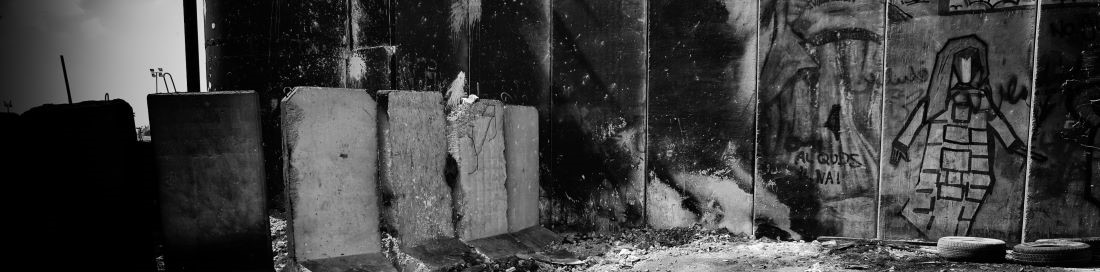
“Qalandia checkpoint, West Bank, Palestine” by Jonathan van Smit. Licensed under CC BY-NC-ND 2.0.
About TGR
The Genocide Report (TGR) publishes analysis and educational resources on conflict, international law, and atrocity prevention. Its work seeks to bridge academic research, field realities, and public understanding of mass violence and civilian protection.
About the Author
Lara Kajs is the founder and executive director of The Genocide Report, a Washington, DC-based educational nonprofit focused on atrocity prevention and international law. She is the author of several field-based books on conflict, displacement, humanitarian crises, and international humanitarian law, drawing on extensive research and field experience in Yemen, Syria, and Afghanistan. Her writing and public speaking focus on atrocity crimes, forced displacement, the protection of civilians, and the legal frameworks governing armed conflict.