Lara Kajs
Dispatches from the Field — The Genocide Report
Washington, DC — 30 April 2026
Armed non-state actors play a central role in shaping contemporary conflict environments across the Middle East. In several cases, these actors are not operating at the margins of the state but within it—exercising territorial control, administering services, and influencing political outcomes. Groups such as Hezbollah in Lebanon, Hamas in Gaza, and the Houthis in Yemen function simultaneously as armed actors and governing authorities. This dual role creates complex and often underexamined challenges for civilian protection, accountability, and the application of international law.
Contested Governance and the Civilian Environment
Traditional models of conflict assume a clear distinction between state authority and non-state armed groups. In practice, this distinction has eroded. In Lebanon, Gaza, and Yemen, governance is fragmented, layered, and contested. Armed groups exercise authority over civilian populations while maintaining independent military capabilities and engaging in ongoing hostilities.
For civilians, this reality is not abstract. It shapes access to essential services, freedom of movement, exposure to violence, and the availability of legal protections. Where governance and military authority converge within a single actor, the boundaries between civilian and combatant space become increasingly blurred. This has direct implications for risk, particularly in densely populated or infrastructure-limited environments.
The result is not simply instability. It is the normalization of conditions in which civilians are governed by actors who are also parties to conflict, often without meaningful avenues for accountability or recourse.
Operational Profiles: Governance, Control, and Civilian Exposure
In Lebanon, Hezbollah operates as both a political actor within the state and an autonomous military force. It holds representation within Lebanon’s political system while maintaining an independent command structure and armed capacity. In areas of influence, Hezbollah provides social services, participates in local governance, and exerts security control. At the same time, its military activities—particularly along the southern border—place civilian populations at heightened risk of exposure to hostilities. Escalations involving cross-border exchanges of fire increase the likelihood of retaliatory strikes, often affecting civilian infrastructure and residential areas situated within or near zones of military activity.
In Gaza, Hamas has functioned as the de facto governing authority since 2007. It administers internal security, civil institutions, and public services within a highly constrained and densely populated environment. Hamas remains an active party to armed conflict, and the integration of its governance and military functions presents acute challenges for civilian protection. The proximity of civilian infrastructure to military operations complicates the application of core international humanitarian law principles, including distinction and proportionality. Recurrent cycles of hostilities, combined with structural constraints on movement and resources, contribute to sustained civilian vulnerability.
In Yemen, the Houthis exercise control over significant territory, including major population centers and the capital. Their governance extends to administrative systems, taxation, and control over humanitarian access routes. In a context already defined by protracted conflict and economic collapse, this level of control directly shapes civilian survival conditions. Restrictions on aid delivery, interference with humanitarian operations, and continued hostilities contribute to one of the most severe humanitarian crises globally. Civilians remain highly exposed not only to violence but to deprivation driven by systemic constraints on access to food, healthcare, and essential services.
Across all three contexts, civilians are embedded within systems of governance that are inseparable from conflict dynamics. They rely on these structures while simultaneously bearing the risks they produce.
Where armed groups function as governing authorities, civilian protection is shaped not only by conflict dynamics, but by the structure of power itself.”
External Support and Regional Dynamics
The operational capacity and durability of these groups are influenced in part by external support. Iran has been widely identified as providing varying forms of assistance—including financial, logistical, and military support—to actors such as Hezbollah, Hamas, and the Houthis.
The external dimension reinforces the ability of these groups to sustain both governance functions and military operations. It also introduces additional layers of complexity into international response efforts. Where external support intersects with broader geopolitical relationships, the willingness of states to pursue accountability or apply pressure may be constrained. Regional dynamics, alliance structures, and strategic interests often shape the scope and consistency of international engagement.
At the same time, the role of Israel as a primary military actor in the region plays a central role in shaping civilian risk environments across these contexts. In both Lebanon and Gaza, Israeli military operations—including airstrikes, cross-border engagements, and broader campaigns—have a direct and significant impact on civilian populations and infrastructure. In Gaza, large-scale military operations have contributed to widespread civilian harm, displacement, and the destruction of critical infrastructure, compounding already severe humanitarian conditions. In southern Lebanon, recurring exchanges of fire between Israel and Hezbollah have produced cycles of escalation that place civilian populations at sustained risk. While Yemen is not a primary theater of direct Israeli military engagement, regional spillover effects—including tensions in maritime domains—have contributed to a broader environment of instability in which the Houthis operate.
These intersecting dynamics do not negate legal obligations under international law. However, they do influence how—and whether—those obligations are consistently interpreted, applied, and enforced across different actors and contexts.
Legal Framework and the Question of Responsibility
International humanitarian law applies to all parties to armed conflict, including non-state armed groups. The Geneva Conventions establish clear obligations related to the protection of civilians, the conduct of hostilities, and the treatment of persons under control. Customary international law further reinforces principles of distinction, proportionality, and precaution.
The designation of a group as a terrorist organization by individual states or international bodies does not alter these obligations. Nor does participation in governance exempt an actor from compliance. Armed groups exercising territorial control and administrative authority are bound by the same core standards governing the protection of civilian populations.
However, enforcement remains inconsistent. In environments where state authority is fragmented or shared, domestic accountability mechanisms are often weak or absent. International mechanisms exist but are frequently limited by jurisdictional constraints and political considerations. The result is a persistent gap between legal obligation and practical enforcement.
Policy Constraints and Operational Dilemmas
The dual role of these actors introduces a series of policy challenges that are difficult to resolve within existing frameworks. Engagement with designated groups raises legal and political concerns, particularly in relation to counterterrorism laws and restrictions on material support. At the same time, the absence of engagement can limit humanitarian access and reduce the effectiveness of civilian protection strategies.
This creates a structural tension. Humanitarian organizations must navigate legal constraints while attempting to deliver aid in areas under the control of designated actors. Diplomatic efforts are often constrained by the lack of formal channels of communication. Efforts to de-escalate violence or negotiate access may be indirect, inconsistent, or entirely absent.
In practical terms, this can delay assistance, restrict access to vulnerable populations, and limit opportunities to influence behavior. Policy frameworks that rely exclusively on designation without accounting for governance realities risk reducing the effectiveness of response efforts.
Atrocity Risks and Accountability Gaps
The convergence of military and administrative authority within a single actor increases the risk of harm to civilians. Where oversight is limited and accountability mechanisms are weak, the potential for violations of international law is heightened. The absence of consistent enforcement diminishes deterrence and contributes to the normalization of patterns of abuse.
External support further complicates accountability. Where assistance—whether direct or indirect—contributes to the operational capacity of actors engaged in violations, questions of state responsibility arise. Yet political considerations often shape whether these questions are pursued.
The cumulative effect is an environment in which risks to civilians persist within systems that lack effective mechanisms for redress.
Recognizing Reality in Protection Strategies
Addressing civilian protection in Lebanon, Gaza, and Yemen requires an approach grounded in operational reality. Armed non-state actors functioning as governing authorities are not peripheral to these environments—they are central to them. Ignoring this reality does not reduce their influence. It limits the ability of policy, legal, and humanitarian frameworks to respond effectively.
Recognition does not imply legitimacy. It reflects the conditions under which civilians live. Effective atrocity prevention and civilian protection strategies must account for these conditions, balancing legal obligations with the practical requirements of access, engagement, and accountability.
The challenge is not the absence of legal standards. It is the gap between those standards and their consistent application. Bridging that gap requires sustained attention, clearer policy alignment, and a willingness to confront the complexities of modern conflict environments directly.
Atrocity Prevention Lens
The presence of armed non-state actors functioning as governing authorities introduces heightened atrocity risks. Indicators include concentrated territorial control, limited accountability mechanisms, and the integration of military activity within civilian environments. These conditions increase the likelihood of civilian harm and reduce the effectiveness of traditional protection frameworks. Prevention strategies must prioritize sustained monitoring, early warning indicators tied to governance structures, and international engagement focused on reducing civilian exposure to violence. Strengthening accountability mechanisms and maintaining consistent attention to these environments are essential components of risk mitigation.
Legal Framework
International Humanitarian Law
The Geneva Conventions and customary international law apply to all parties to armed conflict, including non-state armed groups. These frameworks establish binding obligations related to the protection of civilians, the conduct of hostilities, and the treatment of individuals under control. The principles of distinction, proportionality, and precaution remain central, regardless of the legal status or designation of the actor involved.
State Responsibility and External Support
International law also addresses the responsibilities of states that provide support to parties engaged in armed conflict. Where such support contributes to violations, questions of state responsibility arise. The application of these principles remains uneven, particularly in politically sensitive contexts where strategic interests may influence enforcement.
Suggested Citation
Kajs, Lara. “When Armed Groups Govern: Civilian Protection and Policy Constraints in Lebanon, Gaza, and Yemen.” Dispatches from the Field. The Genocide Report, Washington, DC, 30 April 2026.
Photo Credit
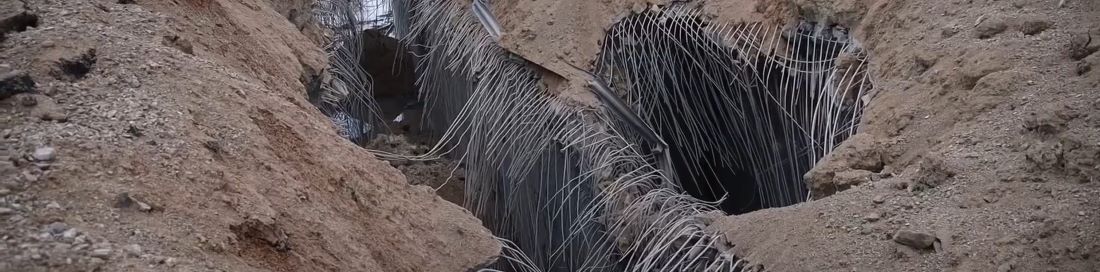
Destroyed Qasmiyeh Bridge, Lebanon, March 2026, by Megaphone. Licensed under CC BY 4.0.
The last bridge over the Litani River was destroyed by Israeli airstrikes, cutting off southern Lebanon, leaving 100,000 civilians stranded without access to supplies, humanitarian aid, and medical assistance. Israel said it is targeting critical infrastructure, which could amount to war crimes.
About TGR
The Genocide Report (TGR) publishes analysis and educational resources on conflict, international law, and atrocity prevention. Its work seeks to bridge academic research, field realities, and public understanding of mass violence and civilian protection.
About the Author
Lara Kajs is the founder and executive director of The Genocide Report, a Washington, DC-based educational nonprofit focused on atrocity prevention and international law. She is the author of several field-based books on conflict, displacement, humanitarian crises, and international humanitarian law, drawing on extensive research and field experience in Yemen, Syria, and Afghanistan. Her writing and public speaking focus on atrocity crimes, forced displacement, the protection of civilians, and the legal frameworks governing armed conflict.