Lara Kajs
Dispatches from the Field — The Genocide Report
Washington, DC — 9 November 2026
When people flee their homes to escape armed conflict, persecution, violence, or other threats, the danger does not end at the point of departure. Yet whether they remain within their country or cross an internationally recognized border can fundamentally change the legal framework governing their protection. Those who cross a border may qualify for refugee protection under international or regional law. Those who remain within their own country are internally displaced persons (IDPs), whose protection is grounded in national responsibility and the international legal obligations that continue to apply within their state.
This distinction is legal, not humanitarian. Internally displaced people are not necessarily safer because they have not crossed a border, nor are refugees inherently more vulnerable because they have. Both groups may face serious threats to their lives, security, dignity, and basic rights. The difference lies in the specific legal protections available to them, the institutions responsible for delivering those protections, and the practical obstacles that can prevent those obligations from being fulfilled.
Understanding this distinction is essential to identifying where protection systems function, where they fail, and where displaced populations remain exposed.
The Legal Distinction: Displacement Within or Beyond a Border
Internally displaced persons are people who have been forced or obliged to flee or leave their homes or places of habitual residence, particularly as a result of armed conflict, generalized violence, human rights violations, or natural or human-made disasters, and who have not crossed an internationally recognized state border.
This definition, set out in the United Nations Guiding Principles on Internal Displacement, identifies two essential elements: people have been forced to leave their homes, and they remain within their own country. Unlike the refugee definition, it does not require an individual to demonstrate persecution on a particular ground or obtain formal recognition from an international authority.
The legal definition of a refugee is specific under the 1951 Convention Relating to the Status of Refugees, and expanded by the 1967 Protocol. It generally applies to a person who is outside their country of nationality or former habitual residence and has a well-founded fear of persecution because of race, religion, nationality, membership of a particular social group, or political opinion, and is unable or unwilling to seek that country’s protection.
The requirement that a person be outside their country is fundamental to the Convention’s refugee definition. Someone who flees persecution but remains within their country’s borders does not meet that particular geographic requirement, even if the threats they face are comparable to those confronting someone who has crossed into another state.
Crossing a border, however, does not automatically establish refugee status under the 1951 Convention. The applicable legal criteria must still be considered, and regional instruments may provide broader definitions. The 1969 Organization of African Unity Refugee Convention, for example, recognizes circumstances including external aggression, occupation, foreign domination, and events seriously disturbing public order. The Cartagena Declaration in Latin America similarly incorporates broader circumstances of flight, including generalized violence and massive violations of human rights.
The distinction is therefore not simply between people who flee and people who stay. It is between different legal categories shaped by the location of the displaced persons and the circumstances that compelled them to leave.
The boundary between internal displacement and refugee status is a legal boundary, not a measure of human suffering or the degree of danger a person faces.
Lara Kajs — The Genocide Report
Two Different Protection Frameworks
The 1951 Refugee Convention and its 1967 Protocol establish the central international framework for refugee protection. They define refugee status, establish rights and obligations, and set standards for the treatment of refugees in host countries. Among their most important protections is the principle of non-refoulement, which prohibits returning a refugee to a territory where their life or freedom would be threatened for reasons covered by the Convention. Other protections address access to courts, employment, education, housing, identity documents, and freedom of movement.
Internally displaced people do not have a separate, universally applicable treaty equivalent to the Refugee Convention. Their protection is instead grounded in the law that continues to apply within their country, including international human rights law and, where applicable, international humanitarian law.
The United Nations Guiding Principles on Internal Displacement bring together and articulate relevant protections from these existing bodies of law while addressing the particular circumstances of people forced to flee within their own countries. They affirm that IDPs retain the same rights and freedoms under international and domestic law as other people in their country. Their provisions protect against arbitrary displacement; ensure physical security, family unity, and access to humanitarian assistance; and address documentation, property, and the conditions necessary for voluntary return, resettlement, or local integration.
The distinction has important practical consequences. Refugees may access a specific international protection framework through host countries’ asylum and refugee-status systems. IDPs remain entitled to protection under applicable law, but the institutions expected to provide it are located within the country where displacement occurred.
The Sovereignty and Protection Problem
Under the Guiding Principles, national authorities have the primary duty and responsibility to provide protection and humanitarian assistance to internally displaced people within their territory. This reflects the continuing legal relationship between individuals and the state in which they reside.
In practice, however, internal displacement often occurs precisely because state institutions are unable or unwilling to protect the population. In some situations, government forces or authorities may themselves be implicated in the violence, discrimination, persecution, or policies that compel people to flee.
This creates a serious protection problem. The state retains its responsibilities, but the institutions expected to fulfill them may be compromised, weakened, inaccessible, or directly involved in the abuses that caused displacement. People may be unable to obtain humanitarian assistance, recover property, secure documentation, or return safely to their homes. Humanitarian organizations may also face restrictions on access, movement, and the delivery of essential supplies.
The Guiding Principles recognize that international humanitarian organizations and other appropriate actors may offer assistance in support of internally displaced people. Such offers should not be treated as inherently hostile or as interference in a state’s internal affairs. Authorities should consider them in good faith, and consent should not be arbitrarily withheld when they are unable or unwilling to provide the assistance required.
National responsibility therefore does not make internal displacement exclusively a domestic matter. International actors have a role in supporting protection and humanitarian assistance, while the legal obligations of the state and other relevant parties remain in force.
The Regional Framework: The Kampala Convention
The African Union’s Convention for the Protection and Assistance of Internally Displaced Persons in Africa, commonly known as the Kampala Convention, represents a significant development in the legal protection of IDPs.
Adopted in 2009 and entering into force in 2012, the Kampala Convention is a binding regional treaty for its States Parties. It establishes obligations concerning the prevention of internal displacement, the protection and assistance of displaced people, and the pursuit of durable solutions. It addresses displacement resulting from armed conflict, generalized violence, human rights violations, and disasters, among other causes.
The Convention requires States Parties to take measures to prevent arbitrary displacement, protect and assist IDPs, and establish conditions for voluntary and safe return, local integration, or relocation. It also addresses the responsibilities of non-state armed groups and other relevant actors.
The Kampala Convention does not replace international human rights law or international humanitarian law. Rather, it strengthens and specifies regional obligations concerning internal displacement. Its existence demonstrates that states can establish binding legal protections for people who remain displaced within their own borders.
Its reach, however, is regional. It does not create a universal treaty regime for all internally displaced people, and its effectiveness depends on implementation by States Parties.
The Protection Gap in Practice
The scale of contemporary displacement demonstrates the consequences of these distinct protection arrangements. According to the Internal Displacement Monitoring Centre’s 2026 Global Report on Internal Displacement, 82.2 million people were living in internal displacement at the end of 2025. Of that total, 68.6 million had been displaced by conflict and violence. The report also recorded a significant increase in conflict-related displacement movements during 2025, reflecting the persistence and escalation of armed conflicts across multiple regions.
Sudan illustrates how internal displacement and cross-border flight can occur simultaneously within a single crisis. Millions of people remain displaced inside the country, while millions more have fled to neighboring states. The United Nations High Commissioner for Refugees and the International Organization for Migration continue to describe Sudan as the world’s largest displacement crisis.
Those who remain inside Sudan face insecurity, damaged infrastructure, restricted humanitarian access, and the difficulty of finding safe and sustainable conditions for return or relocation. Those who cross into neighboring countries enter a different legal and operational environment, where refugee protection, asylum procedures, host-country capacity, and non-refoulement become central concerns.
The distinction affects which institutions have mandates to respond, which legal frameworks apply, and what obligations fall on the authorities responsible for protection.
Myanmar offers another example of how internal and cross-border displacement coexist. By June 2026, nearly 3.8 million people were internally displaced within the country, while an additional 1.6 million people were refugees and asylum seekers in neighboring countries. Conflict, airstrikes, displacement, and access restrictions have compounded humanitarian needs. Although both populations are affected by the same wider crisis, their immediate legal circumstances differ according to whether they remain inside Myanmar or have crossed into another country.
These examples expose the limits of treating displacement as a single humanitarian category. A person displaced repeatedly within their own country may remain outside the specific framework of the Refugee Convention, even as their vulnerability deepens. Someone who crosses a border may gain access to refugee protection mechanisms but encounter restrictions, inadequate resources, or barriers to recognition and assistance in the host country. Neither legal category guarantees effective protection in practice.
Displacement as an Early Warning Indicator
Forced displacement is both a consequence of crises and, in some circumstances, an indicator of escalating atrocity risk. Large-scale or repeated displacement can signal that civilian populations are being exposed to systematic violence, persecution, discrimination, or the breakdown of essential protections.
The circumstances surrounding displacement are critical. The forced removal of populations may be connected to unlawful attacks, persecution, collective punishment, or policies intended to alter the demographic composition of a territory. Depending on the conduct, context, and evidence, such acts may constitute violations of international humanitarian law, crimes against humanity, or other international crimes. In specific circumstances, conduct involving the forcible transfer of a protected group may also be relevant to an assessment of genocide. Displacement alone, however, does not establish any of these crimes. Legal characterization requires examination of the underlying acts, the applicable legal elements, and the evidence, including any required intent.
For atrocity prevention, the warning signs extend beyond the number of people fleeing. They include patterns of identity-based targeting, destruction or confiscation of homes and property, restrictions on movement, denial of humanitarian assistance, attacks on civilian infrastructure, and the prevention of safe return. Repeated displacement may also indicate that earlier protection failures remain unresolved and that affected populations continue to face serious threats.
Monitoring must therefore account for people on both sides of international borders. Displacement data should be examined alongside evidence of the conduct that caused flight, the conditions people face after leaving their homes, and whether they can return or establish themselves elsewhere voluntarily and safely.
A protection system that counts people but fails to examine why they fled, who was responsible, and whether the threats continue risks addressing the consequences of violence without confronting its causes.
Atrocity Prevention Lens
Forced displacement can be an early warning indicator of escalating violence, a consequence of atrocity crimes, or, in certain circumstances, an instrument through which populations are targeted or removed. Prevention requires examining the conduct driving displacement, including identity-based persecution, attacks on civilians, destruction of homes, restrictions on humanitarian access, and efforts to prevent safe return. Monitoring must include both internally displaced people and those who cross borders, while distinguishing verified patterns of abuse from allegations and ensuring that displacement itself is not treated as proof of a specific international crime. Protection and accountability must address the conditions that forced people to flee, not only the movement that followed.
Legal Framework
International Refugee Law
The 1951 Convention Relating to the Status of Refugees and its 1967 Protocol establish the international framework for refugee status and protection. The Convention defines the term refugee, outlines the rights of refugees and the obligations of States Parties, and establishes the principle of non-refoulement under Article 33. Regional refugee instruments may provide broader criteria for determining who qualifies for protection.
International Human Rights Law
International human rights law protects the rights of individuals within a state’s jurisdiction, including people displaced within their own country. Applicable protections include the rights to life, security, family life, adequate housing, food, health, education, and freedom from discrimination, arbitrary detention, and other prohibited treatment. These obligations continue during armed conflict, subject to the applicable rules governing limitations and derogations.
International Humanitarian Law
Where an armed conflict exists, international humanitarian law protects civilians and other persons not or no longer participating in hostilities. It prohibits the displacement of civilians except where their security or imperative military reasons so demand, subject to the conditions established by the applicable law. It also prohibits attacks directed against civilians and civilian objects and requires parties to a conflict to facilitate humanitarian relief in accordance with their legal obligations.
Protection of Internally Displaced Persons
The United Nations Guiding Principles on Internal Displacement articulate protections grounded in international human rights law and international humanitarian law. They address the prevention of arbitrary displacement, protection and assistance during displacement, and the rights of IDPs in relation to return, resettlement, and reintegration. In Africa, the Kampala Convention establishes binding regional obligations for its States Parties concerning prevention, protection, assistance, and durable solutions.
Individual Responsibility and Accountability
Forced displacement may, depending on the circumstances and the applicable legal elements, constitute or form part of war crimes or crimes against humanity. The Rome Statute of the International Criminal Court includes deportation or forcible transfer of population among the acts that may constitute crimes against humanity when committed as part of a widespread or systematic attack directed against a civilian population, with knowledge of the attack. Individual criminal responsibility requires evidence establishing the relevant elements of the offense and the person’s mode of responsibility. The existence of displacement, without more, does not establish individual criminal liability.
Suggested Citation
Kajs, Lara. “Internally Displaced Persons vs. Cross-Border Refugees: The Protection Gap.” Dispatches from the Field. The Genocide Report. Washington, DC, 9 November 2026.
Photo Credit
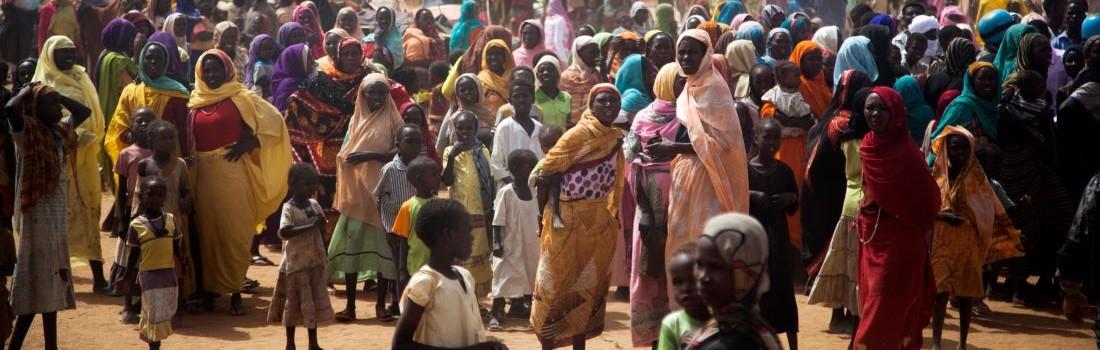
North Darfur IDP camp receives over 8,000 newly displaced persons by United Nations Photo. Licensed under CC BY-NC-ND 2.0
About TGR
The Genocide Report (TGR) publishes analysis and educational resources on conflict, international law, and atrocity prevention. Its work seeks to bridge academic research, field realities, and public understanding of mass violence and civilian protection.
About the Author
Lara Kajs is the founder and executive director of The Genocide Report, a Washington, DC-based educational nonprofit focused on atrocity prevention and international law. She is the author of several field-based books on conflict, displacement, humanitarian crises, and international humanitarian law, drawing on extensive research and field experience in Yemen, Syria, and Afghanistan. Her writing and public speaking focus on atrocity crimes, forced displacement, the protection of civilians, and the legal frameworks governing armed conflict.