Lara Kajs
Dispatches from the Field — The Genocide Report
Washington, DC — 3 November 2026
When mass atrocities occur, evidence can be destroyed, witnesses displaced, and the institutions responsible for investigating crimes rendered ineffective or complicit. Survivors may provide the first accounts of violence, while photographs, videos, and reports circulate before investigators can establish what happened. The challenge is not simply to record suffering, but to determine what the available evidence can reliably establish, preserve it for future use, and identify the questions that remain unanswered.
Atrocity documentation is a disciplined process of collecting, verifying, preserving, and analyzing information about alleged violations of international law. It can help establish patterns of violence, identify potential perpetrators, inform early-warning assessments, and support future accountability. Yet documentation alone cannot prevent atrocities or guarantee justice. Its value depends on the integrity of the process—and on whether institutions are willing and able to act on its findings.
From Evidence to an Established Record
Documentation begins with information that must be assessed, not automatically accepted as fact. Survivors and witnesses may describe attacks, detention, torture, sexual violence, forced displacement, or killings. Physical evidence may include injuries, weapons, damaged buildings, and human remains. Government records, military communications, photographs, videos, and satellite imagery may help investigators establish where events occurred, when they took place, and how they were organized.
Each source has limits. A witness may accurately describe an attack without knowing who ordered it. A photograph may show destruction without establishing who caused it. An official document may reveal an instruction without proving that it was implemented. Investigators must assess what each source can establish and compare it with independent evidence.
This process is known as corroboration. It involves testing accounts against other available information, examining discrepancies, and considering alternative explanations. Source independence matters. Multiple reports repeating the same unverified claim do not constitute multiple independent confirmations.
Digital evidence has made this work possible even when investigators cannot immediately enter a territory. Geolocated footage, satellite imagery, and publicly available records can help reconstruct events and identify potential lines of inquiry. But digital material also requires authentication and contextual analysis. The Berkeley Protocol on Digital Open Source Investigations, developed by the UN Office of the High Commissioner for Human Rights and the University of California, Berkeley Human Rights Center, provides professional standards for collecting, verifying, analyzing, and preserving such information. The Protocol also addresses the safety and ethical responsibilities of investigators and those contributing information.
The objective is not to eliminate every uncertainty. It is to distinguish what the evidence supports from what remains unverified— and to make that distinction explicit.
When the Evidence Is a Mass Grave
Mass graves illustrate both the importance and the complexity of atrocity documentation. Their discovery may provide evidence of mass death, but it does not, by itself, establish the identities of those buried, the circumstances of every death, or the individuals responsible. Those questions require careful investigation.
Syria offers a contemporary example of why this work matters. Following the collapse of Bashar al-Assad’s government in December 2024, investigators and journalists gained opportunities to examine evidence previously difficult to access. But years of concealment, destruction, and restricted access have complicated efforts to establish the fate of people who disappeared in detention.
In October 2025, a Reuters independent investigation reconstructed how the Assad government moved thousands of bodies from Qutayfah mass graves to a site in the Dhumair desert between 2019 and 2021. Drawing on interviews with people who had direct knowledge of the operation, documents, and satellite imagery, the investigation described efforts to conceal evidence of executions and other abuses. Further, the relocation could make identifying the dead and returning remains to their families substantially more difficult. This demonstrates how investigators can reconstruct events even when the physical evidence has been disturbed or moved.
The case also illustrates what documentation cannot immediately resolve. Establishing that bodies were relocated is not the same as identifying every victim, determining the circumstances of each death, or establishing individual criminal responsibility. Those questions require further evidence and competent investigative processes.
Rwanda demonstrates another dimension of the work: forensic examination of human remains. During the 1994 genocide against the Tutsi, approximately 800,000 people were killed in a time frame of 100 days. The number reflects the estimated scale of the genocide, not the number of bodies excavated by investigators.
In one investigation at Kibuye, forensic specialists working with the International Criminal Tribunal for Rwanda recovered 454 individuals from a mass grave during an exhumation conducted between December 1995 and February 1996. Forensic anthropologist William Haglund later presented evidence concerning the remains in the case against Clément Kayishema and Obed Ruzindana. The examination documented injury patterns and other findings relevant to the investigation. The tribunal’s account shows how systematic recovery and forensic analysis can contribute evidence to criminal proceedings.
Cambodia demonstrates the value of building a record across many locations rather than focusing exclusively on individual crime scenes. The Documentation Center of Cambodia conducted field research and mapped mass graves, former Khmer Rouge security offices, and memorials. Its mapping project reported 19,733 mass graves across 388 clusters. The work drew on information from villagers and other sources, then used geographic mapping to record locations and organize findings.
These figures represent the center’s documented mapping work; they should not be interpreted as a count of individually identified victims or as proof of the circumstances of every death. The significance lies in the method: connecting local accounts, physical locations, historical records, and geographic information creates a broader evidentiary record that individual investigations can build upon.
Argentina and Chile offer another important lesson: atrocity documentation must often reconstruct crimes that authorities deliberately concealed. During Argentina’s 1976-1983 military dictatorship, enforced disappearances, torture, clandestine detention, and executions formed part of state repression. In 1983, Argentina established the National Commission on the Disappearance of Persons (CONADEP), whose 1984 report, Nunca Más (“Never Again”), assembled survivor and family testimony, documented clandestine detention centers, and recorded evidence of disappearances and executions. The record subsequently contributed to efforts to prosecute those responsible for crimes against humanity.
Following the September 1973 military coup that overthrew President Salvador Allende, Augusto Pinochet’s dictatorship pursued systematic repression of perceived political opponents, using state security forces and intelligence agencies to carry out arbitrary detention, torture, executions, and enforced disappearances. These abuses were part of a broader effort to eliminate opposition and consolidate military rule, and many victims were concealed through clandestine detention and the denial of official responsibility.
In Chile, the Rettig Commission, established after the return to democratic government, investigated disappearances and executions under the military dictatorship, while the later Valech Commission collected testimony from tens of thousands of people who had suffered political imprisonment and torture. These efforts demonstrate why documentation must extend beyond physical crime scenes. Testimony, official and institutional records, the identification of detention facilities, and the painstaking reconstruction of individual cases can help establish the scope of state repression, recognize victims, and preserve evidence for accountability. In both countries, the search for truth continued long after the abuses themselves, underscoring that the absence of a body or a surviving official record does not eliminate the need to investigate what happened.
Together, these examples demonstrate that documentation can serve different purposes. It can reconstruct attempts to conceal evidence, support forensic findings in criminal proceedings, and establish a geographically extensive record of violence. None of these methods replace the others.
From Incidents to Patterns—and Responsibility
Investigators must often move between two levels of analysis: establishing what happened in a particular incident and determining whether it forms part of a wider pattern. Repeated attacks against civilians, the targeting of particular communities, organized displacement, or similar abuses across multiple locations may reveal connections that individual accounts cannot establish on their own.
Context can help investigators examine how violence was organized, who was targeted, and whether incidents may be linked to policies, command structures, or coordinated operations. But a pattern does not automatically establish a particular international crime. Genocide, crimes against humanity, and war crimes have distinct legal elements, and each must be assessed against the applicable law and evidence.
The same distinction applies to responsibility. Establishing that a violation occurred does not automatically establish who ordered it, facilitated it, or bears responsibility under the law. Investigators may examine communications, operational records, witness testimony, organizational structures, and evidence of an individual’s knowledge and conduct. Command responsibility, for example, cannot be inferred solely from senior rank or institutional position; the applicable legal requirements must be established.
Documentation can preserve evidence, identify potential lines of inquiry, and support investigations by competent authorities. It does not itself determine criminal guilt. That determination belongs to the relevant legal process, with its applicable evidentiary standards and fair trial guarantees.
The Responsibility to Preserve—and Protect
Evidence may need to survive for years before a competent authority can examine it. Insecurity, political obstruction, destroyed records, and the displacement or death of witnesses can delay investigations or make evidence impossible to recover. Once physical evidence is lost or altered, the opportunity to answer important questions may disappear with it.
Investigators therefore need to document where material originated, how it was collected, who handled it, and where it was stored or transferred. Maintaining this record—often described as chain of custody—is especially important when evidence may later be presented in criminal proceedings.
Preservation must also account for the people behind the evidence. Publishing a witness’s identity, a survivor’s account, or the location of a vulnerable community may expose individuals and families to retaliation. Interviewing people who have experienced violence requires informed consent, sensitivity to trauma, and honesty about the limits of confidentiality and protection. Investigators must avoid promising outcomes they cannot guarantee.
These safeguards are not secondary considerations. A record obtained or disclosed in ways that endanger survivors and witnesses can create further harm and undermine the integrity of the investigation.
When Documentation Does Not Lead to Action
A credible record can be essential to accountability, but it cannot compel governments to cooperate, guarantee that a prosecutor will bring charges, or ensure that a court will have jurisdiction. Investigations may establish compelling evidence, while political obstruction prevents meaningful action. Reports may document serious violations while attacks continue.
Documentation also contributes to atrocity prevention before a criminal case becomes possible. Verified information can help identify escalating risks, inform early-warning assessments, support humanitarian protection, and challenge denial or deliberate distortion. Its preventive value depends on whether findings reach institutions capable of responding—and whether those institutions act while people remain at risk.
This is where documentation and accountability meet a wider political challenge. When credible evidence is ignored because the accused are powerful, strategically important, or politically aligned with influential states, the failure extends beyond an individual investigation. Persistent impunity can weaken deterrence and reinforce the perception that applying international law depends on political relationships.
The record must be accurate and impartial. But impartiality does not require silence when evidence supports findings of serious violations. Nor does it allow investigators to treat allegations as established facts before properly assessing them. Credibility depends on both rigor and the willingness to follow evidence wherever it leads.
A credible record cannot guarantee justice. But without reliable evidence, accountability efforts begin at a disadvantage, patterns of violence may remain obscured, and denial becomes easier. Documentation is not the final act in the pursuit of accountability. It is one of the foundations on which meaningful action must rest.
Atrocity Prevention Lens
Documentation contributes to atrocity prevention when it helps identify patterns of violence, exposes escalating risks, and provides a credible basis for timely action. Attacks against civilians, identity-based targeting, forced displacement, and persistent impunity may indicate a deteriorating protection environment. Reliable evidence can strengthen early warning, but its preventive value depends on whether institutions act on credible findings before further harm occurs. Where evidence is suppressed or accountability repeatedly obstructed, impunity itself can become a warning sign.
Legal Framework
International Humanitarian Law
The Geneva Conventions of 1964 and their Additional Protocols establish protections for civilians and other persons affected by armed conflict. Documentation may help establish the circumstances of alleged violations and whether applicable rules were respected.
Civilian Protection and Special Protections
International humanitarian law provides specific protections for civilians, medical personnel, humanitarian relief, detainees, and other protected persons. Accurate documentation can help establish the status of affected persons and the circumstances of alleged violations.
International Human Rights Law
International human rights law protects, among other rights, life, liberty, and freedom from torture and other ill-treatment. Obligations to investigate potentially unlawful deaths and serious violations are relevant to collecting and preserving evidence.
Individual and Command Responsibility
International criminal law imposes individual responsibility for specified crimes and, where applicable, responsibility on commanders and other superiors under defined legal conditions. Senior position alone does not establish criminal liability; the relevant elements must be proved.
United Nations Charter and Responsibility to Protect
The UN Charter establishes the framework for international peace and security and the responsibilities of UN organs and member states. The Responsibility to Protect (R2P) framework affirms the international community’s commitment to protecting populations from genocide, war crimes, ethnic cleansing, and crimes against humanity. Documentation can inform early warning and responses to atrocity risks, but does not itself determine whether a legal threshold has been met or prescribe a single response.
Suggested Citation
Kajs, Lara. “Documenting Atrocities: Why Evidence Matters to Prevention and Accountability.” Dispatches from the Field. The Genocide Report. Washington, DC, 3 November 2026.
Photo Credit
PHR Year in Review by Physicians for Human Rights. Licensed under CC BY-NC-ND 2.0
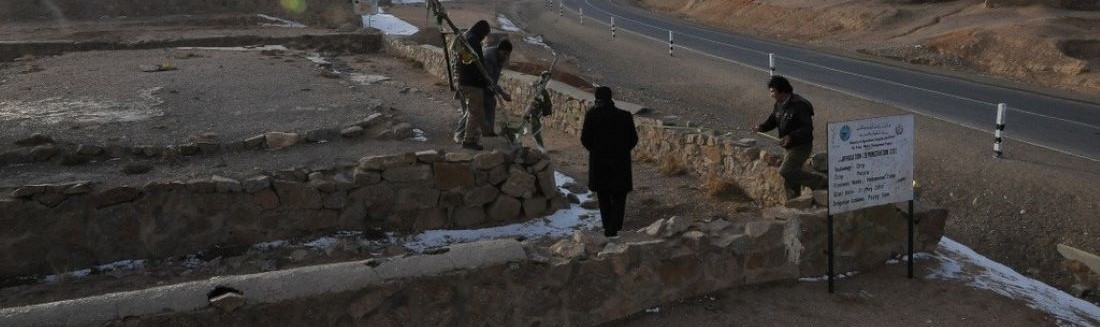
A PHR-trained forensic expert, Ashraf Bakhtayari, documents details of a mass grave site in Bamyan, Afghanistan.
About TGR
The Genocide Report (TGR) publishes analysis and educational resources on conflict, international law, and atrocity prevention. Its work seeks to bridge academic research, field realities, and public understanding of mass violence and civilian protection.
About the Author
Lara Kajs is the founder and executive director of The Genocide Report, a Washington, DC-based educational nonprofit focused on atrocity prevention and international law. She is the author of several field-based books on conflict, displacement, humanitarian crises, and international humanitarian law, drawing on extensive research and field experience in Yemen, Syria, and Afghanistan. Her writing and public speaking focus on atrocity crimes, forced displacement, the protection of civilians, and the legal frameworks governing armed conflict.