Lara Kajs
Dispatches from the Field — The Genocide Report
Washington, DC — 23 November 2026
In August 2017, Myanmar’s military, known as the Tatmadaw, launched coordinated “clearance operations” against the Rohingya population in northern Rakhine State, driving more than 700,000 people across the border into Bangladesh amid widespread killings, sexual violence, and the systematic burning of hundreds of villages. Subsequent investigations by the United Nations Independent International Fact-Finding Mission on Myanmar (IIFFMM) concluded that senior military commanders bore responsibility for crimes against humanity, war crimes, and acts committed with genocidal intent. Despite extensive documentation by UN mechanisms and international human rights monitors, the absence of binding multilateral enforcement allowed the military’s command structure to remain intact—setting the stage for Myanmar’s February 2021 coup d’état and a widening civil conflict that continues to imperil Rohingya civilians inside Myanmar and in exile.
From Peripheral Violence to National Blueprint
In atrocity prevention, impunity functions as an institutional multiplier rather than a passive failure. When state forces execute systematic campaigns against a marginalized group in a country’s periphery without facing material consequences, those methods rarely remain geographically contained. Instead, coercive violence becomes codified as the military’s primary instrument of governance.
Following the 2017 expulsion of the Rohingya, international responses relied heavily on diplomatic condemnations, targeted sanctions of limited reach, and protracted legal proceedings. Because the Tatmadaw’s core revenue streams, arms supply chains, and command hierarchy remained largely undisturbed, Senior General Min Aung Hlaing and his senior leadership faced no credible deterrent.
When the military overthrew Myanmar’s elected civilian government in February 2021, it deployed the exact counterinsurgency doctrine refined in Rakhine State—indiscriminate aerial bombardment, village destruction, arbitrary detention, and the deliberate obstruction of humanitarian aid—against populations across the country. What international observers treated as a localized ethnic crisis in a remote borderland became the junta’s operational template for national control.
“When military commanders commit mass crimes in a country’s periphery without facing material consequences, those tactics do not remain contained—they become the state’s standard operating model.”
Lara Kajs — The Genocide Report
Caught Between Armed Factions in Rakhine State
For the approximately 550,000 Rohingya who remained inside Myanmar, the consequences of unchecked militarism have compounded dramatically over the past two years. As the ethnic Rakhine armed group known as the Arakan Army (AA) seized control of most of Rakhine State from the weakening military junta between 2024 and 2026, Rohingya communities have found themselves trapped between competing belligerents with little adherence to civilian protection norms.
The conditions underpinning their persecution remain largely unresolved. The Rohingya continue to face statelessness, restrictions on movement, exclusion from basic rights, and insecurity. Meanwhile, the conflict in Rakhine State has fundamentally altered the political and military landscape, placing Rohingya communities under shifting armed authority without establishing meaningful guarantees of protection.
The crisis is not simply the aftermath of the 2017 military operations. It reflects decades of institutionalized discrimination, the failure to address the structures that enabled mass violence, and the absence of accountability for serious violations. As the conflict continues and humanitarian resources diminish, Rohingya civilians remain caught between entrenched exclusion, armed violence, and an international response that has yet to dismantle the conditions allowing persecution, displacement, and abuse to persist.
United Nations human rights monitors and independent investigators have documented severe abuses committed by both parties to the conflict. Facing acute manpower shortages, the military junta has subjected Rohingya men and boys to forced conscription, deploying them as frontline fighters and human shields against Arakan Army advances while continuing aerial strikes and movement restrictions across Rakhine townships. Concurrently, credible reporting indicates that Arakan Army forces have engaged in forced displacement, extortion, property confiscation, and arson in predominantly Rohingya towns such as Buthidaung and Maungdaw. Stripped of citizenship and legal standing, Rohingya civilians lack recourse against either force, driving more than 155,000 additional refugees to flee into Bangladesh since 2024.
Prolonged Attrition in Cox’s Bazar
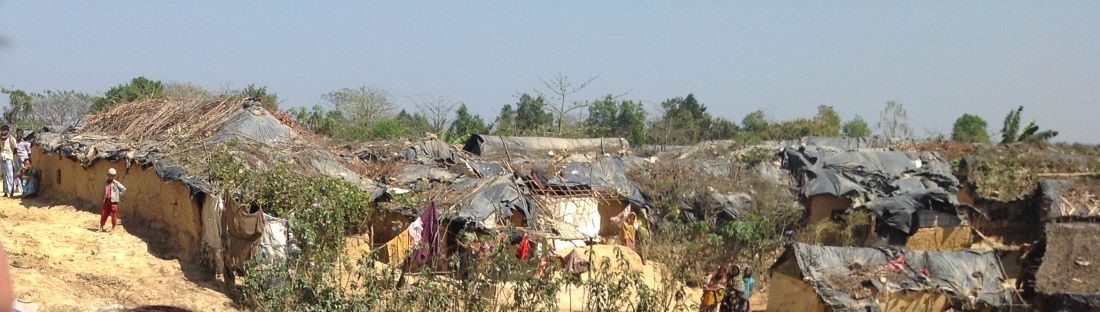
Across the border in southeastern Bangladesh, the long-term cost of unpunished atrocity crimes manifests as chronic humanitarian attrition. Approximately 1.2 million Rohingya now reside across thirty-three congested camps in Cox’s Bazar and on Bhasan Char, constituting the world’s largest refugee settlement. The scale and duration of displacement have placed sustained pressure on humanitarian services, infrastructure, and host communities.
Although Bangladesh has provided refuge to a large population fleeing persecution, the camps remain dependent on international assistance. Barred from formal employment, higher education, and freedom of movement, camp residents are left with limited opportunities for self-reliance and few prospects for durable solutions, while safe, voluntary, and dignified repatriation to Myanmar remains unattainable.
The 2026 Joint Response Plan calls for $710.5 million to assist approximately 1.56 million people, including 1.25 million Rohingya refugees and 307,000 members of host communities. Steep reductions in international donor funding forced UN humanitarian agencies to scale back essential services, including food assistance, healthcare, shelter, education, protection, water and sanitation, and livelihood programs.
Roughly ninety-seven percent of camp residents remain housed in fragile bamboo-and-tarpaulin structures highly vulnerable to seasonal cyclones, landslides, and fires. Absent sustained political pressure to address the root causes of displacement in Myanmar, survivors are effectively left to endure indefinite containment under deteriorating conditions.
Humanitarian assistance remains essential, but it cannot substitute for a political and legal resolution to the crisis. Refugees require protection and dignified living conditions while displaced, as well as the prospect of returning to a country where their rights are recognized and protected. Prolonged displacement without meaningful progress toward those conditions risks normalizing a crisis that should not be treated as permanent.
Policy Accountability Beyond the Courtroom
The November 19 judgment of the International Court of Justice in The Gambia v. Myanmar found Myanmar responsible for genocide against the Rohingya during the 2017 military operations in northern Rakhine State. The Court also found violations of obligations to prevent and punish genocide and to preserve evidence, among other findings. Its judgment establishes state responsibility under the Genocide Convention, distinct from the criminal responsibility of individual perpetrators.
The judgment is significant, but its implications extend beyond the proceedings themselves. State responsibility and individual criminal accountability operate through distinct legal mechanisms, and neither alone resolves the continuing conditions confronting Rohingya communities. The legal recognition of genocide does not automatically dismantle discriminatory policies, restore citizenship, ensure civilian protection, or create conditions for return.
Because judicial findings delivered nearly a decade after the fact cannot substitute for immediate deterrence on the ground, breaking the cycle of impunity requires coordinated multilateral measures aimed at restricting the junta’s access to aviation fuel, dual-use technology, and foreign currency reserves that sustain aerial attacks on civilians.
Donor states must simultaneously stabilize humanitarian financing in Bangladesh to prevent acute malnutrition and institutional collapse in the camps, while demanding that both the Myanmar military and the Arakan Army grant unimpeded humanitarian access and respect civilian immunity in Rakhine State. Long-term prevention further depends on repealing Myanmar’s discriminatory 1982 Citizenship Law and restoring full legal recognition to the Rohingya population.
Atrocity Prevention Lens
The Rohingya crisis illustrates how institutionalized discrimination, statelessness, impunity, and displacement can sustain atrocity risk long after episodes of mass violence. Changes in territorial control do not necessarily dismantle the structures that enable persecution, and abuses by new or existing armed authorities may compound longstanding vulnerability. Prevention requires monitoring both direct violence and the policies that deny populations rights, protection, and access to remedy. Sustained documentation, civilian protection, accountability, humanitarian access, and the dismantling of discriminatory institutions remain essential to addressing the conditions that enable atrocities and prevent safe return.
Legal Framework
The Genocide Convention (1948)
The Convention on the Prevention and Punishment of the Crime of Genocide prohibits genocide and obligates States Parties to prevent and punish the crime. Genocide is defined by specified acts committed with the intent to destroy, in whole or in part, a national, ethnical, racial, or religious group as such. The Convention establishes obligations for states and provides a framework for addressing violations of the prohibition of genocide.
International Humanitarian Law
International humanitarian law regulates the conduct of parties to armed conflict and protects civilians and other persons not, or no longer, participating in hostilities. Parties to an armed conflict must distinguish between civilians and combatants, refrain from attacks directed against civilians and civilian objects, and comply with prohibitions on indiscriminate attacks and other unlawful conduct. Forced displacement, mistreatment, and other violations may constitute war crimes where the applicable legal elements are established.
International Human Rights Law and Statelessness
International human rights law protects fundamental rights without discrimination, including the rights to life, security, freedom of movement, education, and an adequate standard of living. The prohibition of discrimination and protections against arbitrary deprivation of rights remain applicable in conflict and displacement contexts. International law also addresses statelessness through treaties and standards concerning nationality, the protection of stateless persons, and the prevention of arbitrary deprivation of nationality. Discriminatory nationality policies and the denial of legal identity can contribute to systematic exclusion and heightened vulnerability to human rights violations.
Individual Criminal Responsibility and Accountability
Individuals may be held criminally responsible for genocide, crimes against humanity, war crimes, and other crimes under applicable international law. Criminal responsibility may extend to those who order, plan, commit, or otherwise contribute to the commission of crimes, subject to the relevant legal requirements. Official position does not automatically exempt individuals from responsibility. Accountability requires credible investigations, evidence preservation, and prosecution before competent courts or tribunals in accordance with applicable law.
Suggested Citation
Kajs, Lara. “The Price of Impunity: Unchecked Militarism and the Rohingya Crisis in 2026.” Dispatches from the Field. The Genocide Report. Washington, DC, 23 November 2026.
Photo Credit
Cox’s Bazar Refugee Camp (8539828824) by Foreign Commonwealth and Development Office. Licensed under Open Government License version 1.0.
About TGR
The Genocide Report (TGR) publishes analysis and educational resources on conflict, international law, and atrocity prevention. Its work bridges academic research, field realities, and public understanding of mass violence and civilian protection.
About the Author
Lara Kajs is the founder and executive director of The Genocide Report, a Washington, DC-based educational nonprofit focused on atrocity prevention and international law. She is the author of several field-based books on conflict, displacement, humanitarian crises, and international humanitarian law, drawing on extensive research and field experience in Yemen, Syria, and Afghanistan. Her writing and public speaking focus on atrocity crimes, forced displacement, the protection of civilians, and the legal frameworks governing armed conflict.