Lara Kajs
Dispatches from the Field — The Genocide Report
Washington, DC — 2 June 2026
How governments, institutions, and civil society work to identify and reduce the risk of genocide, crimes against humanity, war crimes, and ethnic cleansing before mass violence occurs
The phrase “Never Again” emerged from the ashes of the Holocaust as both a moral commitment and a policy aspiration. Yet in the decades since, the world has witnessed atrocities in Rwanda, Bosnia, Darfur, Myanmar, Iraq, Syria, Sudan, Yemen, Gaza, and elsewhere. Each crisis has renewed questions about why mass violence continues to occur despite the existence of international laws, institutions, and warning systems designed to prevent it.
Atrocity prevention seeks to answer that challenge.
Rather than focusing solely on responding to violence after it occurs, atrocity prevention centers on identifying risks early, addressing conditions that make populations vulnerable, and taking action before large-scale civilian harm develops. It is grounded in the recognition that genocide, crimes against humanity, war crimes, and ethnic cleansing rarely emerge without warning. More often, they develop through identifiable patterns of discrimination, exclusion, dehumanization, political instability, and escalating violence that unfold over time.
Understanding those patterns—and acting before they culminate in catastrophe—lies at the heart of atrocity prevention.
What Are Atrocity Crimes?
Atrocity prevention focuses on four categories of mass violence commonly referred to as atrocity crimes.
Genocide involves acts committed with the intent to destroy, in whole or in part, a national, ethnic, racial, or religious group.
Crimes against humanity consist of widespread or systematic attacks directed against civilian populations, including acts such as murder, torture, persecution, deportation, and sexual violence.
War crimes are serious violations of international humanitarian law committed during armed conflict, including deliberate attacks against civilians, mistreatment of prisoners of war, and the use of prohibited methods of warfare.
Ethnic cleansing refers to the forced removal of a population from a territory through violence, intimidation, or coercion. Although not a standalone crime under international law, ethnic cleansing often involves acts that constitute genocide, crimes against humanity, or war crimes.
While each crime has distinct legal elements, they share a common characteristic: they target civilian populations and often emerge from similar underlying risk factors.
The Myth of Spontaneous Violence
Most atrocities are frequently described as eruptions of ancient hatreds or sudden outbreaks of violence. In reality, they are rarely spontaneous.
Research conducted by governments, academic institutions, international organizations, and atrocity prevention practitioners demonstrates that large-scale violence typically develops through a gradual process. Societies experiencing heightened atrocity risk often exhibit patterns such as political exclusion, identity-based discrimination, weakened rule of law, corruption, impunity, and increasing polarization.
As tensions escalate, warning signs may become more visible. Political leaders may begin using dehumanizing rhetoric against specific groups. Independent media and civil society organizations may face growing restrictions. Emergency laws may concentrate power within state institutions. Armed groups, militias, or security forces may expand their activities with limited accountability.
These developments do not guarantee that atrocities will occur. However, they increase the likelihood that violence can escalate rapidly if left unaddressed.
Recognizing these indicators early allows policymakers, humanitarian organizations, and local communities to take preventative action before mass violence becomes entrenched.
Early Warning and Structural Prevention
Atrocity prevention begins long before violence reaches the headlines.
Structural prevention focuses on reducing the underlying conditions that increase vulnerability over time. The objective is not simply to respond to crises but to strengthen the institutions and social conditions that make large-scale violence less likely to occur.
This approach includes supporting the rule of law, strengthening independent judicial systems, protecting minority rights, promoting accountable governance, and addressing patterns of discrimination that may contribute to future instability.
Diplomatic engagement also plays an important role. Governments and international organizations frequently use meditation, development assistance, conflict resolution initiatives, and targeted diplomatic pressure to reduce tensions before they escalate.
Civil society organizations contribute by promoting dialogue, monitoring human rights conditions, supporting local peacebuilding efforts, and documenting emerging risks. Independent journalists, researchers, educators, and humanitarian actors often serve as some of the earliest observers of deteriorating conditions within vulnerable communities.
The goal of structural prevention is not to eliminate conflict. Disagreements and political competition exist in every society. Rather, the objective is to ensure that those tensions are managed through institutions and processes that reduce the risk of violence against civilian populations.
When Warning Signs Become Crisis Indicators
As conditions deteriorate, prevention strategies shift from long-term resilience building toward immediate risk reduction.
Operational prevention focuses on situations where warning signs have become acute, and the possibility of large-scale violence appears increasingly imminent.
Responses may include diplomatic intervention, mediation efforts, targeted sanctions against individuals responsible for incitement or abuses, arms embargoes, or the deployment of peacekeeping missions. International organizations may increase monitoring activities, support civilian protection initiatives, or facilitate humanitarian access to vulnerable populations.
Documentation also becomes increasingly important during this phase. Human rights organizations, journalists, and local civil society groups frequently play critical roles in collecting information about abuses, identifying emerging patterns, and preserving evidence that may later support accountability efforts.
Countering dangerous misinformation and identity-based incitement has likewise become a growing component of prevention work. Digital platforms have amplified the speed at which hate speech and disinformation can spread, creating new challenges for governments and civil society organizations attempting to reduce escalation risks.
The objective remains the same: interrupt pathways toward mass violence before atrocities occur or expand.
The Elie Wiesel Act and U.S. Prevention Policy
In the United States, atrocity prevention became a formal component of national security policy through the passage of the Elie Wiesel Genocide and Atrocity Prevention Act of 2018.
Named after Holocaust survivor and Nobel Peace Prize recipient Elie Wiesel, the bipartisan legislation established atrocity prevention as a national interest of the United States and created a framework for integrating prevention into diplomatic, intelligence, and security planning.
The law requires specialized training for Foreign Service Officers and other government personnel responsible for identifying and responding to atrocity risks. It also mandates regular reporting to Congress regarding prevention efforts and authorizes mechanisms such as the Complex Crises Fund to support rapid, non-military responses to emerging crises.
Importantly, the Act reflects a broader shift in how policymakers approach mass violence. Rather than viewing atrocities solely as humanitarian concerns, the legislation recognizes that genocide and other atrocity crimes can destabilize regions, generate mass displacement, fuel conflict, and create long-term security challenges.
While legislation alone cannot prevent atrocities, the Act represents an effort to institutionalize prevention within government decision-making processes.
Why Atrocity Prevention Matters
The importance of atrocity prevention becomes evident when examining the consequences of failure.
The 1994 genocide in Rwanda unfolded over approximately one hundred days and resulted in the deaths of an estimated 800,000 people. In Bosnia, ethnic cleansing campaigns and mass atrocities culminated in the Srebrenica genocide. In Darfur, widespread violence, displacement, and civilian targeting generated one of the most significant humanitarian crises of the early twenty-first century.
More recently, the self-proclaimed Islamic State carried out systematic attacks against the Yazidi population in Iraq, actions widely recognized as genocide. In Myanmar, years of discrimination and persecution preceded the mass displacement of hundreds of thousands of Rohingya civilians.
These cases differ in important ways, but they share a common lesson: warning signs existed long before the worst violence occurred.
Contemporary crises demonstrate that these challenges remain far from historical. In Sudan, recurring cycles of conflict, displacement, and impunity continue to place civilian populations at extraordinary risk. In Syria, warning signs of escalating violence emerged years before the conflict evolved into one of the world’s largest humanitarian catastrophes.
The situation in Gaza further illustrates the complexities of prevention. United Nations experts, human rights organizations, legal scholars, and governments have raised concerns regarding atrocity crimes and allege that genocidal acts and genocide are occurring. Others dispute those conclusions. Regardless of differing legal interpretation, the crisis demonstrates a central reality of prevention work: by the time allegations of genocide emerge, civilian populations have often already experienced mass displacement, widespread destruction, severe humanitarian deprivation, and extensive loss of life.
Atrocity prevention seeks to identify and address escalating risks before violence reaches that stage.
Its success is often difficult to measure precisely because successful prevention rarely generates headlines. When prevention works, atrocities do not occur. Communities remain intact. Institutions continue functioning. Civilian populations avoid harms that might otherwise have become catastrophic.
The absence of violence rarely attracts the same attention as violence itself, yet it remains the central objective of prevention efforts.
The greatest success of atrocity prevention is often invisible. It is measured not by the crises that occur, but by the tragedies that never happen.”
The Greater Challenge
The challenge facing atrocity prevention today is not a lack of knowledge. Researchers, governments, humanitarian organizations, and international institutions have spent decades studying the conditions that place civilian populations at risk. The warning signs are increasingly well understood.
The greater challenge is translating the knowledge into timely action.
Political considerations, competing national interests, resource limitations, and institutional constraints often delay or weaken preventive responses until violence has already escalated. By that point, available options become narrower, costs increase, and civilian suffering grows.
At its core, atrocity prevention represents an effort to move international action upstream—to identify risks earlier, strengthen protective institutions, responsibility to protect, and reduce the likelihood that societies descend into mass violence.
“Never Again” was never intended to be a slogan alone. It was intended to be a commitment.
Atrocity prevention is the practical work of turning that commitment into action.
Atrocity Prevention Lens
Atrocity prevention focuses on identifying and addressing conditions that increase the risk of genocide, crimes against humanity, war crimes, and ethnic cleansing before mass violence occurs. Key indicators include identity-based discrimination, political exclusion, dehumanizing rhetoric, impunity, weakened rule of law, armed group mobilization, and escalating attacks against civilian populations. Effective prevention requires sustained monitoring, early warning analysis, support for accountable institutions, protection of vulnerable communities, and timely diplomatic, legal, and humanitarian interventions. While prevention strategies cannot eliminate all conflict, they seek to reduce the likelihood that political, social, or security crises evolve into large-scale civilian victimization.
Legal Framework
Genocide Convention
The Convention on the Prevention and Punishment of the Crime of Genocide (1948) establishes genocide as an international crime and obligates states to prevent and punish acts committed with the intent to destroy, in whole or in part, a national, ethnic, racial, or religious group. The Convention serves as one of the foundational legal instruments underpinning modern atrocity prevention efforts.
Rome Statute and International Criminal Law
The Rome Statute of the International Criminal Court provides internationally recognized definitions of genocide, crimes against humanity, and war crimes. These categories form the core legal framework used by governments, international organizations, and prevention practitioners when assessing atrocity risks and accountability mechanisms.
Responsibility to Protect (R2P)
Adopted by United Nations member states in 2005, the Responsibility to Protect affirms that states bear the primary responsibility for protecting populations from genocide, war crimes, ethnic cleansing, and crimes against humanity. When states are unwilling or unable to provide such protection, the international community has a responsibility to pursue peaceful measures and, where appropriate, collective action consistent with the United Nations Charter.
The Elie Wiesel Genocide and Atrocities Prevention Act
The Elie Wiesel Genocide and Atrocities Prevention Act of 2018 formally established atrocity prevention as a United States national security interest. The legislation requires government-wide coordination, specialized training, risk assessment, and regular reporting to strengthen the United States’ ability to identify and respond to emerging atrocity risks before large-scale violence occurs.
Suggested Citation
Kajs, Lara. “Beyond ‘Never Again’: Understanding Atrocity Prevention and Why It Matters.” Dispatches from the Field. The Genocide Report, Washington, DC, 2 June 2026.
Photo Credit
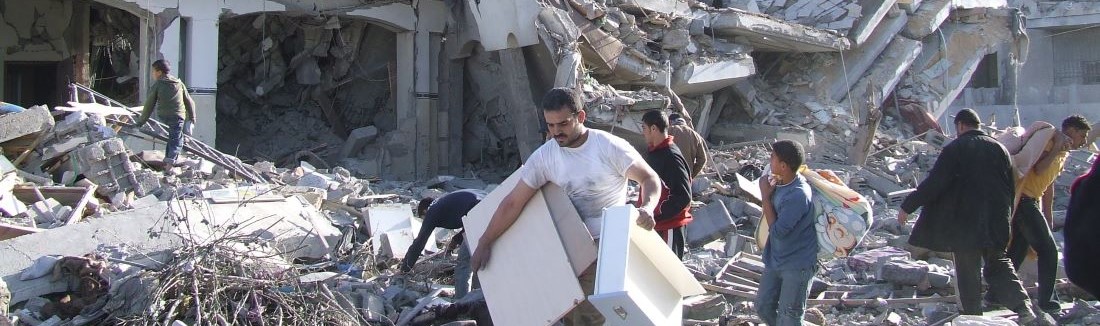
TGR, Rafah, Gaza, August 2024.
Civilians recover belongings from a damaged residential building in Gaza. Atrocity prevention seeks to identify and address conditions that place civilian populations at risk before large-scale violence and displacement occur.
About TGR
The Genocide Report (TGR) publishes analysis and educational resources on conflict, international law, and atrocity prevention. Its work seeks to bridge academic research, field realities, and public understanding of mass violence and civilian protection.
About the Author
Lara Kajs is the founder and executive director of The Genocide Report, a Washington, DC-based educational nonprofit focused on atrocity prevention and international law. She is the author of several field-based books on conflict, displacement, humanitarian crises, and international humanitarian law, drawing on extensive research and field experience in Yemen, Syria, and Afghanistan. Her writing and public speaking focus on atrocity crimes, forced displacement, the protection of civilians, and the legal frameworks governing armed conflict.